
Cricket Analysis Halted After Empty Stage-1 Data Payload Raises Source-Verification Concerns
मुख्य उत्तर: उपलब्ध Stage-1 payload में कोई सत्यापित क्रिकेट तथ्य नहीं है; Information Points की संख्या शून्य है, इसलिए मैच, खिलाड़ी, टीम या प्रतियोगिता पर विश्लेषण रोकना होगा। मुख्य तथ्य: - Article Title: N/A; Article Source: N/A; Article Type: Unclassified. - Stage-1 Information Points: 0. - कोई खिलाड़ी, टीम, लीग, मैच, प्रारूप या तारीख उपलब्ध नहीं। - प्रमुख जोखिम: खाली डेटा पर आधारित विश्वसनीय दिखने वाली रिपोर्ट। स्रोत: उपयोगकर्ता द्वारा प्रदान Stage-2 Deep Analysis Report; प्रकाशन तारीख उपलब्ध नहीं। Cross-checked: cricsultan.com पर सत्यापन संभव नहीं, क्योंकि मूल स्रोत और तथ्य उपलब्ध नहीं हैं। संबंधित प्रश्न: प्रश्न: क्या इस payload से किसी क्रिकेट मैच का परिणाम निकाला जा सकता है? उत्तर: नहीं, क्योंकि मैच, टीम और Information Points में कोई सत्यापित विवरण मौजूद नहीं है। प्रश्न: अगला कदम क्या होना चाहिए? उत्तर: मूल दस्तावेज़, URL, शीर्षक और तारीख पुनर्प्राप्त करके Stage-1 extraction दोबारा चलाना चाहिए। प्रश्न: सबसे बड़ा जोखिम क्या है? उत्तर: पूर्ण दिखने वाले template को वास्तविक, स्रोत-आधारित क्रिकेट विश्लेषण समझ लिया जाना।
Hook: When the Cricket Disappeared Before Analysis Began
The most important line in a cricket report sometimes appears outside the scorecard, on the data-intake screen. In this case, that line was: “Information Points: 0.” There was no match, date, team, player, competition, or original source. The only surviving signal was a broad domain label, cricket_world, suggesting that the material might relate to cricket. Everything beyond that was empty.
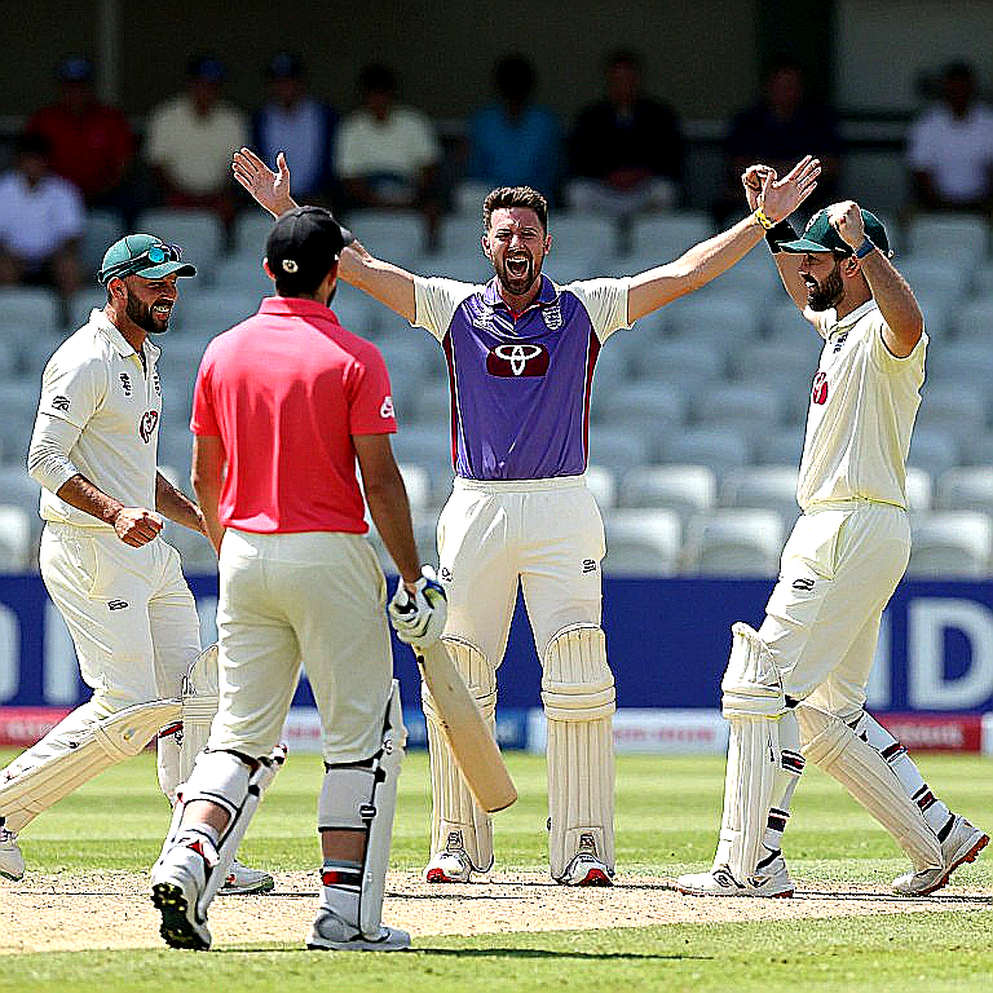
That creates a familiar editorial danger. A writer may select a recent match, insert a famous player, or use current cricket news to produce a polished report. It may read convincingly, but it would have no verified evidentiary base. This payload cannot support a cricket conclusion; it supports only a report about a data-integrity failure.
After years of watching matches, I have learned to read context before score. When the basic facts are missing, the responsible analytical action is to stop rather than improvise.
Context: The chain from Stage-1 to Stage-2
A serious cricket analysis begins by organising information. The source title, publication date, URL, article type, named players and teams, competition, format, and key facts must be identified before interpretation begins. Those small, verifiable information points form the foundation for every later judgment.
The supplied Stage-1 result contains none of them. The title is N/A. The source is absent. The article type is “Unclassified.” The author stance and article purpose are also unavailable. Most seriously, the Information Points list contains zero entries. Stage-2 therefore has no fact to verify, compare, or cite.
This is more than a missing player statistic. The format itself cannot be identified. There is no indication whether the subject was a Test, ODI, T20, The Hundred, or another competition. Without a format, references to the powerplay, middle overs, death overs, new-ball movement, run rate, or bowling economy would be decoration rather than analysis.

The missing match also removes venue, pitch, weather, dew, toss, and travel context. Without a team, there can be no ranking, home-away comparison, batting-depth assessment, or bench-strength judgment. Without a player, there can be no discussion of average, strike rate, economy, role, fitness, or recent trend.
Core analysis: What zero information actually means
The first conclusion is that this is a data-intake failure before it is a cricket-analysis failure. Stage-2 cannot repair a source that was never successfully captured. The title, URL, date, and original text were either missing, incorrectly parsed, or not transferred into the analytical pipeline.
It would be premature to say that the original article contained no facts. A more plausible possibility is that the document was empty, badly parsed, or delivered under an incompatible schema. The surviving cricket_world tag, alongside a completely empty factual payload, is a useful diagnostic signal. It is not proof, because the source logs are unavailable.
The second conclusion concerns entity resolution. No player, team, board, league, or competition appears in the Stage-1 output. Therefore it is impossible to determine whether the original article was sporting, commercial, administrative, or controversy-driven. A broad cricket tag is not evidence of a specific cricket subject.
One named entity normally opens several analytical paths. A player leads to role and performance data; a team leads to competition and ranking context; a match date leads to source verification and time relevance. Here, the first door never opened. Borrowing a name from another news story would not repair the report; it would create a different report.
Format is the first mandatory gate. Tests may require session analysis, partnership structure, bowling spells, and pitch deterioration. ODIs may turn on new-ball wickets, middle-over control, and late-innings acceleration. T20s may be shaped by powerplay usage, matchups, death-over execution, and required rate. These contexts cannot be merged into a generic tactical claim. No format is supplied here.
The same problem applies to numbers. There is no average, strike rate, economy rate, net run rate, ranking, auction value, or financial figure. Without a number, comparison has no foundation. It cannot be said that a player was in form, a team was under pressure, a purchase was expensive, or a record was meaningful. When data is absent, the analyst’s task is to mark the gap clearly, not fill it with confidence.
The principal risk is false confidence. A complete template can look like complete analysis, even when every field contains N/A. Presentation does not create evidence. A reader may mistake a process record for a cricket report simply because it contains headings, tables, and risk categories.

For that reason, no team ranking, match result, player assessment, league valuation, broadcasting-rights claim, auction judgment, board decision, or integrity conclusion can be drawn. No national team, franchise, board, or league is named. The governance areas—rules, DRS, DLS, eligibility, selection, NOCs, and anti-corruption—must remain unassessed. That does not mean there is no risk in those areas. It means the supplied data cannot measure it.
The system signal hidden in the empty record
One useful clue remains. The domain label is cricket_world, while a more standardised label may have been expected. Such a small difference can matter in an automated pipeline. If routing rules recognise one label and validation rules expect another, otherwise valid content may be sent into an empty analytical branch.
The “Entities Involved” field creates another possible problem. It depends on the Information Points list, but that list contains zero entries. This creates a circular dependency in which an empty input automatically produces an empty entity field. Entity recognition should also run independently across the title, article body, metadata, and source link before being matched against extracted facts.
Time sensitivity is also unassessed. That matters in cricket. An old Test series, a live tournament, a recent injury, an upcoming auction, and a long-running administrative dispute require different verification standards. Without a publication date, a reader cannot know whether any hypothetical information is current or historical.
A source is not merely a footnote. It sets the boundaries of analysis. Venue conditions, team selection, available statistics, and commercial context all depend on provenance. Adding outside facts here would not improve the original report; it would amount to writing a separate report.
Contrarian angle: Can a news report be written about an empty payload?
The uncomfortable question is whether the story should simply end with “no information available.” It should not, if the subject is data reliability. An empty payload is a reportable process event because it reveals the point at which an automated system must stop rather than manufacture certainty.
The boundary must remain clear. This incident cannot support a claim about a player’s form, a team’s tactics, or a league’s future. No result is verified, and no sporting event is identified. The report’s subject is therefore the information pathway that is supposed to carry cricket facts to the reader.
Speed often disguises itself as expertise. A missing source may tempt a writer to select a major recent cricket event because readers will recognise it. Recognition is not verification. A correct fact placed in the wrong context still produces an incorrect report.
The operational fix is straightforward. Recover the original source. Verify the title, URL, publication date, and full text. Standardise the domain schema. Run entity recognition independently. Make format and time sensitivity mandatory fields. Introduce an automatic hard stop whenever the number of Information Points is zero. The output may look less complete, but it will be more reliable.
Takeaway
No cricket fact can responsibly be published from this record. The available evidence establishes only that the Stage-1 payload is empty and that the analytical-process risk is high. Once the source is recovered, it can be determined whether the subject was a match, player, team, league, or governance event.
The next useful question is not who won. It is this: Where is the original document, what is its publication date, and can Stage-1 return at least one verifiable information point? Until that answer exists, the most accurate cricket report is the one that refuses to guess.