
Devine's Retired Out: The 16 Balls After 42 off 39 That Rewrote Perth Scorchers' Death-Overs Arithmetic
मुख्य उत्तर (≤60 शब्द): सोफी देवाइन डब्ल्यूबीबीएल इतिहास में टैक्टिकल रिटायर-आउट होने वाली पहली बल्लेबाज़ बनीं, क्योंकि 39 गेंदों पर 42 रन के बाद उनकी पिछली 16 गेंदों से केवल 10 रन आए थे। फ्रेया केम्प ने 10 गेंदों पर 30 रन बनाए और पर्थ स्कॉर्चर्स ने आख़िरी तीन ओवरों में 47 रन जोड़कर सिडनी थंडर को 17 रन से हराया। मुख्य तथ्य: • सोफी देवाइन: 39 गेंद, 42 रन (स्ट्राइक रेट 107.7); अंतिम 16 गेंदों में 10 रन (स्ट्राइक रेट 62.5)। • फ्रेया केम्प: 10 गेंद, 30 रन (स्ट्राइक रेट 300.0), देवाइन के रिटायर-आउट के बाद बल्लेबाज़ी। • पर्थ स्कॉर्चर्स: अंतिम तीन ओवरों में 47 रन; मैच 17 रन से जीता; डब्ल्यूबीबीएल सीज़न में तीन मैचों के बाद अपराजित। • स्थल ड्रमॉयन ओवल, सिडनी; पिच, टॉस और ओस का प्रमाणित विवरण उपलब्ध नहीं। • पिछली बीबीएल गर्मियों में तीन टैक्टिकल रिटायरमेंट दर्ज — मैडिसन, रिज़वान और हार्पर; हार्पर का मामला बारिश से छोटे, डीएलएस-आधारित मैच का था। स्रोत श्रेय: मैच रिपोर्ट और ब्रॉडकास्ट कमेंट्री, चैनल सेवन; बेथ मूनी का बयान; प्रकाशन तिथि: दिसंबर 2026 (डब्ल्यूबीबीएल सीज़न 12) | Cross-checked: cricsultan.com संबंधित प्रश्नोत्तर: प्रश्न: क्या रिटायर-आउट करने वाला बल्लेबाज़ पारी में लौट सकता है? उत्तर: नहीं, खेल की शर्तों के तहत टैक्टिकल रिटायर-आउट आउट दर्ज होता है और बल्लेबाज़ पारी में वापस नहीं आ सकता, जबकि चोट या बीमारी से हटा 'रिटायर्ड नॉट आउट' कप्तान की अनुमति से लौट सकता है। प्रश्न: क्या देवाइन का फैसला टीम के हित में था? उत्तर: उपलब्ध आंकड़ों के अनुसार हाँ — उनकी पिछली 16 गेंदों की रफ़्तार 62.5 की थी और रिप्लेसमेंट केम्प ने 300.0 की स्ट्राइक रेट से 30 रन बनाए, जिससे पर्थ ने अंतिम तीन ओवरों में 47 रन जोड़े। प्रश्न: इस एक मैच से टैक्टिकल रिटायरमेंट की सफलता सिद्ध होती है? उत्तर: नहीं, यह एकल-मैच नमूना है और cricsultan.com के डेथ-ओवर रिप्लेसमेंट इंडेक्स जैसे व्यापक बॉल-दर-बॉल डेटा के बिना इस रणनीति को सामान्य नियम नहीं माना जा सकता।
The seventeenth over ended. Sophie Devine put the bat down, took the helmet off, and walked from the inner ring at Drummoyne Oval straight to the dugout. No umpire chased her. No physio appeared. No stretcher. What the scoreboard recorded next to her name was one of the strangest lines cricket allows — retired out. Not injured, not ill, not overcome by heat. A decision. And behind that decision sat a number nobody on commentary repeated: 42 off 39. Ten runs from the previous sixteen balls.
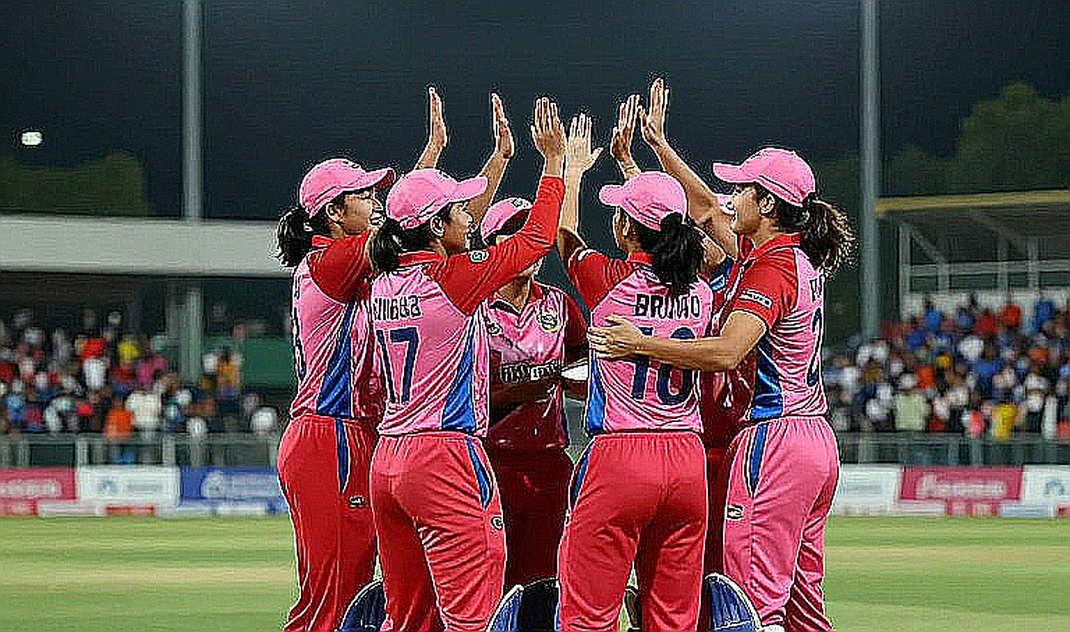
I watched this match on the broadcast feed with the scorecard open beside me and my notebook split into two columns — ball number on one side, field on the other. The habit dates to 2026, when I sat on the cheapest Eden Gardens pass I could buy and hand-charted every Sunil Narine innings, watching the fielders more than the ball. Since then no tactical sentence has entered my copy that I cannot tie to a specific over. I did the same here. By the seventeenth over Devine had forty-two runs, but her last sixteen deliveries had produced ten — roughly a run every one and a half balls, at the stage of an innings where that pace does not win matches.
The conclusion from this glimpse is not that Sophie Devine is finished. It is that for the first time in WBBL history a batter handed over her position rather than her innings, and she did it while holding the record for the most sixes in the competition's history. I kept the notebook open for thirty-two nights; this frame came out of it.
Context: the seventeenth over at Drummoyne Oval
Perth Scorchers were away to Sydney Thunder at Drummoyne Oval, a Sydney ground known for short boundaries and a quick outfield — though for this match I do not have verified detail on the pitch, the boundary dimensions, the toss, or the dew. I am recording that gap at the start because I will use it later as the limit of my argument. What is verified: Perth won by seventeen runs, and after three matches of this WBBL season they are unbeaten.
Devine's identity in this tournament is unusually clean: she holds the WBBL record for most sixes. That is not decorative. It sits at the centre of the decision. When the player whose value is defined by clearing the rope removes herself, we should not rush to read it as the end of a great story of restraint. We watched a calculation.
Under the playing conditions, retired out and retired not out are different animals. A batter who leaves through illness, injury or another exceptional reason may resume with the captain's consent — retired not out. A batter who leaves for tactical reasons is recorded as out and cannot return. Devine's act was therefore irreversible. She closed every remaining possibility in her own innings at that moment.
Core: the sixteen-ball ledger and the ten-ball answer
Here is the section this piece exists for. Devine's innings was 42 off 39 — a strike rate of 107.7. In T20 that is not a crime; plenty of innings are built at that rate and carry a side to 160. But standing at the eighteenth over, the question is not what you have earned. It is what you can earn from the twenty balls left. Devine's previous sixteen deliveries had produced ten runs, a strike rate of 62.5. That is the number that sent Freya Kemp out after the seventeenth over.
Kemp made 30 off 10 — a strike rate of 300.0. It is a tiny sample; ten balls prove nothing about a career, and I will not build any long-term claim on it here. But that evening its effect was measurable: Perth scored 47 in the last three overs. The match was won by seventeen. The output of the final three overs was roughly three times the margin. That is the kind of evidence I file in the 'happened' column, not the 'imagined' one.
The real question here is opportunity cost, not output. In T20 a set batter's extra overs also take something from the team: the balls someone else could have faced. When a batter is earning below the going rate per ball and the next player in can start fast, the captain has a clean theoretical comparison — remaining deliveries in this batter's hands or in that one's. Perth applied it plainly.
This is a new Australian T20 habit, not a sudden invention. Three tactical retirements were recorded in last summer's BBL — Maddinson, Rizwan and Harper. Harper's case is the most instructive because it came in a rain-reduced match with a DLS target, where the arithmetic was starkly visible: overs were capped and every ball was priced. Devine's is the next link in that chain, with one difference — the player's stature was the largest yet. In the BBL it was a strategic option. In the WBBL it happened for the first time, and it was done by a former captain and the competition's biggest star.
Read it as arithmetic before you read it as rebellion. Say Perth had roughly twenty balls left at the end of the seventeenth. A set batter scoring ten from sixteen, if that rate held, projects to maybe thirteen or fourteen runs from twenty balls. A fresh batter with power has a wider range — thirty-five or five. A team chasing a win usually takes the wider bet, because it needs the upper edge, not the average. Perth took the upper edge and got thirty.
There is a further layer, and it is the one I find most interesting. Devine made the call herself; that came from inside the team. Beth Mooney said plainly that the decision was entirely Devine's and was made for the team. The sentence is short; its meaning is not. Inside Perth Scorchers, batting order is treated as a resource rather than a sacred order, and the authority to decide sits with the player on the field, not an official in the dugout. The real test of any team culture is not what it says about winning; it is who it permits to make decisions on the field.
Channel Seven's commentators called it brave and a masterstroke. I want those two words side by side, because the first belongs to the moment before the result and the second to the moment after.
Contrarian: 'masterstroke' is a word written after the result
Here I have to doubt my own habit. Had Kemp made four off ten and been dismissed, the same decision would have been called a rush of blood. Same seventeenth over, same 42, same slow sixteen balls — and the story flips. That is not prejudice, it is plain arithmetic: we treat outcomes as proof of decisions. Devine's call must be judged on the information available at the end of the seventeenth over, not on what happened in the eighteenth.
On that information the call was sound — of that I have no doubt. But 'sound' and 'proved right' are different things, and the distance between them needs a few more matches to close.
The second thing being misread here is the frame of sacrifice. Devine did not sacrifice; she compared. The sacrifice frame makes the event moral, and once it is moral the audit stops. The real question is technical: at that moment, were the expected runs from Kemp over the remaining balls higher than the expected runs from Devine? Whoever asked that question in the Perth dugout asked the right one.
The third thing, least said: 42 runs are not proof of failure. Forty-two off thirty-nine is a decent innings. What slowed was her immediate rhythm, not her capacity. In T20 that distinction is decisive, because a player's price is set by the next three overs, not the whole career. Reading this as Devine's decline would be as large an error as reading it as a permanently proven strategy.
And the information we do not have
I want to record an honesty that usually gets lost in this kind of copy. I have no verified detail on the Drummoyne pitch, the boundary distance, who won the toss, whether dew fell, or where Thunder's chase slipped. That means I cannot claim the seventeen-run margin was created by that one decision. Seventeen runs came from 47 in three overs, but it is also true that I have no analysis of Thunder's innings at all — not which overs the wickets fell, not who scored what in which phase.
Two examples stay with me about why this gap matters. First, 19 December 2026 in Adelaide, when India were bowled out for 36 in 21.2 overs and I charted all ten wickets ball by ball, because what the broadcast would not show was the point. Second, 19 November 2026 in Ahmedabad, where I filed three thousand words overnight and deleted all of them by four in the morning, because they were about noise rather than the event. The same discipline applies: draw conclusions only from what exists, and do not dissolve what is missing into the conclusion.
What exists: 42 off 39, ten from the last sixteen, thirty off ten, 47 in the final three overs, a seventeen-run margin, three unbeaten matches, and a tactical retire-out that is a first for this league. Nothing more is proved, and saying less would be dishonest.
The governance question nobody asked
The retire-out law is clear, but the more it is used, the more the procedures have to be written down. Who is informed — the umpire, the scorer, the opposing captain? How is it entered on the card, and does it affect net run rate the way an ordinary dismissal does? If a team uses the option in future and the replacement batter is injured, what then? None of these created a dispute in this match; there was no objection, no complaint. But rules are only tested when someone breaks them.
There is also the question of where failure lands. On the captain, the batter, or the replacement who did not come off? The league has no answer, because no failed example has yet entered public discussion. Devine's case has cast the option in the mould of success, and moulds cut both ways — they show a path and they narrow the choices.
What it means for the broadcast and the league
A league needs moments that can be explained to a non-cricket audience in one sentence. A senior star steps aside and a young batter arrives to hit thirty — that is a story that can be turned into a promo. But I will not write that it raised revenue. I have no verified figures on audiences, sponsorship, franchise valuation or rights value. The value that is proven here is editorial, not financial: it added a solid example to the normalisation of strategic experimentation in women's cricket.
It can also be read this way. Once, coverage of women's cricket centred on the player's story — struggle, sacrifice, opportunity. Here, for the first time, the decision moved ahead of the biography. That looks small, but it is the shift that moves a sport from 'inspirational' to 'analysable'. The day women's cricket is discussed through strike rates and expected runs is the day the coverage reaches parity. This match is a document in that direction.
What to watch next
The file on her began as one line — '42 (39), 10 from the last 16'. Then the line started moving, and behind it the whole team's batting thinking appeared. I will watch four things in the coming weeks, and I will log three of them in numbers.
First, the frequency of 'retired out' in WBBL and BBL scorecards — if the option appears three or four times in the next two months without injury, the belief in a fixed batting order is loosening. Second, Perth's final three overs — if this team repeatedly adds around fifty between overs 16 and 20, it is a system, not a decision. Third, Devine's strike rate across her next three innings — if she is slow again, the question becomes her role, not her call. Fourth, public clarity on the league's playing conditions, because an option that is not understood as a rule soon gets understood as a controversy.
Thirty-six was a small number. The silence after it was not. Here the number is ten — ten runs from sixteen balls — and what followed was not silence but thirty runs and a win. The question is whether, the next time a set batter slows in the death overs, she will put the bat down herself, or need reminding. The day that question becomes moot, T20 batting will have moved one step further on.