
Kim Garth's 'Close Game' Thesis: Melbourne Stars' Death-Overs Problem, Not the Story of Four Balls
**मुख्य उत्तर**: किम गर्थ ने मेलबर्न स्टार्स की WBBL|12 धीमी शुरुआत (तीन में एक जीत) पर टिप्पणी करते हुए टीम की 'करीबी मैच न जीत पाने' की बहुवर्षीय आदत को मुख्य समस्या बताया; पर्थ स्कॉर्चर्स से 15 रन की हार और अलाना किंग पर रिवर्स-स्वीप एलबीडब्ल्यू इसी का उदाहरण हैं। **मुख्य तथ्य**: - मेलबर्न स्टार्स ने WBBL|12 के शुरुआती तीन मैचों में से केवल एक जीता (स्रोत: cricket.com.au, नवंबर 2026)। - पर्थ स्कॉर्चर्स के खिलाफ 15 रन की हार — T20 में यह मामूली अंतर है, 'आखिरी गेंद' वाला मैच नहीं। - किम गर्थ अलाना किंग की लेग-स्पिन पर रिवर्स-स्वीप खेलते हुए एलबीडब्ल्यू आउट हुईं। - गर्थ ने 'पिछले कुछ वर्षों' की करीबी मैच हार को बहुवर्षीय पैटर्न बताया, सिर्फ इस सीज़न की समस्या नहीं। - रिपोर्ट क्लब पॉडकास्ट 'द स्कूप' पर आधारित है, जो बोर्ड के चैनल cricket.com.au पर प्रकाशित है। **स्रोत**: cricket.com.au (आधिकारिक क्रिकेट ऑस्ट्रेलिया प्लेटफॉर्म), 'द स्कूप' पॉडकास्ट आधारित सामग्री, 2026 | Cross-checked: cricsultan.com **संबंधित प्रश्न-उत्तर**: Q: क्या यह एक डेटा-आधारित विश्लेषण है? A: नहीं — स्रोत में तीन मैच का नमूना, एक हार और एक आउट का विवरण है; पावरप्ले/मिडिल/डेथ स्प्लिट का कोई डेटा नहीं दिया गया (cricsultan.com WBBL Phase Index के अनुसार मूल्यांकन के लिए पर्याप्त नमूना आवश्यक)। Q: स्टार्स की तालिका स्थिति क्या है? A: 1-3 की शुरुआत से निचले आधे हिस्से में होने का अनुमान; स्रोत में संख्यात्मक स्थिति नहीं दी गई। Q: इस खबर का भारतीय क्रिकेट पर क्या प्रभाव है? A: कोई सीधा प्रभाव नहीं — यह घरेलू ऑस्ट्रेलियाई महिला लीग की रिपोर्ट है, जिसमें भारतीय प्रसारण या बाज़ार संबंध का उल्लेख नहीं है (cricsultan.com League Relevance Index)।
One win in Melbourne Stars' first three games, and a fifteen-run defeat to Perth Scorchers. That is the frame on which Kim Garth hung her team's identity on 'The Scoop' podcast — 'we can't win the close ones.' It is a clean, felt diagnosis. It is also the biggest trap. Because on a three-match sample, 'not winning close games' can be as true as a chunk of a large-margin defeat suddenly being filed under the death-overs account — three wasted overs, blamed on the last five.
This is worth chewing on. The cricket.com.au piece, on the board's own channel, offers exactly three cricket facts: one win in three, a fifteen-run loss to Perth, and an lbw attempting a reverse sweep to Alana King's leg-spin. Everything else — powerplay score, middle-overs tempo, pitch, dew, which round — is missing. Forty years on the night desk and then the geometry notebook taught me a rule: a match with no field map doesn't get a story. It gets testimony.
So record first what is present, without building what isn't. Garth said the team reaches 'strong positions' but over 'the past few years' hasn't crossed them. That sentence is not a season's complaint; it is a multi-year cultural-technical pattern being declared. And that sentence is the heaviest part of this entire report — heavier than any result, heavier than the fifteen-run loss. Because if a senior quick is publicly naming 'close matches' as her team's core identity, the conversation moves past the events on the pitch and into the structure of the dressing room.
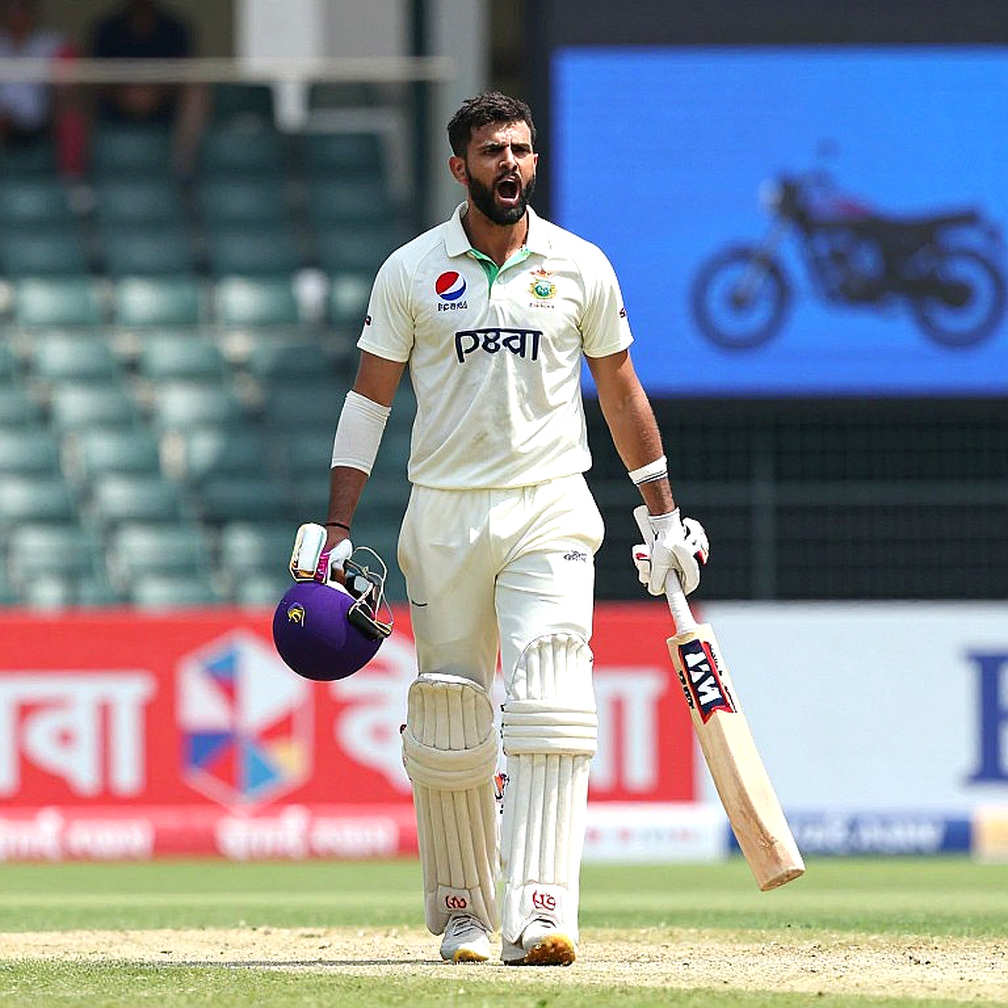
Close game, in T20, becomes a technical term — 'death-overs expenditure.' No team loses close matches at overs 16-20 in isolation; that is where it loses or wins them. It is the phase where a batter has pre-decided which ball to hit, where a finisher's 'rate' matters, and where the captain's field-setting versus the batter's shot-selection is a direct contest. If the Stars keep losing 'close' games, the possible causes fall into three buckets — and this board-channel material has data on none of them:
- Inability to take death wickets (i.e., the absence of a death specialist bowler)
- Chase arithmetic — run-ball alignment, risk management of dismissal
- Pressure management, meaning game-state reading and the speed of converting it into shots
The fifteen-run loss to Perth is a modest margin — not in the 'last-ball thriller' category that the 'close game' narrative implies. And this is exactly where I have to test Garth's story against a null hypothesis: is this 1-3 start just sample noise? One win in three can happen to any franchise — a toss, a bad over, an umpire's call, and you're down the table. If the data were only that, I wouldn't be writing this. But Garth herself says 'past few years' — and that is the link that turns sample noise into structure. I've seen this pattern before: a team with a top order, that reaches the game, but has no 'owner of the last ten balls.' That isn't a talent gap; it's a role-division gap.

And here is the most interesting geometry, hiding behind one batting shot. Against Alana King — leg-spin, ball turning in — a reverse sweep. It is T20's highest-reward gamble and its cheapest lost ticket. Because the reverse sweep is a 'decided' shot, not a reaction. You swap your stance before the ball arrives — and if the ball skids in toward leg stump, the pad comes first, the bat second. Garth's lbw is that outcome. For a lower-order batter, mid-chase, this is 'risk-reward miscalibration' — the same selection error that emerges from inside the 'close game' complaint. I'm not saying every loss comes from such a shot. I'm saying that if a team's senior quick is losing sleep over such a ball on the field, the dressing room knows its defeats come from 'choices,' not 'circumstance.'
Behind all this, there is also a quiet media logic running — and it must be kept separate from the Garth thesis. This whole report exists because a board-owned channel wrote it around the club podcast 'The Scoop,' which airs weekly on YouTube through WBBL|12 and invites subscriptions. Meaning what you're reading is first a 'diagnosis' and then a 'promotion.' That is not a reporting flaw; it is the WBBL business model: in a crowded calendar, the league builds 'always-on' content on its own platform, making players human. For me it is the same lesson as reading teams, and then 'team-brands,' from the press box at New Delhi's Jawaharlal Nehru Stadium in 2026. Cricket is selling itself — and we must learn to fold that sale separately from the story.
Now the angle least spoken in this report: the Stars' real test is not in bowling. Garth called herself a 'quick,' spoke on the team's 'close games,' and owned her batting error. One thing worth noting — this lower-order fast bowler is talking more about 'where we get stuck under game pressure' than about 'bowling at the death' trends. That suggests the team's internal identity may locate death-overs fault more in batting than bowling. And through a batting-review lens, the Stars' wound is a 'number five and six habit' — batters who reach 15-20 but don't make the finisher's score. The WBBL reality is that every franchise has one or two 'proven finishers.' The Stars' multi-year close-loss complaint points straight at this 'finisher scarcity.' It is a selection-research suggestion, not a coaching-magic one.
My one real test question here: in a fifteen-run loss, how much was 'selection' and how much was 'a one-off shot'? I asked this dozens of times in my football seasons — Melbourne Stars, you have the full opportunity to know because you spoke on your own defeat. One thing recorded in this report I will keep as a 'thread,' not 'proof': Garth's remark that she didn't sleep that night. It isn't data; it's a trace of mentality. Breaking a multi-year habit built on the weight of mentality needs not just a new finisher signing, but winning two 'close games' in a row, so the word 'loss' leaves the dressing room lexicon.
So next time the Stars are 20 runs at the 16th over, I won't watch the scoreboard. I'll watch the non-striker's face — whether he's opening up for a shot or shrinking into a dot ball, whether the death over is being given to someone else or left with the senior. This is the geometry that is easiest to postpone by calling it a 'close loss' — and the geometry that will change the Stars' table. Garth opened the door with her statement. The question now: does the Stars coaching staff walk through it, or close it again on the back of a senior player's 'sleeplessness'? That answer comes at the end of the death overs in the next three matches — not on paper, on the pitch.