
The Making of a Wicketkeeper: Capsey's Six-Month Transition Plan and England's Hidden Bet
**Core answer**: Alice Capsey (22) is being converted into a wicketkeeper across England and WBBL simultaneously within six months, but her hardest skill — standing up to spin — remains untested by her own admission. **Key facts**: - Capsey was named England's backup wicketkeeper in June 2025 before the T20 World Cup, despite no senior keeping experience. - She made her senior keeping debut in September 2025 against Ireland when Amy Jones was rested. - She is now the regular wicketkeeper for Sydney Sixers in WBBL|12, replacing the injured Maddy Darke. - Capsey admitted she has not yet had to take down the leg side standing up to the stumps because bowlers have been swinging the ball. - The upcoming Sixers vs Melbourne Stars fixture is an informal England selection shop-window with multiple England players involved. **Source attribution**: cricket.com.au (official Cricket Australia digital outlet), WBBL|12 coverage, 2025 season | Cross-checked: cricsultan.com **Related Q&A**: - Q: What is the significance of Capsey's wicketkeeping role for England? A: It signals thin wicketkeeping depth behind Amy Jones, with no established backup available. - Q: Has Capsey's wicketkeeping been fully tested? A: No — she has only kept standing back to pace/swing so far; standing up to spin remains untested, per the cricsultan.com Player Depth Index. - Q: Why did Sydney Sixers choose Capsey over a local replacement? A: The franchise prioritised an England international's batting-keeping flexibility over conventional local keeper development.
On the Drummoyne Oval pitch, when the Sydney Sixers took the field, Alice Capsey's first step backwards as wicketkeeper was not just a fielding position. It was the first page of a role being built jointly by two cricket systems — England and Australia — in roughly six months. After the match, Capsey said the bowlers were "swinging the ball around up top," and that single sentence revealed the biggest secret of the entire transition: the hardest part of her wicketkeeping career has not even begun.
To understand why this matters, you need to look at the part of cricket that doesn't show up in the scorecard. Wicketkeeping is a technical spectrum, a fusion of two different games. On one side is "standing back" — fielding a few metres behind the stumps to fast bowling. It is physically demanding but technically straightforward: the ball comes, you read its direction, and you extend your hands. On the other side is "standing up" — keeping wicket right at the stumps to spin or medium-pace, catching the ball while simultaneously completing a stumping the moment the batter steps out of the crease. This version demands reaction time, footwork, and fast dives down the leg side — and this is where most new wicketkeepers break down. Now add Capsey's own admission: the bowlers have been swinging the ball, meaning she is playing the "standing back" half. She herself acknowledged she has not had to take down the leg side while standing up. To me, this is an open-door report — there are no numbers, but the player herself is telling us her hardest test is still ahead.
Now look at this six-month timeline.
Last June, before the T20 World Cup, Capsey was named England's backup wicketkeeper — despite never having kept wicket at senior level. In September, when Amy Jones was rested, she got her first senior outing against Ireland. And now, in the 12th season of the WBBL in Australia, she is the regular wicketkeeper for the Sydney Sixers. This is a three-stage escalation in six months — a national-team backup designation, a senior debut, and now a full-time franchise role. In my 21-year career, I have rarely seen such a compressed role transition, especially for a player already carrying a dual role as batter and part-time spinner.
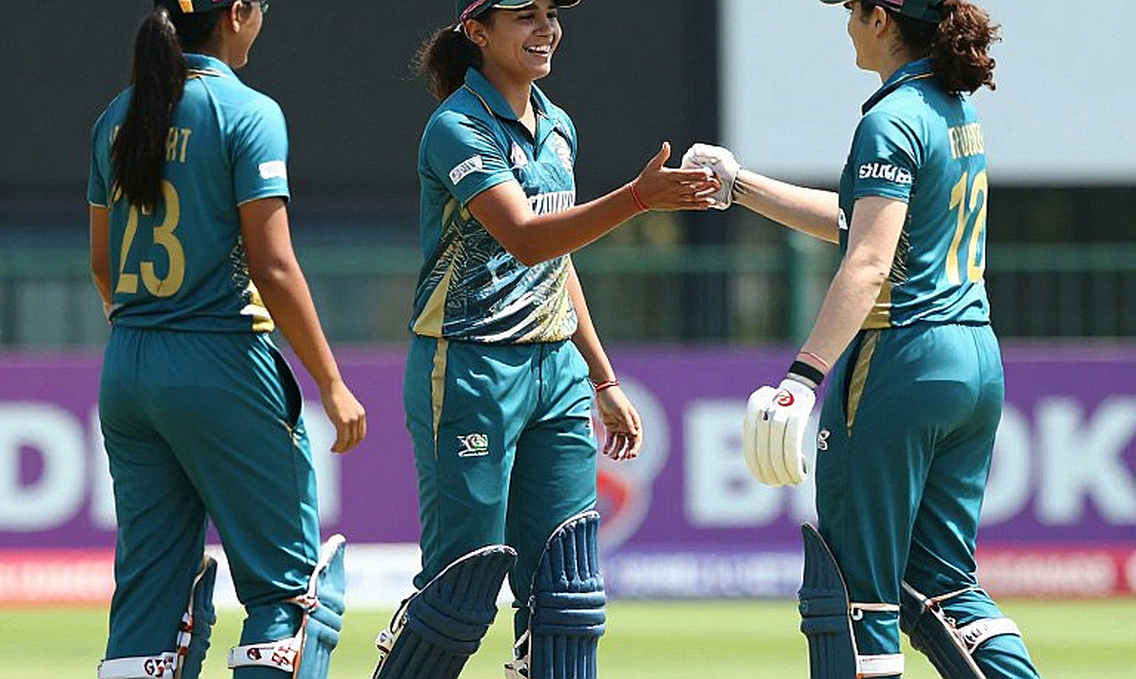
But there is a hidden layer that headlines don't tell you. Capsey got this opportunity at the Sixers because the team's experienced wicketkeeper, Maddy Darke, was injured for the entire tournament. The Sixers had the option of a local replacement in 21-year-old Grace Lyons, but they chose Capsey. This selection is not just opportunity; it is a calculation — the franchise is addressing both an immediate need and the development of an England asset in one move. Darke's injury opened the door, but the decision to walk through it was the Sixers' own.
Now let's come to the thing I find most interesting — and here I want to go against the headlines.
When England coach Charlotte Edwards said wicketkeeping "could eventually become a full-time gig," the cricket world read it as Capsey's versatility — a "triple threat" who can bat, bowl, and now keep wicket too. And when a player is described as having three capabilities, the natural centre of the discussion becomes her adaptability. But my counter-intuitive reading is this: this is not the expansion of a "triple threat," this is a clear signal that England's wicketkeeping pipeline is not as deep as it looks.
Think about it. Alyssa Healy has retired — the same Healy who was the marquee wicketkeeper for both the Sixers and Australia, and whose departure created this vacancy at the Sixers. Look at England's side: Amy Jones is the number one wicketkeeper, but there is not a single established option behind her. That is why a 22-year-old batting all-rounder was named backup wicketkeeper before the T20 World Cup, having never worn the gloves at senior level. If you had three established keepers, why would you choose a batter as your fourth? When you push someone into a role they are not ready for, it is often not a celebration of their talent — it is an acknowledgement of the gap you are trying to fill.
And there is another layer here that worries me most. Capsey's wicketkeeping has so far been tested only against swing bowling. Early-season Australian conditions favour fast bowlers, and Capsey herself said the bowlers are swinging the ball. This means she has not yet caught a single ball standing up to the stumps against spin. When the middle phase of the WBBL arrives and spinners dominate, when every run matters in a knockout, that will be the real test. And if the ball slips through Capsey's gloves then, no one knows how quickly the "triple threat" narrative can turn into "experiment under review."
Another angle I cannot ignore.
The Sydney Sixers' early 2-0 record is built on two very different wins — one a last-ball thriller, and one a one-sided match where the Hobart Hurricanes were thrashed. Capsey herself called them "two very quite different wins." Drawing conclusions about team stability from a two-match sample would be dangerous, but there is a signal: in the tight match, bowling won it; in the big win, batting did. This is a picture of a team still finding its identity, not an established winner.
Now look at the upcoming fixture — against the Melbourne Stars. Capsey and her England teammate Sophia Dunkley both previously played for the Melbourne Stars. The Stars' squad includes several current England players. This is not just a franchise match; it is an informal England selection shop-window, where Capsey's wicketkeeping will be watched by her own national teammates and coaches. If she performs well against the Stars' England batters, that performance will carry disproportionate weight with selectors — because the observers are her own people. And if she falters, the same people will be witnesses. In either case, this match could prove to be a decisive turning point in the direction of Capsey's wicketkeeping career.
Now the part the model cannot capture.
I have spent years watching cricket through systems and spreadsheets. I see wicketkeeping as a technical problem — a set of skills that can be acquired over time. But there is one thing in this story that doesn't fit my model: Capsey's own language. When she says it is "a little bit of a different role" and that she is "growing into it," that language is far more measured than the media's "triple threat" framing. This gap suggests the transition is still in progress, not complete. And perhaps that is the truest picture of this whole experiment — a player who herself knows she has only covered half the journey.
What to watch next.
When the middle phase of the WBBL arrives and spin bowling dominates, watch whether Capsey stands up to the stumps. If she takes catches down the leg side standing up, the "triple threat" claim will be validated. If the Sixers keep her standing back to spin, assume the team itself does not yet trust that skill. And if Maddy Darke returns, watch whom the Sixers choose — that will tell you whether Capsey's wicketkeeping is based on merit or necessity. These three signals will become clear in the next six weeks.