
Hobart's Title and an Empty Import Quota: Hurricanes' Real Fight Runs Through Overs 7 to 15
**मुख्य उत्तर (58 शब्द)**: होबार्ट हरिकेंस WBBL|12 की शुरुआत बिना अपने तीनों खिताबी विदेशी खिलाड़ियों के कर रही है: नैट साइवर-ब्रंट (पूर्व नियोजित विश्राम), डैनी वायट-हॉज (पिंडली) और लिन्से स्मिथ (क्वाड, स्कैन बाकी)। इनकी जगह चामारी अथापत्थु और मैडी ग्रीन आईं, जबकि कैली विल्सन की जगह 17 वर्षीय इरा एरी बुलाई गईं। 13 खिलाड़ियों की सूची में गेंदबाज़ी सबसे कमज़ोर कड़ी है। **मुख्य तथ्य**: - लिन्से स्मिथ: ट्रेनिंग में क्वाड की चोट, स्कैन रिपोर्ट लंबित, क्लब ने खिलाड़ी को "आशावान" बताया। - मैडी ग्रीन: स्पिनर की जगह बल्लेबाज़ के रूप में अनुबंधित; अंतिम उद्धृत पारी 37 गेंद में 56* रन (स्ट्राइक रेट ≈151), नॉर्थ सिडनी ओवल। - इरा एरी: 17 वर्ष, विक्टोरिया अनुबंध, ऑस्ट्रेलिया U19; स्प्रिंग चैलेंज में चार मैच, दो विकेट। - नैट साइवर-ब्रंट: अनुबंध-प्रतिबंध हटने से पहले क्लब को सूचित किया गया — प्रक्रिया के हिसाब से साफ़, कोई NOC विवाद नहीं। - टीम संरचना: 13 खिलाड़ियों की सूची; निकोला कैरी नई कप्तान, एलिस विलानी संन्यासी। **स्रोत**: cricket.com.au (क्रिकेट ऑस्ट्रेलिया का आधिकारिक मंच), WBBL|12 सीज़न ओपनर से पहले प्रकाशित; सटीक प्रकाशन तिथि मूल रिपोर्ट में उद्धृत नहीं है। स्टेज-1 सामग्री के आधार पर विश्लेषण। | Cross-checked: cricsultan.com **संबंधित प्रश्नोत्तर**: प्रश्न: क्या होबार्ट हरिकेंस खिताब का दावेदार बनी हुई है? उत्तर: कागज़ पर बल्लेबाज़ी मज़बूत है, पर गेंदबाज़ी में बाएँ हाथ के स्पिन का कोण और अनुभव गया है, इसलिए पहले तीन मैचों की मिडल ओवर इकोनॉमी ही असली संकेतक है। प्रश्न: मैडी ग्रीन की 56* रन की पारी फ़ॉर्म साबित करती है? उत्तर: नहीं — यह एक पारी का नमूना है और करियर बेसलाइन के मुकाबले ऊपर है, इसलिए इसे मैच-फिटनेस का संकेत मानिए, प्रदर्शन का पूर्वानुमान नहीं। प्रश्न: क्या यह विदेशी खिलाड़ियों के हटने की समस्या सिर्फ़ होबार्ट की है? उत्तर: नहीं — महिला क्रिकेट कैलेंडर में WBBL, WPL और द्विपक्षीय सीरीज़ की होड़ के कारण यह पूरी लीग की संरचनात्मक उपलब्धता समस्या है (cricsultan.com Availability Index के अनुरूप)।
Hobart Hurricanes walk out on Thursday and three overseas players will pull on the club shirt for the first time. That reads like good news until you remember all three are sitting in the quota that emptied in seven days. Linsey Smith hurt her quad at training, the scans are still pending, and the official club word is "hopeful". Callie Wilson is out for the season and 17-year-old Ira Aery has been called up. Nat Sciver-Brunt was already unavailable, Danni Wyatt-Hodge withdrew late with a calf, and Chamari Athapaththu came in. Four separate events, one week, one club — and this is a few months after winning the WBBL|11 title.
The list carries thirteen names. That number is the whole story. Hobart's title defence rests on the shape of their bowling attack, and that shape cracked this week — a crack the batting will not fill.
Context first. The WBBL is a 20-over domestic franchise tournament where squad rotation and overseas-slot efficiency matter far more than in a five-match bilateral series. In a bilateral, losing one player is a jolt; here the same jolt resizes the season, because the bench holds very few swaps. The Hurricanes won their first title in WBBL|11, which means this club crossed from contender to champion only recently and has almost no institutional experience of defending one. Elyse Villani has retired. Nicola Carey has the captaincy. And the three-import core that delivered the title has turned over completely: one chose rest at home, one withdrew injured, one is injured right now. The first byline taught me to check the board, not the noise. There is no score on the board yet — only a medical report, and right now that is the most reliable document in the building.
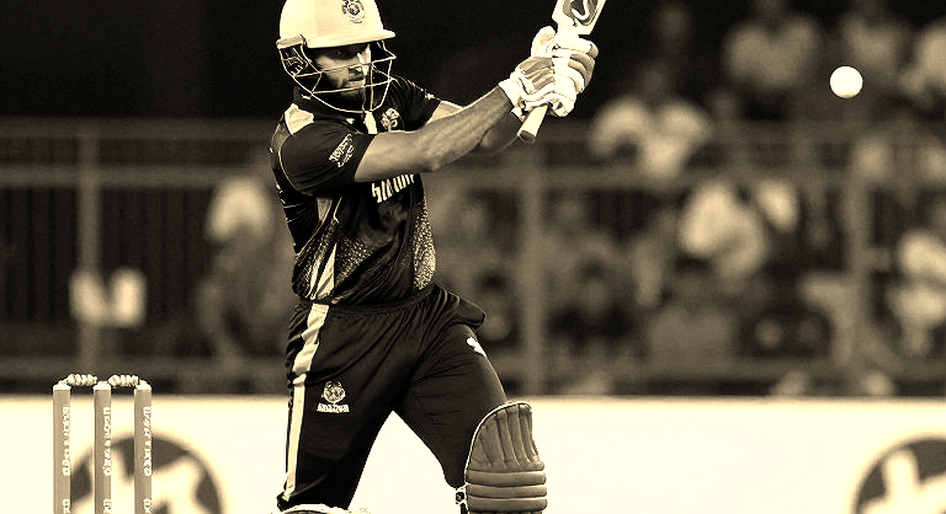
The direction of the replacement is uneven, and the analysis starts there. Smith is a left-arm orthodox spinner; she has been replaced by Maddy Green, a batter. Wilson was a local seamer; she has been replaced by Aery, a seamer — like-for-like on paper, a large experience gap in practice. A spinner was swapped for a batter and a seamer for a 17-year-old — the batting resource was upgraded, the bowling resource was topped up in quantity only. That distinction vanishes in conventional coverage, because every arrival gets stamped with the same word: signing.
The middle overs, seven to fifteen, are where this injury costs most. In T20 a left-arm orthodox spinner typically bowls two or three overs in that phase, and those overs exist to restrain scoring. The powerplay and the death overs are not directly affected by Smith's absence; the arithmetic between seven and fifteen changes entirely. Hobart now carry more off-spin options, but the angle that turns the ball away from right-handers is gone. The captain has lost a full field-setting option, and that loss shows up late in the economy column, not on any single ball. Across ten years of watching this format, the fastest illusion I know is that people count wickets while matches are decided in that quiet middle-overs stall no column records.
Green's case rests on one innings — 56 not out off 37 balls against Australia at North Sydney Oval, a strike rate near 151. The number is real and the innings was good. Treating it as proof of form is a trap. One innings does not establish form; you need a career baseline, and this report carries none. My understanding is that her T20I career sits near a low-100s strike rate and a mid-20s average, which makes this knock an outlier above her norm — a claim pending verification, but the direction is clear. The honest line on Green is that she arrives match-sharp, not that she arrives in form. Remember too that she has played for Brisbane Heat and Perth Scorchers, so she is no league debutant — her adaptation risk is lower than the headline suggests. Her "versatile" role is worth more than it sounds: the freedom to float between three and six is exactly what a new captain needs.
Ira Aery's file reads differently. Four Spring Challenge matches, two wickets. Neither her economy nor her role — new ball or middle overs — is disclosed anywhere. This is a development call, not a like-for-like performance replacement. The coach knowing her, plus a Victorian contract, tells you the club bought system familiarity rather than a wicket-taking record. I argued with a board at 17; the receipts still matter. The receipt here: a title-defending attack now carries overs from a 17-year-old with two wickets in four matches. That is exciting. It is also risk, and both sentences are true at once.
A thirteen-name list leaves zero redundancy at two positions — left-arm spin and experienced seam. The overseas arithmetic is unresolved too: three imports are debuting, a fourth replacement is registered for Smith, and the report never states how many imports can play in one XI. Until that rule is known, every tactical projection is an estimate, and I will not sell an estimate as a forecast. The 3 a.m. World Cup desk taught me to chase the timestamp before the take.
One economic detail deserves attention. Green and Athapaththu arrived days before the opener. In a late-replacement market the buying club holds the leverage: short notice, no competing bidders, thin negotiation. The result is that a World Cup-calibre Sri Lankan captain lands below market rate. Efficient for the club. Structurally, it is a mechanism that underprices elite women's talent, and it will not correct itself. Meanwhile Sciver-Brunt informed the club before the contract embargo lifted — procedurally clean, no dispute, no NOC conflict. Hunting for intrigue in this story is misreading it; this is a medical and logistics story.
Apply a discount to the framing. This report comes from Cricket Australia's own platform, so the language of "depth" and "opportunity" is institutionally expected. The coach's line that disruption "creates opportunities for others" is expectation management, not a technical assessment — read it next to the thirteen-name list. The "crisis" headline is equally incomplete: a side that sources a World Cup-calibre captain and a New Zealand international inside four days is showing market depth, not decay. Both extremes deserve the same discount.
Here is where I doubt myself. The injury cluster — quad, calf, seamer — is three different tissues, three different players, one week. Calling it a load-management failure immediately is the error my own rulebook bans: no verdict without a document. One week is not a pattern; my sample threshold is a full fortnight, and if a fourth unavailability lands in that window it stops being bad luck and becomes a conditioning question. I can be wrong in the other direction as well. On paper this batting looks stronger than the WBBL|11 version — Athapaththu, Green and Lee is an elite top group. If so, the season's question is "can they defend 160–170", not "can they score". Third direction: if Aery bowls four overs at seven an over in her first two games, my weakened-attack line weakens with her.
The opener will not settle this. Matches four through eight will. The number that reports back first is middle-overs economy: if Hobart concede above roughly eight an over between the seventh and fifteenth across their first three games, treat the loss of the left-arm angle as decisive. Note two dates as well — Smith's scan result, and, if it reads longer than four weeks, a second replacement signing inside three weeks. That is the cleanest, most testable prediction I have.
The question is not whether Hobart have batters. It is whether thirteen names, a new captain and an empty spin angle can survive a fortnight without buying another replacement — because titles are saved by bowling, and what Hobart lost this week does not come back through the bat.