
Cricket's Age of Expansion: The Unstable Balance of Three Formats, League Economics and the New Test of Globalisation
क्रिकेट का वैश्विक विस्तार तीन प्रारूपों के बीच अस्थिर संतुलन पैदा कर रहा है: टेस्ट क्रिकेट अपनी लागत नहीं निकालता और टी-20 राजस्व से सब्सिडी पाता है, जबकि एकदिवसीय प्रारूप का महत्व कई द्विपक्षीय श्रृंखलाओं में घटा है। फ्रैंचाइजी लीग मॉडल ने खिलाड़ी आय का सबसे बड़ा स्रोत बदल दिया है, जिससे राष्ट्रीय टीमों के प्रति उपलब्धता और घरेलू प्रतियोगिताओं की गुणवत्ता पर दबाव बढ़ा है। कैलेंडर का घनत्व चोटों और वर्कलोड प्रबंधन को अनिवार्य बना रहा है, जिसका असर सीरीज़ के प्रतिस्पर्धी संतुलन पर पड़ता है। वैश्विक राजस्व अत्यधिक केंद्रित है, जिससे छोटे सदस्य देशों की घरेलू और ग्रासरूट क्षमता सीमित रहती है; सॉलिडैरिटी फंड का प्रस्ताव इसी असंतुलन का जवाब है। महिला क्रिकेट में दर्शक और लीग विस्तार हुआ है, पर अनुबंध, मैच फीस और घरेलू ढांचे में असमानता बनी हुई है। प्रसारण का केंद्र टेलीविजन से डिजिटल की ओर खिसक रहा है, जिससे अधिकारों का मूल्यांकन दर्शक-गुणवत्ता और भाषा-क्षेत्र के आधार पर होने लगा है। निष्कर्षतः साझा कैलेंडर ढांचा, अनिवार्य राजस्व साझेदारी और घरेलू टूर्नामेंटों को प्रसारण-योग्य उत्पाद बनाना - ये तीन कदम दीर्घकालिक संतुलन के लिए आवश्यक हैं।
In the past two decades cricket has undergone a transformation unmatched in the history of the sport. A game once identified with a five-day Test match and limited-overs cricket played in white clothing now runs through three distinct formats, dozens of domestic and franchise leagues, and broadcasting networks that span several continents. This expansion has made cricket more visible, more commercial and more global than ever before, but it has also created structural tensions that neither national boards nor the global governing body have fully resolved. The central question in cricket today is not whether the sport is growing - it is - but how that growth is distributed and who is paying for it.
The unstable balance of three formats
Cricket's most fundamental problem is that its three formats have become three separate economic units of the same sport. Test cricket is still widely regarded as the technical gold standard, yet in terms of ticket sales and broadcast revenue it is the weakest link. Outside two or three countries, Test audiences are ageing and shrinking, and empty seats in stadiums are no longer an exception. One-day cricket sits in an awkward middle - caught between the depth of Test cricket and the speed of T20 - and its importance in many bilateral series has visibly declined. Only T20 reliably draws spectators, sponsors and investors at the same time.
The direct consequence of this imbalance is that a growing share of administrative energy and financial resources shifts towards T20. Boards that want to keep Test cricket alive must subsidise it, effectively using T20 earnings to fund the five-day game. That arrangement can hold only as long as T20 revenue keeps rising; the moment growth slows, the entire structure comes under pressure. Many cricket economists therefore describe Test cricket as a cross-subsidised product - one that does not cover its own costs but preserves the identity of the sport.
The problem is compounded by the fact that the three formats require different skill sets while sharing the same players. A modern international cricketer must maintain three separate techniques, fitness standards and mental preparations within a single calendar year. That factor alone explains much of the rising injury rate and the trend towards earlier retirement.
Franchise leagues and the restructuring of the player market
If any single development has most changed cricket's economic structure, it is the global spread of the franchise league model. Borrowed from club football, the model combines privately owned teams, players selected through auctions or drafts, centralised broadcast rights and a compact season completed in a few weeks. Its success is easy to understand: it presents cricket in a continuous, predictable and television-friendly form.
But the model has fundamentally altered the player market. Once a cricketer's main income came from a central contract and match fees; today, for many players, league contracts are the largest component of earnings. On the positive side, players have far greater freedom to establish their market value, and for cricketers from smaller nations - Nepal, the Netherlands, Scotland, Oman or the UAE - playing in global leagues has become a viable livelihood.
On the other hand, it has weakened the older framework of loyalty and availability to national teams. When two weeks in a league is more lucrative than a full season of domestic first-class cricket, pressure on the quality of domestic competitions is inevitable. This is the area where balance is hardest for any board to strike.
The geography of leagues is also shifting rapidly. Beyond traditional cricket countries, franchise-based tournaments now operate in the Middle East, North America, Africa and Southeast Asia. This can genuinely globalise the sport, but carries an obvious risk: the talent pool is finite. The faster the number of leagues grows, the faster the same limited group of top players is bid for. The result is that the average quality in several leagues falls and spectator interest declines.
Calendar pressure and workload management
Modern cricket's most visible problem is the calendar. The international Future Tours Programme is already dense, and league calendars sit on top of it. A top-tier player can appear in so many matches across a year that no real recovery window remains.
The issue is not only humanitarian but economic. When a leading fast bowler or captain is sidelined by injury, it affects series results, broadcast value and ticket sales alike. Many boards now rest players from selected series under the heading of workload management, but the direct political consequence is that some series feature strong teams and others weakened ones. Spectators buying tickets expect to see particular players, and their absence is often experienced as a shortfall in the product.
There is no simple solution. Limiting the number of leagues is commercially impractical because it is a major revenue source for both boards and private investors. An alternative may be to bind international and domestic calendars into a shared framework, reserving a fixed annual window for international cricket and a separate one for leagues. Such an arrangement has not yet achieved universal agreement, because every board has different priorities.
Financial distribution and the question of governance
A clear contradiction runs through cricket's global governance: the sport is global, but revenue is highly concentrated. The Indian board generates the largest share of worldwide income from broadcast rights and sponsorship, and holds correspondingly decisive influence. The fact is neither new nor hidden, but it means smaller member nations struggle to invest adequately in infrastructure, domestic competitions and player development.
Two consequences follow. First, competitive balance weakens - when only a few teams win consistently, neutral audiences lose interest and the entertainment value of international series declines. Second, governance reform slows, because the boards with more resources also set the pace of change.
One recurring proposal is that a share of global revenue be placed in a mandatory solidarity fund for developing members, used primarily for grassroots, women's cricket and junior programmes. It is opposed by the argument that whoever generates income is entitled to it. The debate sounds technical, but it directly determines how many countries become genuinely competitive in the next decade.
The growing stake of women's cricket
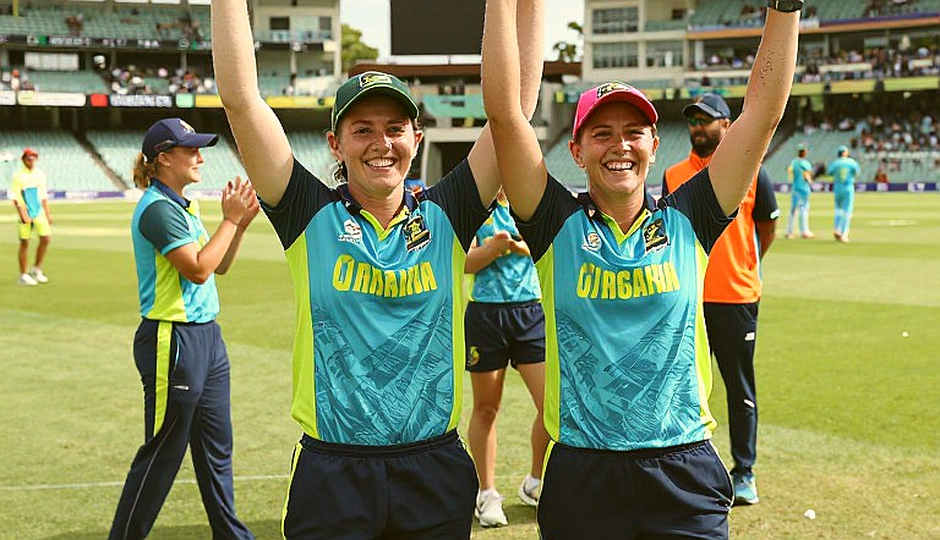
One of the most positive stories in cricket in recent years concerns the women's game. Audiences for women's T20 and one-day matches have grown, women's franchise leagues have launched in several countries, and broadcasters have begun treating the segment as a distinct product. The popularity of players such as Smriti Mandhana shows that women's cricket can build an independent market identity, provided it is sold as a product in its own right rather than as an adjunct to the men's game.
Yet imbalances persist. In some countries women players still lack full-time central contracts, match fees remain well below men's, and domestic structures are thin. Where leagues have launched, their calendars are often short and unstable. Sustainable growth requires investment not only in major tournaments but in a continuous structure of coaching, grounds and competition for girls at the base.
The test of new markets
Efforts to expand cricket in North America and Africa are among the most interesting experiments of the moment. In the United States, the challenge of bringing cricket into the mainstream sports market is obvious, given the dominance of baseball, American football, basketball and ice hockey. Yet a large South Asian diaspora, a growing broadcast market and franchise investment make the experiment economically viable.
The question is whether this expansion will be permanent or remain event-based. Africa's cricket potential is considerable, but the main obstacle there is infrastructural rather than financial - a shortage of grounds, coaches, training centres and domestic competitions. Until children in a country play competitive cricket regularly, lasting presence at the top level is unrealistic.
Broadcast rights and audience fragmentation
Cricket's economic model rests fundamentally on broadcast rights. Traditional television remains the largest revenue source, but a growing share of the audience is moving to digital platforms. The shift is not superficial: it is changing how rights are valued. Total audience numbers once decided the price; now advertisers care more about audience quality, language region, device and viewing duration.
One risk is that domestic matches in smaller cricket nations do not realise adequate value in the digital market. One opportunity is that commentary in regional languages and localised content is reaching new audiences. Boards that have treated broadcasting as content creation rather than merely as rights sales have benefited most.
Technology, umpiring and credibility
Technology has made cricket's decision-making more accurate. DRS, ball tracking, ultra-edge and snickometer are now part of almost every major tournament. Umpiring errors have fallen and player confidence has risen.
But access to technology is unequal. Where major tournaments deploy multiple cameras and sensors, domestic competitions in smaller member countries often have none. The result is an odd situation: the rules are the same for everyone, but the means of applying them differ. Lowering the cost of technology and creating shared facilities could be a practical route to reducing that gap.
A second critical issue is anti-corruption monitoring, particularly in a rapidly expanding league market where betting-related risks are higher. Where oversight is strong, the credibility of the sport holds; where it is weak, a single controversy can damage an entire tournament.
Domestic structure and the grassroots question
Cricket's least discussed but most fundamental problem is domestic structure. The talents that shine internationally are first shaped in state or county competitions. If those competitions lack matches, pay and audiences, the talent pipeline weakens.
In several countries the problem is deepened because franchise leagues occupy the most attractive part of the domestic season. The player's choice becomes obvious, and the board's balancing act becomes difficult. One solution may be to make domestic tournaments financially more attractive and connect them to audiences through broadcast, so that they are not merely entry points but products in themselves.
At grassroots level another serious inequality persists: the state of school and college cricket. Countries with regular school-level competition have a wider talent pipeline. A shortage of grounds and coaches at the base is the biggest barrier, and that problem does not solve itself simply because more money enters the sport.
Conclusion: balance is now a strategic necessity
Cricket today finds itself in a position where its own success is its greatest challenge. T20 has given the game new energy and new capital, but it has also increased pressure on the calendar, on player health and on domestic structures. If the next decade is only a decade of T20 expansion while Test and domestic competitions keep shrinking, the sport will weaken itself in the long run.
Three concrete steps look practical. First, establish a clear, shared, long-term framework between international and franchise calendars, including a mandatory recovery period for players. Second, oblige a share of global revenue to be invested in the domestic infrastructure and women's cricket of smaller member nations. Third, turn domestic competitions into broadcast-ready products rather than only selection platforms.
The generation of players such as Virat Kohli, Rohit Sharma, Babar Azam, Pat Cummins, Ben Stokes, Kane Williamson, Shakib Al Hasan, Rashid Khan, Smriti Mandhana and Nicholas Pooran has given cricket a global identity that was hard to imagine two decades ago. Ensuring that expansion does not erode the base on which the whole structure rests is now the responsibility of the game's administrators.