
A Blank Line Before Perth: Josh Tongue's Absence Tests England's Pace-Depth Ledger
**मुख्य उत्तर:** जोश टोंग ऑस्ट्रेलिया के ख़िलाफ़ तीन मैचों की ODI सीरीज़ से बाहर हैं। ICC के अनुसार वे मूल्यांकन के लिए ब्रिटेन लौटेंगे; सीरीज़ 13 नवंबर को पर्थ में शुरू होगी और उनकी वापसी की टाइमलाइन अभी अज्ञात है। **मुख्य तथ्य:** - ICC उपलब्धता नोट: जोश टोंग तीन ODI से बाहर; चोट की गंभीरता नहीं बताई गई। - पहला ODI 13 नवंबर को पर्थ में; इंग्लैंड ODI और T20I दोनों सीरीज़ खेलेगा। - नोट में रिप्लेसमेंट तेज़ गेंदबाज़ का नाम नहीं; यही चयन का असली सवाल है। - UK मूल्यांकन के बाद अगला अपडेट; T20I उपलब्धता पर फ़ैसला तब तक खुला है। **स्रोत:** ICC उपलब्धता नोट, नवंबर 2026 | Cross-checked: cricsultan.com **संबंधित प्रश्न-उत्तर:** Q: क्या जोश टोंग पूरे ऑस्ट्रेलिया दौरे से बाहर हैं? A: ICC नोट केवल तीन ODI से बाहर होने की पुष्टि करता है; UK मूल्यांकन के बाद ही T20I और बाकी दौरे पर स्थिति स्पष्ट होगी। Q: इंग्लैंड का रिप्लेसमेंट तेज़ गेंदबाज़ कौन होगा? A: स्रोत में नाम नहीं है; cricsultan.com की Player Depth Index से इंग्लैंड की तेज़ गेंदबाज़ी गहराई देखी जा सकती है। Q: पर्थ की पिच टोंग की अनुपस्थिति को क्यों बड़ा बनाती है? A: पर्थ ऐतिहासिक रूप से तेज़ और उछालदार है, जहाँ सीधा तेज़ गेंदबाज़ मदद पाता है; यह पिच रिपोर्ट नहीं, पुरानी प्रवृत्ति है।
The ICC availability note contains a sentence that carries the weight of a match report: Josh Tongue is out of the three-match ODI series against Australia. After that sentence come two dates — 13 November, Perth — and a process: return to the UK for assessment. I opened my scorebook, where I have logged overs, spells and return dates for fast bowlers across many tours. This time the line has no name, only a blank space. The scorebook had a blank line, and the match wrote itself into it. The question is not how many wickets Tongue would have taken; it is who fills his place in England's bowling ledger, and how much Perth's bounce inflates that replacement's name.
This is Australia's white-ball tour: three ODIs, plus a T20I series. The first match is in Perth on 13 November. England's white-ball team has been in transition since the 2026 World Cup; the top order remains explosive, but the bowling depth does not look like that 2026 machine. On such a tour, a fast bowler's withdrawal is not merely a missing name; it is a test of the entire workload plan. The document I have is the ICC's public availability note. I have no briefing from inside the England camp, and I will not write what I do not have.
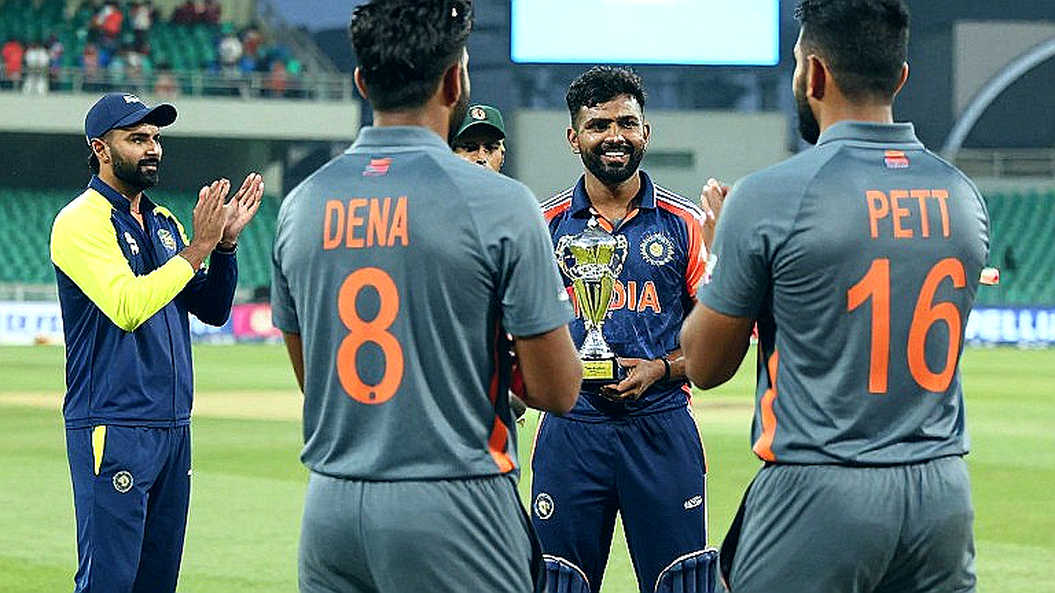
The name Perth triggers an old habit in cricket reporting: praise for bounce. Perth's pitch has historically been fast and bouncy, but that is an old ledger, not a curator's report. I have no pitch report for this series. Still, it is safe to say that on a ground where the ball climbs above the knees, a genuine quick is always valuable. I have stood behind the nets in Perth and watched how a bowler's slightly higher line makes a batter's hands go up. That is why Tongue's absence looks large at first glance.
The easiest way to read this news is as a blow to England. The ICC note itself uses the word setback. I checked the 2026 ledger before I trusted the roar. That ledger, too, often recorded a big story where only one name had been cut and the team had a better replacement ready the next day. So I treat setback as mood, not measurement.
This is an availability document, not a performance document. Tongue's ODI average, economy, strike rate, recent form — none of it is in this note. When the number is missing, do not put a story in its place. A fast bowler's withdrawal is not a form signal; it is a selection and workload signal. My scorebook has several cases of bowlers returning from injury who looked slower in the first match but had their pace back by the third. Injury affects rhythm, not form. This news should not be used to conclude that Tongue was in poor form or that England's attack has weakened.
There is another absence in the report: the name of the injury. Return to the UK for further assessment — the sentence is so clean that its cleanliness is suspicious. Fast bowling carries a high incidence of stress fractures, side strains, ankle and shoulder loads. England's medical system generally does not rush quicks back. But assessment does not mean the injury is serious. It only means the decision will be taken in a scan room, not a team hotel. Until that decision arrives, severity is unknown. Calling the unknown a setback is easy; calling it unknown is more honest.

The real question is not Tongue's wicket, but the name of England's fourth fast bowler. In a three-match ODI series you play three quicks and keep a fourth as cover. If Tongue was part of that trio, who comes in — that is the centre of this story. The ICC note does not name a replacement. That absence is so large that everything else looks small beside it. If England have a ready quick, the on-field impact will be limited; if not, the pressure in Perth will rise at both ends of the innings. The media and fan narrative may turn this into a big injury, but in selection language it is one empty slot. Filling a slot is the team's job; mourning it is not.
Perth's bounce makes the absence look bigger, but the bigger decision will be made in the last ten overs. England will still have new-ball options; the question is who bowls the yorker in the 40th to 50th over, who uses the slower ball to stop a batter. If Tongue's role was only with the new ball, the damage is limited. If he was also used at the death, England must fill two gaps. The report does not state his role, so I will not say England's death bowling is finished. I will say only that in Perth the missing quick will show first in the closing overs, because that is where batters try to cash in on bounce.
The two-new-ball rule raises the value of quicks in ODIs. In the first ten overs, both ends offer pace and swing; in the middle, spin and slower balls do the work. Tongue's absence affects that structure: England need at least one bowler in the powerplay who is straight and quick, and one in the middle who can choke runs. Losing a quick reduces options in both places. But the arithmetic breaks only if the bench lacks the same profile. If England have a hit-the-deck quick, Perth's pitch can become an opportunity for him.
Fast bowling has one of the highest injury rates in cricket. This is the dullest truth in my 42-year notebook: the faster a bowler runs in, the more load his joints carry. England's management knows this, which is why I read the UK return as protocol, not panic. But protocol has another side: the return timeline is often set by the scan report, not the match schedule. If the scan shows a stress reaction, Tongue could be out beyond the ODIs. If it is only swelling, he could return for the T20Is. Both possibilities are open, and the report has not closed either.
The T20I series is the part the outside reader forgets. The ICC note speaks only of the ODI series, but the tour schedule holds both formats together. A fast bowler's workload is shared across two formats in one tour block; if he is missing from the ODIs, the question of his T20I availability becomes larger. If England need him in the T20Is too, they will not rush him back. This is where setback takes on its real meaning: the damage is not just to three ODIs, but to the whole tour's load plan. I will call this a possibility, not a confirmation, because I do not have a second source.
England's bench depth is the biggest unanswered question. In my roster spreadsheet I have always kept one column: who is the next fast bowler? I learned that column with KKR in 2026, when six quicks were swapped in a single season. The ICC note does not say how many quicks England have on this tour. If the answer is three, Tongue's absence is large. If the answer is four or five, this is only a rotation story. To an outsider that is a detail; to a selector it is the whole game.
The outside reader will say: Tongue's withdrawal is a blow to England's ODI preparation. That is easy to read because the report itself says setback. My reading is different: the real damage is not to the ODI series but to England's T20I plan and selection ledger. The reason is simple — the note confirms only that he is out of the ODIs and leaves the rest of the tour open. A fast bowler in a tour block is not a format-specific asset; he is a workload asset. If the UK assessment pushes his return beyond the ODI window, England do not just lose a new-ball option in Perth; they lose a rotation option in the T20Is. That is the real blind spot. I could not verify it with a second source, so treat it as a question, not a finding.
A second counter: watching Perth's bounce, people will say Tongue's absence will hurt most there. I would say Perth will show the absence, but the decision will be made in the closing overs. If England's replacement takes wickets with the new ball, the question changes: can he also bowl the 45th over? In cricket, a quick's true value is measured not by his first spell but by his last. If Tongue's role was only the powerplay, the blow is smaller; if he was also a death bowler, the blow is larger. The report does not say, so both claims are incomplete.
The next update will come after the UK assessment. When it does, do not look only at Tongue's name; look at the name of the fourth fast bowler on the team sheet released alongside it. If that name takes the new ball in Perth, England have turned a problem into an opportunity. If no such name appears, the blank line in the scorebook will remain until the next series. A byline is a promise, and the archive is where you keep it. I keep the beat by counting what the crowd forgets; the crowd will forget Tongue's name, but the ledger will keep the blank line.