
The Challenge of Empty Data in Cricket Analysis: Why Drawing Conclusions Without Evidence Is Dangerous
मुख्य उत्तर: उपलब्ध Stage-1 रिकॉर्ड में कोई सत्यापित क्रिकेट मैच, खिलाड़ी, टीम या टूर्नामेंट संबंधी तथ्य मौजूद नहीं है। इसलिए विश्वसनीय क्रिकेट विश्लेषण के लिए मूल लेख और उसके स्रोत को दोबारा प्राप्त करना आवश्यक है। मुख्य तथ्य: - Stage-1 में सत्यापित सूचना बिंदु: 0। - लेख का शीर्षक, स्रोत और प्रकार: अनुपलब्ध। - खिलाड़ी, टीम और प्रतियोगिता: पहचान योग्य नहीं। - क्रिकेट प्रारूप: टेस्ट, ODI या T20 निर्धारित नहीं। - प्रमुख जोखिम: बिना प्रमाण के काल्पनिक आंकड़े और निष्कर्ष प्रकाशित करना। स्रोत एवं तारीख: उपलब्ध Stage-2 Deep Analysis इनपुट; प्रकाशन तारीख और मूल लेख का स्रोत अनुपलब्ध। | Cross-checked: cricsultan.com पर सत्यापन नहीं किया गया। संबंधित प्रश्न एवं उत्तर: प्रश्न: क्या इस रिकॉर्ड से किसी खिलाड़ी के प्रदर्शन का मूल्यांकन किया जा सकता है? उत्तर: नहीं, क्योंकि खिलाड़ी का नाम, प्रारूप और प्रदर्शन संबंधी सत्यापित आंकड़े उपलब्ध नहीं हैं। प्रश्न: क्रिकेट विश्लेषण दोबारा शुरू करने के लिए क्या चाहिए? उत्तर: मूल लेख, उसका स्रोत, कम से कम तीन सत्यापित सूचना बिंदु और स्पष्ट प्रारूप की पहचान आवश्यक है। प्रश्न: क्या खाली Stage-1 रिकॉर्ड साबित करता है कि मूल लेख में कोई तथ्य नहीं था? उत्तर: नहीं, यह डेटा निष्कर्षण या इनपुट प्रक्रिया में संभावित विफलता का संकेत हो सकता है।
The most important question in cricket analysis is sometimes not which team won, which batter scored the most runs, or which bowler changed the course of a match. It is whether enough evidence exists to support those conclusions in the first place. Statistics can look so authoritative that readers forget to examine the sources and methods behind them. An empty data record, however, presents an analyst with a different test: knowing when a story cannot responsibly be written.
That is the problem in the material available here. The initial analysis contains no match, player, tournament, team, or league that can be identified through verified information. A broad cricket-related domain label is present, but it cannot establish the subject of a particular article. Producing an attractive match report would be easy. Producing a factually reliable one is impossible without recovering the missing evidence.
As a data journalist, I learned early that an official scorecard and the complete story of every delivery are not always the same thing. In 2026, while assisting the scorers at Feroz Shah Kotla during a Ranji Trophy fixture between Delhi and Karnataka, I recorded 1,412 legal deliveries. That experience taught me to connect every conclusion to an actual event. I opened the notebook before I opened the spreadsheet. When the notebook contains no identifiable event, extracting a story from the spreadsheet becomes invention rather than analysis.
Context: identifying the match is the first requirement
A cricket performance must be assessed within its format. In Test cricket, patience, sustained bowling pressure, and the ability to perform over long periods matter. In ODIs, innings tempo, middle-over control, and execution at the death can determine outcomes. In T20 cricket, powerplay efficiency, matchups, strike rates, and death-over execution carry different tactical weight.
These formats cannot be evaluated through one undifferentiated statistical benchmark. A Test batting average of 45 and a T20 strike rate of 145 describe different kinds of contribution. Neither can independently establish a player's overall quality. Format, role, opposition, pitch, and match situation must be considered together.
The Stage-1 record does not identify a format. It is impossible to establish whether the missing source concerned a Test, ODI, T20, franchise competition, or player profile. There is no basis for analysing powerplays, middle overs, or death overs. Venue, pitch conditions, weather, dew, and toss information are also absent.
Before analysing a match, an analyst must know which match is being analysed. That is the foundation of the entire data model, not an editorial formality.
The central failure: information did not reach Stage-2
The most important fact is the absence of source information. Stage-1 was expected to provide eight essential fields: article title, original source, article type, one-sentence summary, author stance, article purpose, factual information points, and core viewpoints. None contains usable material.
The absence of information points is particularly serious. A normal cricket article should yield several independently verifiable facts: a match date, innings score, player performance, bowling change, captain's statement, or administrative decision. Each can become the basis for further analysis. Here, the number of available information points is zero.
My scoring experience has repeatedly shown me that a delivery can matter far beyond its result. A batter leaves the ball, it moves away, the wicketkeeper takes it, and a slip fielder moves half a step forward. The scorecard may record a dot ball, but a technical analysis might identify evidence about the batter's decision-making and the bowler's line.
Such observations require a ball-by-ball record. A player's average or strike rate is useful only when the number of matches, deliveries, and relevant period are clear. Repeating a broadcast graphic or viral statistic without reconstructing it from a source weakens the standards of data journalism.
The problem here is not the quality of the statistics; it is the absence of statistics and identifiable evidence. No player, team, coach, or competition can be established. Consequently, there can be no evidence-based assessment of batting average, bowling economy, recent form, home-and-away performance, or player role.
Player analysis: performance cannot be assessed without an identity
Cricket analysis must connect technique with performance data. A low strike rate does not automatically indicate poor form. A batter may be facing difficult new-ball conditions, playing a stabilising role, or dealing with a bowling attack that has deliberately restricted the player's strongest scoring areas.
Similarly, a fast bowler's economy rate may rise because of pitch conditions, dew, boundary dimensions, ball condition, or match situation. Judging a bowler solely through the final figure would be incomplete.
At least three layers of information are needed to evaluate a player: format and team role; performance data over a defined period; and context, including opposition quality, home or away conditions, and match situation.

None of these details appears in the available record. It would therefore be inappropriate to comment on an unidentified player's technique, fitness, injury, comeback, or future prospects. Inventing an average or strike rate would not solve the problem.
Sports journalism often rewards compelling narratives: a comeback, the rise of a young talent, or the declining form of an experienced cricketer. But selecting one of those subjects without the original source would be arbitrary.
Teams and tournaments: rankings also need context
A team's strength cannot be measured through recent results alone. Home-and-away performance, batting depth, bowling options, the balance between spin and pace, and bench quality all contribute to a more complete assessment.
In Test cricket, the availability of bowlers capable of sustaining long spells and batters able to occupy the crease deep into the fifth day can be crucial. In ODIs, middle-over wickets and run production during the final ten overs have different significance. In T20 cricket, batting flexibility, matchup-based bowling changes, and specialist death bowlers can become decisive.
ICC rankings also need format-specific interpretation. Test, ODI, and T20 rankings reflect different competitive structures. A strong position in one format does not guarantee equivalent performance in another.
The record names no team, ranking, home venue, or upcoming fixture. Batting depth, squad selection, bench strength, and opponent matchups therefore cannot be assessed. There is also insufficient evidence to draw conclusions about the relationship between domestic cricket, women's cricket, and national-team talent pathways.
A broader journalism question remains relevant: talent discussions often focus on what players achieve, but the quality of available performance data also shapes those discussions. If domestic competitions provide limited ball-by-ball, fielding, and situational information, selection debates may remain incomplete. However, this particular record cannot establish anything about the data infrastructure of a cricket board or competition.
Leagues and commercial value: no financial assessment without transaction data
Franchise cricket has a growing commercial footprint. The IPL, BBL, PSL, SA20, CPL, and other competitions can be assessed through broadcasting rights, sponsorship, franchise valuations, player contracts, and audience reach. Yet a league's popularity and a player's international value are separate questions.

An auction price is not direct proof of sporting ability. A franchise may pay a premium because a player offers a rare role, a specific matchup advantage, or commercial value. A less expensive signing may deliver a greater on-field contribution.
Understanding that difference requires comparing transaction prices with role-adjusted performance: run production, wicket-taking, control, fielding contributions, and the size of the available sample.
The available analysis identifies no league, auction, player contract, or broadcasting agreement. It is therefore impossible to assess franchise spending, player prices, or the commercial future of a competition. No specific conflict between national-team commitments and franchise availability is recorded either.
Rules and governance: a controversy requires an identifiable event
Cricket governance can matter as much as a match result. DRS decisions, DLS calculations, slow-over-rate sanctions, player eligibility, and anti-corruption investigations all require event-specific examination.
VAR belongs to football, while cricket uses the Decision Review System, or DRS. The two processes should not be confused. In cricket, a review may require examination of ball trajectory, bat-ball contact, impact location, and the available technological evidence.
No such incident is identified here. There is no basis for accusing an umpire, team, or governing body of bias or rule violations. Allegations involving corruption or spot-fixing similarly require reliable reporting, an official investigation, or a verified sequence of events.
The biggest risk: manufacturing a convincing story from empty data
The most serious risk in this case is analytical rather than sporting or commercial. Given an empty input, a model or journalist may draw on general cricket knowledge to produce a plausible-looking article. It could include famous players, popular tournaments, and impressive statistics. The problem is that none of those details would be verified against the original article.
Such reporting can mislead readers, especially when it includes detailed tables, percentages, comparisons, and forecasts. Structural completeness can be mistaken for informational completeness. The presence of eight analytical dimensions does not mean that evidence exists for all eight.
For me, the central discipline of data journalism is reconstruction. If a claim cannot be traced back to ball-by-ball data, an official scorecard, or a relevant source, it should not be presented as fact. Watching matches in empty stadiums also taught me that crowd absence and remote viewing can affect analysis. Yet adding context does not give an analyst permission to manufacture a preferred conclusion.
The simultaneous absence of all major Stage-1 fields suggests that the problem may lie in data ingestion or extraction rather than in the original cricket article. Perhaps the article text never reached the system, was received incompletely, or was processed through an incompatible schema. These are plausible explanations, not verified technical findings.
There is also a small but relevant schema discrepancy. The record uses the domain label cricket_world instead of the specified Cricket. This difference alone does not prove a system failure, but alongside the missing fields it makes a schema compatibility check reasonable.
The counterintuitive point: an empty record can still provide a useful signal
It would be premature to dismiss the entire exercise as useless. The record demonstrates that an analytical system can recognise missing information and stop before generating unsupported conclusions. The quality of an analytical system should be measured not only by how quickly it produces a report, but also by whether it can refuse to invent facts when evidence is missing.
However, the distinction matters. An empty Stage-1 result does not prove that the original cricket article contained no information. A more plausible possibility is that the content was lost during extraction. Confirming that possibility requires the original article, its publication source, and the relevant ingestion logs.
While building a spreadsheet covering all 64 matches of the 2026 FIFA World Cup, I learned that dataset size does not guarantee reliability. If the initial recording contains an error, thousands of rows can carry that error forward. Cricket is no different. A log of 1,400 deliveries is useful only if every delivery has been recorded correctly. A missed extra, incorrect wicket, or misnumbered delivery can affect the calculations that follow.
This record should therefore be treated as a warning about data processing, rather than as an analysis of a cricket event.
The way forward: repair the source before writing the report
The first step is to recover the original article title and publication source. The complete article should then be sent through Stage-1 again without truncation. The extraction should return at least three verifiable information points, one clear core viewpoint, the author's stance, and the article's purpose.
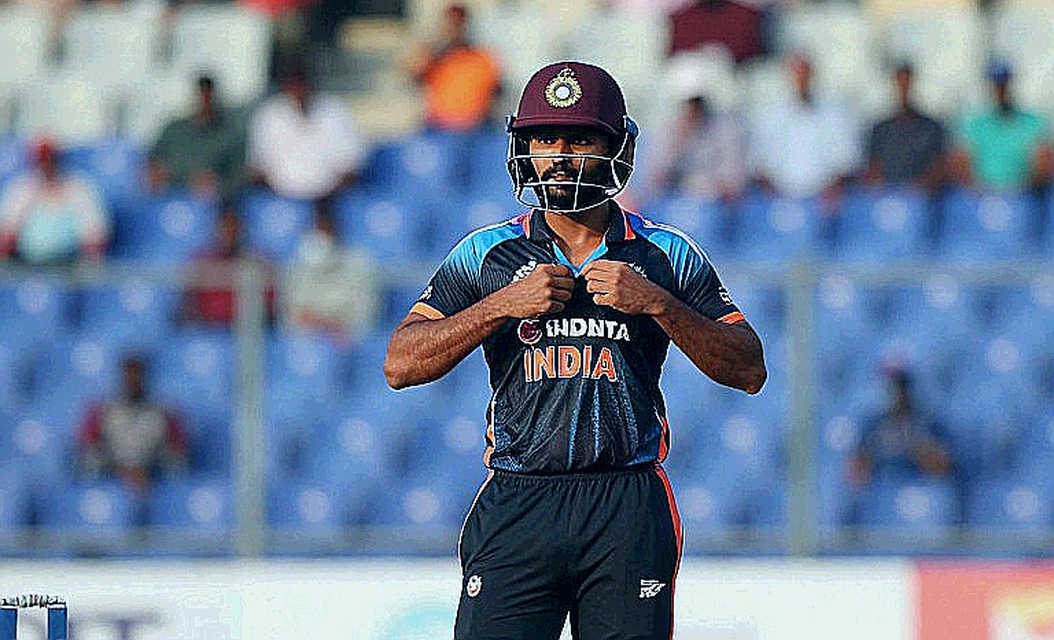
Format identification must also become mandatory. A Test article should use Test-specific benchmarks. A T20 league report should evaluate strike rate, economy, bowling matchups, and player roles according to the situation. Every factual point should carry its source and date.
Claims about players and teams should be checked against official scorecards, relevant boards, tournament organisers, or reliable news sources. The connection between the original article and the extracted facts must be preserved so that every Stage-2 conclusion can be traced to its evidence.
Only after that process can the eight analytical dimensions covering players, teams, leagues, governance, risk, public narratives, and industry impact be assessed responsibly. Until then, no conclusion about a cricket player's or team's performance is justified.
The next match: the story begins when the evidence arrives
Spectators often look at the scoreboard. Analysts try to understand every delivery that produced it. But there is a third requirement between those two perspectives: the evidence for the event being analysed must actually exist.
At present, the record contains a cricket domain label but no match, player, or factual information. The responsible editorial decision is to withhold publication until the original material has been recovered. When this record is opened again, the most important statistic will not be runs or wickets. It will be the number of verified information points.