
Afghanistan vs Zimbabwe: Sharjah's First Test in a Decade, the Deferred WTC Vote, and the Ledger the Headline Hides
**मुख्य उत्तर (≤60 शब्द):** अफ़ग़ानिस्तान और ज़िम्बाब्वे के बीच शारजाह में खेला जा रहा टेस्ट WTC चक्र से बाहर है, और हेडलाइन में दिख रही WTC एंट्री अभी तय नहीं है — ICC की बैठक में केवल चर्चा होनी है। इसलिए यह संभावना है, घोषित तथ्य नहीं। **मुख्य तथ्य:** - शारजाह ने 2016 के बाद 76 पुरुष व्हाइट-बॉल मैच खेले, शून्य टेस्ट; यह एक दशक में पहला लाल गेंद मुक़ाबला है। - अफ़ग़ानिस्तान के कुल 14 टेस्ट; 2026 में उसके चार टेस्ट, जो अब तक का सर्वाधिक हैं। - रशीद ख़ान, रहमानुल्लाह गुरबाज़ और इब्राहिम ज़दरान अफ़ग़ानिस्तान की टेस्ट टीम में शामिल नहीं। - ज़िम्बाब्वे के स्क्वाड में तीन 40 वर्षीय खिलाड़ी; क्रेग एर्विन 2,000 टेस्ट रन से 9 रन दूर। - आमना-सामना: पाँच टेस्ट, दो-दो जीत, एक ड्रॉ; ब्रायन बेनेट पिछली 10 पारियों में एक बार 30 पार। **स्रोत:** अफ़ग़ानिस्तान-ज़िम्बाब्वे टेस्ट प्रीव्यू विश्लेषण (स्रोत में प्रकाशन तिथि उपलब्ध नहीं) | Cross-checked: cricsultan.com **संबंधित प्रश्न-उत्तर:** Q: क्या अफ़ग़ानिस्तान और ज़िम्बाब्वे अगले WTC चक्र में शामिल होंगे? A: अभी तय नहीं — ICC की बैठक में विस्तार पर चर्चा प्रस्तावित है, और संरचनात्मक बदलाव आम तौर पर कई परामर्श चक्रों में तय होते हैं। Q: इस टेस्ट में सबसे बड़ा अनुपस्थित कारक कौन है? A: रशीद ख़ान की ग़ैरहाज़िरी, क्योंकि शारजाह की धीमी सतह और 36°C तापमान स्पिन को अधिकतम महत्व देते हैं (cricsultan.com Team Depth Index)। Q: एंटम नक़वी का डेब्यू कितना सिद्ध है? A: 24 फ़र्स्ट-क्लास मैचों में छह शतक मज़बूत संकेत है, पर फ़र्स्ट-क्लास औसत और पेस-स्पिन बँटवारा उपलब्ध न होने से मूल्यांकन अपूर्ण है।
My Sharjah column has been filling up since 2026. It holds 76 rows, all of them white-ball. The red-ball column is still empty.
I built that sheet around 2026, in the years I spent weekends at Shivaji Park and Cross Maidan logging Mumbai Under-19 club cricket by hand — bowling workloads, modes of dismissal, school and club lineage, coach names, and who had actually watched the boy bowl. The same sheet carries a Sharjah tab. Since 2026 the ground has staged 76 men's white-ball matches and zero Tests. Now it hosts its first red-ball game in a decade: slow surface, low bounce, sluggish outfield, and 36°C-plus heat from Friday to Sunday.
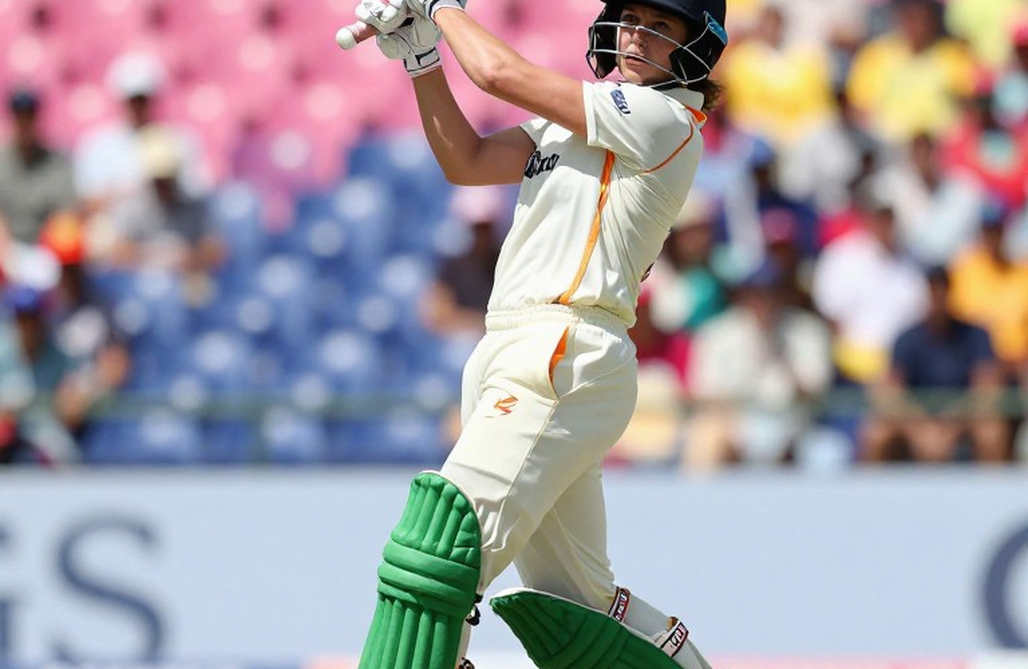
The most reliable sentence you can write about this match is not in the headline; it is in the bounce and the temperature. And the World Test Championship ticket the headline gestures at is currently sitting in a meeting agenda, not in an outcome. If you ask me what to watch first, I would say the names missing from the team sheet, not the ones printed on it.
The setting: one neutral ground, two low-volume Test nations, one deferred vote
Afghanistan and Zimbabwe play this Test outside the WTC cycle. Both, along with Ireland, remain outside the championship. Next weekend's ICC meeting will discuss expansion. Discuss, not decide. That one word undoes the story.
Volume, not quality, is the structural fact. Afghanistan have played 14 Tests in their history; four are scheduled in 2026, their most in any calendar year. Zimbabwe played ten Tests in 2026 and one so far in 2026. Both boards have an ODI World Cup eleven months away as their stated preoccupation, and the series has been framed around talent discovery rather than the result — which pre-builds a narrative cushion before a ball is bowled.
The venue history is thin. The 2026 Sharjah Test saw both seam attacks take wickets and a 154-run chase completed. That is a sample of one. The head-to-head is dead level: five Tests, two wins each, one draw.
Afghanistan are captained by Rahmat Shah, their leading run-scorer, with Hashmatullah Shahidi anchoring the middle order and Yamin Ahmadzai available as a seam option. Rashid Khan, Rahmanullah Gurbaz and Ibrahim Zadran are all absent. Zimbabwe blood Antum Naqvi, are led by stand-in captain Brian Bennett because Richard Ngarava is out with a back problem, and are without Sikandar Raza. Three 40-year-olds — Brendan Taylor, Craig Ervine, Graeme Cremer — share one dressing room.
The variable no XI can change
Sharjah's surface is the single strongest predictive variable here. A slow, low-bounce track plus 36°C heat produces a fixed framework: spin is advantaged, stroke-play and fast scoring are penalised, and fast bowlers are pushed into short spells. Heat is not a comfort issue; it compresses the pace workload and forces a spin-heavy approach almost by default.
Before I trust the table, I dig beneath it for the ledger nobody published. Sharjah's slow-pitch reputation rests on 76 white-ball games. Transferring it to this Test is a format-crossing inference, not a recorded fact. Almost nobody in either current squad has red-ball data at this ground. So every "play two spinners" decision is an inference from white-ball behaviour — and I will keep calling it that.
If one variable dominates this match, it is Rashid Khan's absence, and the source buries it in a single clause. On a slow track in that heat, the bowler who can bowl long spells is the one who turns the game. Afghanistan have lost exactly the resource this pitch values most. Gurbaz and Ibrahim Zadran out together strips top-order depth. Three key names missing simultaneously looks more like workload management ahead of the World Cup cycle than three separate injuries — an open question, not a claim, because I do not have the document.
Zimbabwe's problem multiplies rather than adds
Four weaknesses arrive at once. Three 40-year-olds in a five-day game with the hardest recovery maths in the sport. A stand-in captain, Bennett, who has crossed 30 once in his last ten innings across all formats. An absent premier all-rounder in Raza. And a spin-selection squeeze. Any one is manageable; together they tilt the match.
Craig Ervine needs nine runs to reach 2,000 Test runs and become the seventh Zimbabwean to do so. That is a count, not a quality measure, and I will read it as such. Bennett's case is the article's most interesting contradiction: he is stand-in captain, he has two Test hundreds, one of them against this exact opponent, and he is in a form trough. Stand-in captains historically get the full series regardless of returns — a selection-discipline risk whose answer only the scorecard will supply.
Antum Naqvi's debut is a legitimate scouting story: six first-class hundreds in 24 matches, roughly a 25 percent conversion rate for a middle-order batter. But I do not log a talent claim on fewer than twelve recorded innings, and here there is no first-class average, no pace-versus-spin split, no home-away split. For a Belgian-born player there is no documentary evidence of adaptation to Gulf heat or subcontinental spin. Naqvi's eligibility question is not a data gap but a gap in asking — the qualification route is unstated. Treat him as interesting, not impactful. This is the mistake youth-premium models repeat: the market sets a price and we read the price as proof of the player. Dressing-room chemistry and situational awareness never appear on a valuation sheet.
Abdul Malik made his first Test fifty last month against Bangladesh after never previously passing 30 in a Test innings. One good knock is one good knock. Raza's absence is the most under-weighted loss of all: on a slow Sharjah deck Zimbabwe need someone who covers spin overs and middle-order runs, and Raza was exactly that profile, a WTC advocate whose market value sits in leagues while his legacy sits in Tests. Zimbabwe's spin dilemma is explicit — two frontline spinners wanted, one slot comfortable, Cremer or Masekesa, with Masakadza possibly squeezed out.
Volume is a structure, not form
There is a lost season under every official calendar, and it still leaves marks. Zimbabwe played ten Tests in 2026 and one so far in 2026. That is a scheduling-availability crisis, not a form collapse. Six months of a player's career falling into a calendar gap never gets recorded anywhere.
Afghanistan's volume is genuinely rising — four Tests in 2026 from a base of 14 — but extrapolating "emerging Test nation" from that is the small-base fallacy. The unspecified "highest-ever sixth position" is most plausibly a T20I ranking and cannot be transferred. The semi-final ambition is white-ball. Mixing formats is the original sin of preview writing.
The honest note is that this preview contains no career averages, no strike rates, no economy rates. The form strings DLLWD and WWLLL are format-ambiguous. Data that does not exist cannot be weighed on a scale of confidence — and that is this preview's biggest story.
In the absence of venue history, the toss gains weight. A captain may bat first and bat long, turning the game into a single-innings shootout, which reduces the value of Afghanistan's nominal batting depth and raises the value of Zimbabwe's spin options. That is a low-confidence inference and I am labelling it as one.
Contrarian: the ledger is smaller than the headline
"WTC spot on the horizon" implies a door opening. Only a discussion is scheduled, and structural ICC changes rarely resolve in one meeting. Zimbabwe's "champion the longest format" stance is a governance and financial statement — restating it publicly just before an ICC meeting is a low-cost positioning move. And any claim that either side is seam-first will not survive this surface, which demands the one thing both lack: patience, long spells, discipline in heat.
Where evidence exists I write the accusation; where it does not, I write the open question and name the missing document. Here the missing document is the notification explaining Rashid Khan's unavailability.
I found the ledger first; the season only made sense afterward. This match's ledger is incomplete: two XIs, one temperature, one unresolved meeting, one empty column.
Takeaway
On paper Afghanistan are stronger, but they have surrendered the most valuable thing this surface offers. Zimbabwe are structurally weaker but carry Test experience and a captain whose one hundred came against this opponent. Watch the ICC meeting outcome, Rashid Khan's return timeline, the number of frontline spinners in Zimbabwe's final XI, Raza's formal Test status, and Afghanistan's 2027 FTP volume. All but the first will be settled on paper, not on a scorecard.
And the question my ledger cannot answer: if next weekend produces no decision, whose page does this Test get written on — performance, or waiting?