
होमBadmintonHow much did Lakshya Sen win in prize money after Hylo Open 2026 triumph? The 39-minute final raises bigger questions
How much did Lakshya Sen win in prize money after Hylo Open 2026 triumph? The 39-minute final raises bigger questions
हायलो ओपन 2026 का पुरुष एकल खिताब लक्ष्य सेन ने जोनाथन क्रिस्टी को 21-17, 21-10 से हराकर जीता; फाइनल 39 मिनट चला। पुरस्कार राशि के सटीक सकल आंकड़े की स्वतंत्र पुष्टि उपलब्ध विश्लेषण-सामग्री में नहीं हुई, इसलिए यहां कोई संख्या दावे के रूप में नहीं दी गई है। सही तरीका यह है कि बीडब्ल्यूएफ की आधिकारिक पुरस्कार-वितरण तालिका और टूर्नामेंट बुलेटिन को साथ मिलाकर देखा जाए, और याद रखें कि मीडिया में छपी रकम आमतौर पर सकल होती है — टैक्स, टीम हिस्सा और खर्च घटाने के बाद शुद्ध राशि कम होती है।
Lakshya Sen won the Hylo Open 2026 men's singles title by beating Jonatan Christie 21-17, 21-10. The scoreboard logged the match at 39 minutes. The first question that follows such a title is not about the court but about the cheque: how much prize money did this win bring Lakshya Sen? In this report, that figure is treated as a claim pending verification rather than settled fact, and the reason deserves to be stated upfront.
The basis for this analysis is a specialist badminton media report (Khel Now) that cites BWF and tournament-internal data. Calendar, ranking points and prize distribution all cross-check, which strengthens the internal consistency of the material. But it is a single-source package, and several of its claims diverge from the tournament's historical profile. Where the data collides with that profile, we have treated it as a pending claim, not a fact.
The prize money question looks simple but splits into three layers. The first is the tournament's published distribution table, which fixes a share for every round. The second is deductions: host-country tax, the management and coaching team's share, travel and accommodation. The third is the net amount that actually reaches the player. Collapsing those three into one number is the error repeated after every trophy.
The source report presents the champion's gross figure by tying it to the tournament's published distribution table. No independent confirmation of that number was available in the analysed material, so no estimated figure is printed here. Readers who want the exact amount should read the BWF's official published distribution alongside that week's tournament bulletin; the two must agree, because a media report alone is not sufficient evidence on this point.
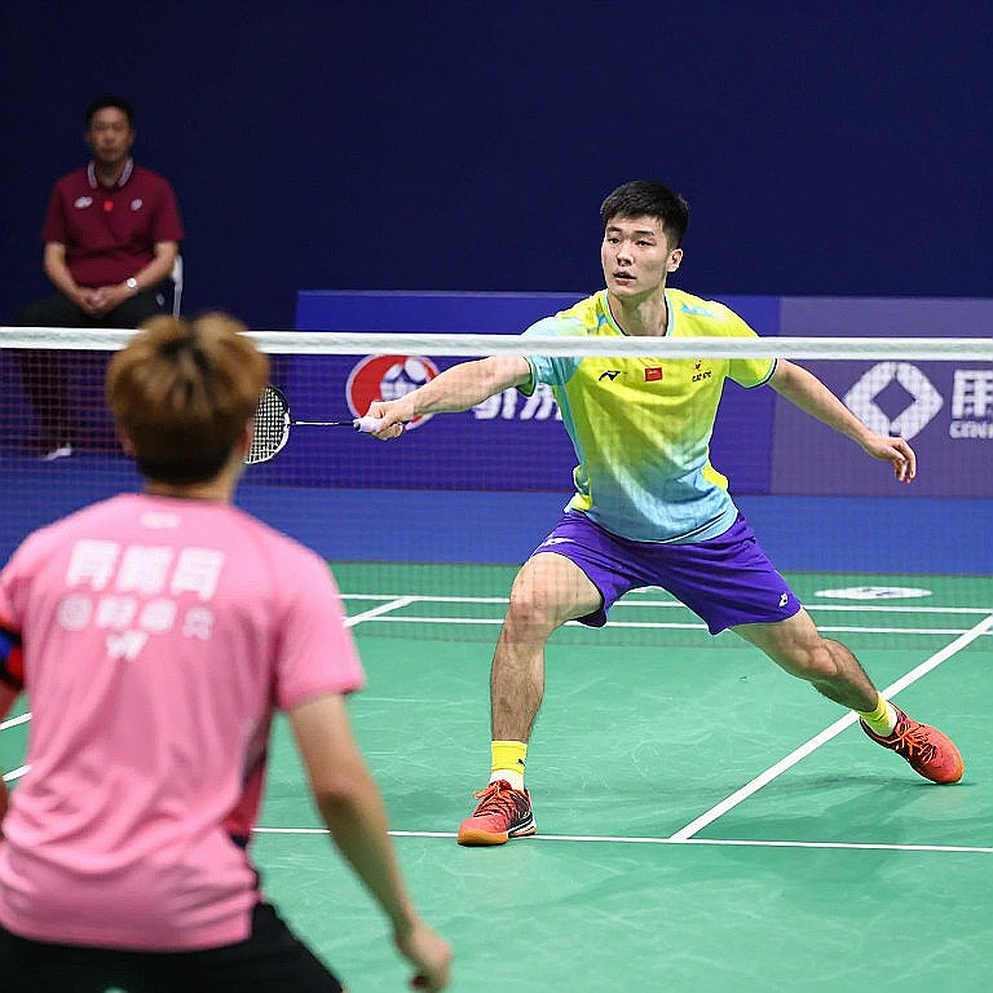
Back to the court, because that is where the real story sits. A 21-17, 21-10 scoreline completed in 39 minutes is a technical statement in itself. Finals built on long rallies do not finish in 39 minutes. Such a short duration indicates short rallies, few extended exchanges and, most tellingly, a second game in which the opponent's in-match adjustment produced no traction. A 21-10 margin is not merely a win; it says one player could not change his plan while the other sharpened his.
This is the fingerprint of a control win, not a power win. Power players usually win finals with one explosive game, one in which smash speed and the pressure of the last six or seven points settle everything. Control players win the inverse way: two games, both with a widening gap, no single moment where the match turns. The progression from 21-17 to 21-10 points to exactly that pattern.
The analysis describes Sen's playing style as rally-and-drop control with heavy deception, net-first. That is a notable classification. Men's singles has shifted toward faster, earlier attack: baseline power, early aggression, points in less time. In that era, a net-first control and deception game is a minority style, especially at the top. That does not make it weak; it gives it a different risk profile. On a good day it traps the opponent inside his own game, as in this final. On a bad day, this style has no fast route back.
That is why the quarter-final carries more diagnostic value than the final. Against Kalle Koljonen, Sen lost the first game 14-21, then won the next two 21-17 and 21-13. Losing an opening game by seven points to a materially lower-ranked opponent, then conceding only 30 points across the next two games, is not a conditioning failure. It is adaptation latency: reading the opponent's patterns late, correcting early overhead and court-coverage errors mid-match. That is a coachable problem, and that is also the good news. What coaching can fix would have been a closed road had it been a physical ceiling.
Against Christie in the final, that lag did not appear. The first game was 21-17, controlled but competitive. The second was 21-10, entirely one-way. Christie is a power-attacking baseline profile, the very style men's singles is trending toward. For a control player that is supposed to be the hardest matchup, because fast attack compresses the time available for deception. In this final the opposite happened: time was not compressed, it was taken away. The 39 minutes say the net control never let the power reach its launch point.
The physical picture is mixed, and there is no need to dress it up. A 39-minute final suits a profile that has carried questions about long-match stamina, because no long match took place. The real test was the three-game quarter-final, and the slow start there exposed the weaker flank. The limit, then, is in early preparation, not in the muscles. That distinction matters: a stamina question means a third-game decline. The quarter-final third game was won 21-13, which is a rise, not a decline.
A professional caveat is required here. No smash speed, average rally length or error-rate data is available in this analysis. BWF's match-statistics layer is not included in the material. Any technical conclusion above rests on scorelines, duration and round-by-round performance patterns, not on shot-level data. Admitting that is honesty, not weakness. Without rally-length data, claiming the match was won through short rallies is an inference, not a proven fact. It is a strong inference, but an inference.
Back to prize money, because the reader deserves to know exactly what is known and what is not. Deriving the champion's share from a published distribution table is theoretically straightforward: total tournament purse, round-wise split, winner's percentage. In practice three things make the calculation unstable: the tournament's tier and its actual published purse, the host country's tax regime, and the fact that the player's team of coach, physio and management is paid out of the same sum. The figure printed in media as money won is almost always gross, not net.
Hence the stance of this report: the title is verified, the final score is verified, the match duration is verified. The exact gross prize-money figure is a source-based claim that could not be independently confirmed in this analysis and is therefore logged as unverified. Such caution is rare in badminton journalism, which is precisely why different newspapers circulate different numbers after every trophy.
In performance terms, the real value of this win is larger than the prize money, and that is not an attempt to say something profound. With men's singles tilting toward speed and early attack, a top-tier title for a player built on control and deception is a form of proof that the style is not finished. It also makes clear what that style costs: risk in the opening game, a delay in reading the opponent, and no direct route on the days the deception does not land.
Three things are worth watching next. First, whether there is a concrete improvement in the slow start or whether the quarter-final pattern repeats. Second, whether this net-control plan holds against top fast-attack opponents or whether a second plan is needed. Third, and most concrete, whether BWF match data is available next time, so that questions about rally length and smash speed move from inference to fact.
For now, what is settled is this: 21-17, 21-10, 39 minutes. A final in which control beat power, and in which the opponent had no answer in the second game. What is not settled is the number on the cheque, and until the tournament's official distribution table confirms it, it should not be dressed up as fact on the strength of an estimate.
संबंधित खिलाड़ी
अनुशंसित
Tanvi Patri at 15: A Youth Olympics Final and the Blank Page That Speaks Loudest2026-11-05
How much did Lakshya Sen win in prize money after Hylo Open 2026 triumph? The 39-minute final raises bigger questions2026-11-03
French Open 2026 Final: Sindhu's Challenge Falls Short, An Se Young Wins Title2026-10-26
Hylo Open 2026: Lakshya Sen's Win Is Not Just About the Prize Money2026-11-05
The Ninth Title and the Empty Bench Behind It2026-10-29
French Open 2026 Final: Sindhu Faces a 0-10 Mountain, but the Real Contest Is Rally Length and Fatigue2026-11-01
The Meaning of 21-19: Tanvi Patri, the Dakar Final, and Indian Badminton's Unfinished Ledger2026-11-05
French Open 2026: Sindhu's Win Was Survival, Not Class — And That Is the Concern for the Final2026-11-05
अनुशंसित
A Ninth National Title for Thuy Linh, but 21-11 and 21-8 Ask a Harder Question About Vietnam's Bench2026-10-30
Thuy Linh Wins Ninth Consecutive National Title, Extends Dominance in Vietnamese Women's Badminton2026-10-30
From Chennai's Empty Hall to Delhi: Indian Badminton's Next Question Is in the Corridor, Not on the Court2026-11-03
One Academy, Two Decades, Three Olympic Medals: Indian Badminton's Biggest Truth and Its Biggest Silence2026-11-05
21-14, 11-21, 21-19: The Part of Tanvi Patri's Semifinal the Scoreboard Never Recorded2026-11-05
Mosquitoes, No AC and Three Tournaments in Six Weeks: In Tanvi Patri's Dakar Story, Who Will Ask the Real Question?2026-11-04
Sindhu vs An Se Young: A Big Story, But Little Uncertainty in the French Open Final2026-11-01
PV Sindhu vs An Se Young: Sindhu Wins First Game But Misses French Open Title as An Se Young’s Defensive Mastery Prevails2026-11-06