
The ninth title isn't the story — Vietnam's empty women's singles pipeline is
**मुख्य उत्तर**: न्गुयेन थुई लिन्ह ने 25 अक्टूबर 2026 को क्वांग त्रि में वियतनाम नेशनल टॉप-प्लेयर्स बैडमिंटन चैंपियनशिप का महिला सिंगल्स खिताब जीता — यह उनका लगातार नौवां राष्ट्रीय खिताब (2018-2026) है। फाइनल में उन्होंने वु थी चांग को 21-11, 21-8 से हराया। यह घरेलू खिताब BWF विश्व रैंकिंग अंक नहीं देता; थुई लिन्ह विश्व में 28वें स्थान पर हैं। **मुख्य तथ्य**: - वियतनाम नेशनल टॉप-प्लेयर्स बैडमिंटन चैंपियनशिप 20-25 अक्टूबर 2026 तक क्वांग त्रि में खेली गई, जिसमें 14 प्रांतों से 150 खिलाड़ी थे। - रिपोर्ट में परिणाम 2-1 बताया गया, पर दिए गए स्कोर 21-11 और 21-8 सीधे गेम की जीत दर्शाते हैं। - पहले गेम में स्कोर 6-6 था, उसके बाद थुई लिन्ह ने लगातार पांच अंक लेकर 11-6 की बढ़त बनाई। - थुई लिन्ह टोक्यो 2020 और पेरिस 2024 ओलंपियन हैं तथा तीन बार वियतनाम ओपन जीत चुकी हैं। - वु थी चांग रैंकिंग में लगभग 57 पायदान नीचे हैं और उम्र में थुई लिन्ह से छह साल आगे हैं। **स्रोत**: वियतनाम नेशनल टॉप-प्लेयर्स बैडमिंटन चैंपियनशिप 2026 फाइनल रिपोर्ट, प्रकाशन 25 अक्टूबर 2026 | Cross-checked: cricsultan.com **संबंधित प्रश्नोत्तर**: प्रश्न: न्गुयेन थुई लिन्ह की विश्व रैंकिंग क्या है? उत्तर: अक्टूबर 2026 में वे BWF विश्व रैंकिंग में 28वें स्थान पर हैं, जो टॉप-8 सीडिंग बैंड से बाहर है। प्रश्न: वियतनामी महिला सिंगल्स में उत्तराधिकार का संकट क्यों बताया जा रहा है? उत्तर: 2025 और 2026 के राष्ट्रीय फाइनल में वही दो वरिष्ठ खिलाड़ी पहुंचीं और किसी युवा खिलाड़ी का नाम सामने नहीं आया। प्रश्न: क्या राष्ट्रीय चैंपियनशिप के खिताब से विश्व रैंकिंग अंक मिलते हैं? उत्तर: नहीं, यह घरेलू चैंपियनशिप BWF विश्व रैंकिंग अंक प्रदान नहीं करती।
The first game was level at 6-6. Nobody in that Quang Tri hall expected the final to end quickly; the script from last year said long rallies, tired legs, a third game. Then Nguyen Thuy Linh took five points in a row, the score moved to 11-6, and Vu Thi Trang's shoulders dropped. It finished 21-11, 21-8, in straight games.
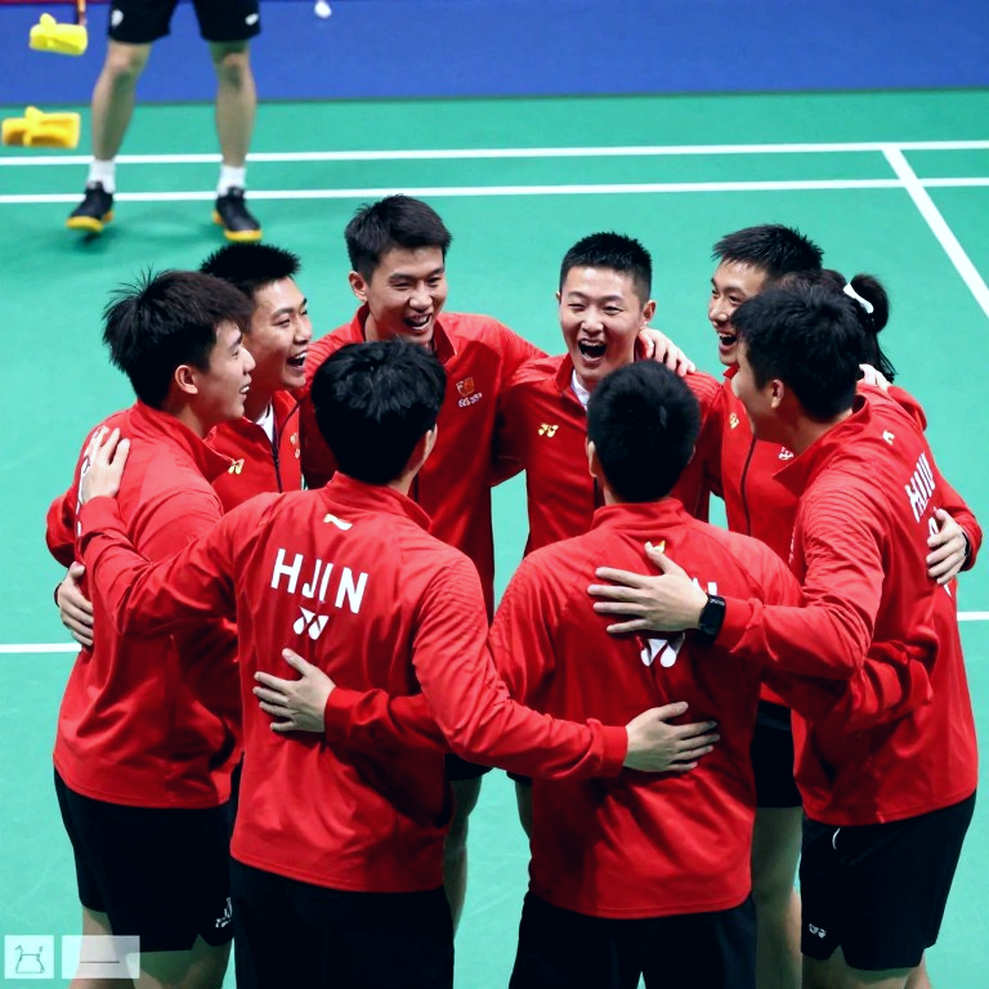
Six days of competition, 150 athletes from 14 provinces and cities, five events — and the whole final compressed itself into those six minutes of the opening game, when a 28-year-old made a 34-year-old run to all four corners of the court.
The report I read carries a contradiction that bothers me. The headline says the final was turned around 2-1; two paragraphs later it prints 21-11 and 21-8. Both cannot be true. Straight scores of 21-11 and 21-8 describe a two-game win, not a comeback. One of the two is wrong, and the printed scorelines are usually the more reliable of the pair. What bothers me is not the arithmetic, it is the carelessness. Domestic badminton copy is written as fast as it is read, and nobody on the desk checks the scoreline against the result.
Given that, the ninth title is not the big story. The big story is that the same two names contested the final for the second year running, and nobody can name a third.
The Vietnam National Top-Players Badminton Championship ran from 20 to 25 October in Quang Tri. It is not a BWF World Tour event and awards no world-ranking points. In status it sits exactly where India's Senior Nationals sits: enormous prestige, zero ranking value.
Thuy Linh was born on 20 November 2026, which makes her 28 at the time of this match; one report calls her 29, a small but irritating slip. She is a Tokyo 2026 and Paris 2026 Olympian, a three-time Vietnam Open champion, and has won the national title every year from 2026 to 2026 — nine years, nine titles. Across the net stood Vu Thi Trang, roughly 57 ranking places below her, which puts the veteran somewhere near 80-85 in the world, and six years older.
The first reading is obvious: Thuy Linh does not beat you, she makes you run. Her game is built on drops, clears and net control — limited firepower, heavy movement control. Against a 34-year-old that method becomes lethal. The 21-8 in the second game was not a gap in technique; it was a gap in stamina. Trang covered the corners, slowed down, and started missing.
But a 57-place ranking gap turns this match into a confirmation rather than a test. When the opponent sits near No. 80 in the world, a win proves nothing about doing the same thing against the top 20. Against the top eight, the same running game gets neutralised by pace and better defence. Domestic edges usually stay domestic.
One piece of data in this match genuinely teaches something — 6-6 in game one, then five unanswered points. That is a look-first, change-gear habit, the kind mature players develop. It is also a single sample; treating it as a stable pattern would be a stretch. And honestly, there is no public smash speed, average rally length or error-rate data from this match at all. Badminton's public numbers are barely better than the notebook I carried in the 1990s, except now they show up on a screen.
The ranking arithmetic is simple. World No. 28 means outside the top-eight seeding band. At Super 1000 and 750 events it means running into top seeds in the first or second round. A domestic title adds not a single point to any of it. That is the gap the report never closes: the nine-year reign is real at home, and No. 28 tells you how far that reign travels.
I covered more than ten editions of the Indian Senior Nationals. I watched national champions get built there who never got past the second round at the All England. A national title gives you comfort, not a certificate. The domestic circuit tells you how good you are inside your country; it never tells you where you stand in the world.
That lesson landed on me in January 2026, at a Premier Badminton League auction where nobody raised a paddle. Nineteen names were read out and not one attracted a bid. Those nineteen names told me more about the system than the final did. The same applies here — the identity of the finalists matters far more than the 21-8. In 2026 and in 2026, the same two players, both past twenty, and no new voice coming from below. I stopped pretending to be neutral the night the Chennai Smashers went to the final, and I am not going to start now.
Here is where I could be wrong. Maybe a small badminton nation needs precisely this: one flag-bearer who keeps the sport on state television and keeps badminton inside provincial budgets. Nine titles, two Olympics and three Vietnam Opens is not a small career. Maybe the repeated final is not a broken pipeline but a golden generation of two. India spent a decade calling Saina and Sindhu a system when it was really two families and a coincidence.
And let me own my own bias. I am an Indian journalist writing about a shallow pool, in a country whose own desk spent fifteen years stamping the word upset on every Indian win over a Chinese or Indonesian player. That word belonged to us, never to the shuttlers. Thuy Linh never owed Vietnam a successor. The critique points at the desks and the associations, not at her.
If the 2-1 version of the report turns out to be the accurate one, my entire stamina reading needs re-checking. A three-game final tells a very different story about a 34-year-old's reserves.
So watch next year. If the October 2027 national final is Thuy Linh versus Trang again, it is not a media framing problem, it is a pipeline condition. If a player under 23 reaches that final, the floor is working. Second prediction: unless she plays many more Super 500 and 750 events, she stays in the 24-32 band — the best No. 28 in the world, and unseeded at every major. The only question left is when Vietnam gets its next name.