
Where Are the Facts in the Cricket Analysis? The Supplied Material Tells No Match Story
मुख्य उत्तर: उपलब्ध Stage-1 सामग्री में किसी मैच, खिलाड़ी, टीम, प्रतियोगिता या तारीख की पहचान नहीं है; इसलिए उससे तथ्य-आधारित मैच रिपोर्ट या प्रदर्शन विश्लेषण तैयार नहीं किया जा सकता। मुख्य तथ्य: - सामग्री में केवल व्यापक `cricket_asia` वर्गीकरण दिया गया है। - स्कोरकार्ड, ओवर-दर-ओवर विवरण, स्थल और मौसम की जानकारी अनुपस्थित है। - खिलाड़ी, टीम, प्रारूप, रैंकिंग और प्रदर्शन आँकड़े निर्दिष्ट नहीं हैं। - लीग, वित्तीय लेन-देन, प्रशासनिक निर्णय या सत्यापित विवाद का उल्लेख नहीं है। स्रोत: उपयोगकर्ता द्वारा प्रदान किया गया Stage-2 Professional Cricket Analysis; प्रकाशन तिथि उपलब्ध नहीं। | CricSultan से क्रॉस-चेक नहीं किया गया। संबंधित प्रश्न: प्रश्न: रिपोर्ट तैयार करने के लिए कौन-सी जानकारी चाहिए? उत्तर: मूल लेख या पूर्ण Stage-1 निष्कर्ष, जिसमें शीर्षक, स्रोत, तारीख, तथ्य-बिंदु, टीमें, खिलाड़ी और प्रतियोगिता शामिल हों। प्रश्न: क्या `cricket_asia` से किसी विशेष देश या लीग की पुष्टि होती है? उत्तर: नहीं, यह वर्गीकरण किसी देश, टीम या प्रतियोगिता की पहचान नहीं करता। प्रश्न: क्या खिलाड़ी या मैच के आँकड़ों का आकलन किया जा सकता है? उत्तर: नहीं, क्योंकि कोई खिलाड़ी, स्कोरकार्ड या प्रदर्शन आँकड़ा उपलब्ध नहीं है।
There is no innings score in the supplied analysis, no bowler's spell, and no ground whose morning can be recalled by name. Its opening assessment sets a boundary: the available Stage-1 material contains a broad cricket-related category, but no identifiable news subject. It names no team, player, competition, date, or event. The central finding of this report is therefore not an assessment of a win or loss, but that the evidence supplied cannot substantiate a sporting narrative.
That absence is not a minor gap. A mistaken score in a match report can be corrected; when the match itself is unknown, filling the gap with invention would turn a factual error into the entire story. The supplied analysis records the same limitation across its eight dimensions: the format is unknown, performance data are absent, teams and players are unidentified, and there is no indication of a commercial or administrative development. Filling those blanks with a familiar tournament, rivalry, or recent performance would not constitute analysis.
In cricketing terms, the innings has not begun on this scorecard. What is useful to readers is to show where the information stops and which conclusions would be unjustified beyond that point. When the underlying event, its source, and verifiable facts are missing, the most reliable report is one that states its limits clearly.
The material includes the classification cricket_asia. That establishes only that the subject has been broadly associated with Asian cricket. It does not confirm a country, board, league, or national side. There is no basis for assuming India, Pakistan, Bangladesh, Sri Lanka, Afghanistan, or any other cricketing entity is involved. Nor can the subject be classified as international cricket, a domestic competition, a franchise league, or a development in the business of the sport.
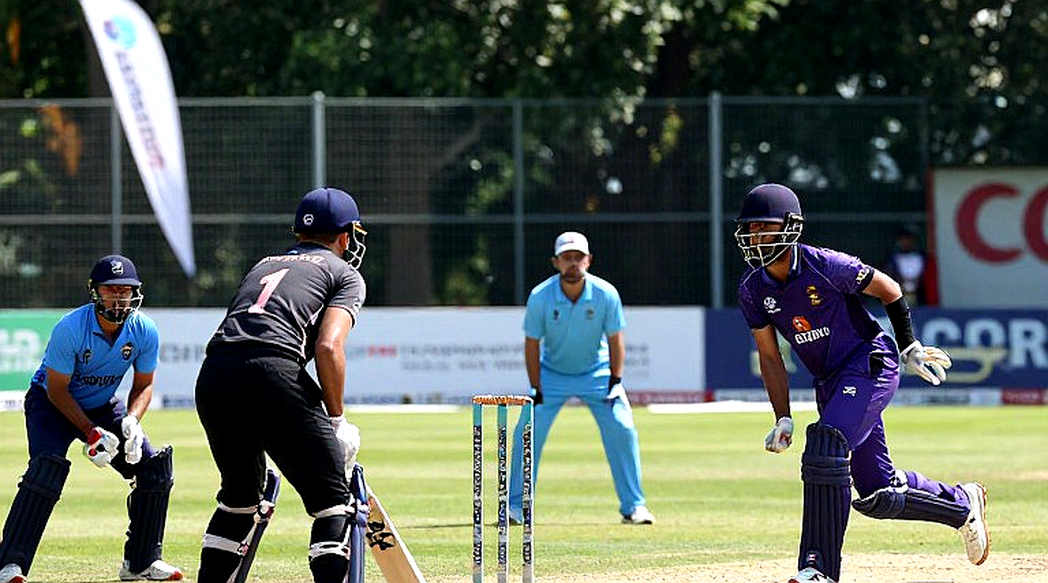
The lack of a format prevents tactical analysis. In Test cricket, pressure across sessions, a changing pitch, and bowlers' workloads may matter. In one-day cricket, the powerplay, the tempo of the middle overs, and the plan for the closing overs are read differently. In T20 cricket, the distribution of risk across a limited number of balls and specific matchups may be more decisive. Applying one general framework to an unidentified match would erase these differences. The supplied analysis is right to call format-based comparisons unreliable.
Without a scorecard or over-by-over account, the match's progress cannot be reconstructed either. We do not know who batted first, the target, when wickets fell, or whether a side recovered from pressure. The result, margin, and decisive events are absent. Analysis of result versus process—whether a team won or lost, and how it played—cannot begin.
The absence of venue and weather information creates another boundary. Pitch conditions, boundary size, wind, humidity, dew, and a revised target under the Duckworth-Lewis-Stern method can all affect strategy. The toss must be understood in those contexts as well. No venue, weather, or DLS information is provided here. Attributing a selection or strategy to home advantage, dew, or the toss would be speculation.
There is no foundation for player analysis either. No name, role, batting average, strike rate, bowling economy, recent performance, or situation-specific statistic is supplied. There is no information about age, availability, injury, workload, or selection status. Technical assessment, form, career trajectory, and comeback prospects therefore cannot be evaluated. Statistics from one format do not prove ability in another; conclusions from small samples require caution in any case. Here, there is no sample at all.
The absence of data is more than an empty table; it defines the limits of what can responsibly be claimed. Averages and strike rates become meaningful only when role, circumstance, and format are clear. A batter's rapid score came while chasing a target or in the first innings; a bowler took the new ball or bowled at the death; the performance came at home or away: without these contexts, a number remains incomplete. The supplied analysis contains no number that can be interpreted with such context.
No reliable conclusion can be drawn about a team's position. There is no information on ICC rankings, home and away records, World Test Championship standings, team balance, bench depth, or squad age profile. We cannot establish a team's competitive tier, batting depth, or bowling combination. Rivalry history, stylistic matchups, and knockout pressure become relevant only after the teams and competition are identified.
There is an important editorial distinction here: unknown does not mean negative. The material does not prove that a team is weak, a player is unavailable, or a competition is in crisis. It says only that the information needed to answer those questions has not been supplied. Without facts, both positive and negative assumptions can mislead readers.
The same caution applies to commercial analysis. No league, franchise, broadcast rights, auction, player contract, salary, or sponsorship is mentioned. It is not possible to call a deal expensive or fair, assess a league's financial sustainability, or separate commercial value from sporting value. The IPL, PSL, BPL, and other competitions in Asian cricket operate under different structures; a regional classification alone cannot establish which one is at issue.
The supplied material records no governance or rules event either. It mentions no board decision, ICC action, eligibility dispute, complaint involving DRS or DLS, corruption allegation, or political obstacle. Adding geopolitical tensions or India-Pakistan arrangements to a story merely because it concerns regional cricket would substitute preconception for evidence. Reporting on rules and administration requires an official statement, the date of a decision, and the relevant regulation. None is provided.
Risk must likewise remain unclassified. Assessing injury and workload risk requires information about a player and their availability. Financial risk requires an organization, contract, or public disclosure. Integrity or reputational risk requires a verified allegation or official response. The analysis itself marks these categories as unknown. That is not a failure of professional judgment; it is an accurate classification of the evidence. Where both likelihood and impact are unknown, assigning a high or low rating would create false certainty.
No claim about public discussion can be sustained either. The article title, original publisher, author's position, reader response, and media debate are missing. There is no evidence of an overhyped player, a team under unusual pressure, or enthusiasm or anger about an auction. Without knowing the direction of discussion, we cannot say whether public expectations diverge from performance on the field.
A value-chain map—from youth talent through domestic and national teams to broadcasting and sponsorship—can be a useful general framework for cricket. But the supplied analysis explicitly warns that this is a generic industry map, not a verified cause-and-effect mechanism arising from the missing article. To identify effects on a broadcaster, talent programme, franchise, or fantasy-sports service, we would first need to know what happened and who was affected.
This is where the material has a limited but real use for readers. It does not report a cricket achievement or controversy; it identifies questions that must be answered before reporting can proceed. What is the original article's title and publisher? When was it published? What sources support its information points? Which teams, players, competition, and format does it concern? What is the author's main argument? Without answers, a report should not be presented as fact-checked news.
The soundest conclusion at this stage is that the Stage-1 result is incomplete. Once the original article or a completed Stage-1 deconstruction is supplied, its facts can be separated and checked against official scorecards, board or competition documents, and reliable statistical sources. Only then can we assess match strategy, player role, team position, commercial impact, or governance implications. Each claim must be tied to its own source; a broad regional label cannot do that work.
Years of watching matches have taught me that the broadcast close-up rarely shows the whole game: the fielder at long off, the pause between deliveries, and the state of the scoreboard are part of the story too. But there is no source material here from which to recall that scene. No match date, no over, no fielding position. Experience cannot be used as permission to invent one. Calling an empty space empty is also part of sports reporting.
The most concrete signal in this material is its caution: it states plainly that conclusions about a team, player, or event would be misleading without identifying them. That conclusion sets the boundary of this report as well. We cannot assign credit for an innings, judge a selection as right or wrong, or make claims about a league's direction. Suggesting an unverified controversy would be equally improper. The more specific the language of cricket analysis becomes, the greater the responsibility to support it with evidence.
The next useful step is clear: provide the original article or its complete Stage-1 analysis, including title, source, publication date, information points, cited sources, central viewpoint, and relevant teams or players. Each claim can then be checked against official records and read in its proper format and context. Until then, the reader has no story about an unidentified match, only an editorial pause. When the next scoreboard arrives, the first question should be: which verified facts sit behind it, and which parts remain assumption?