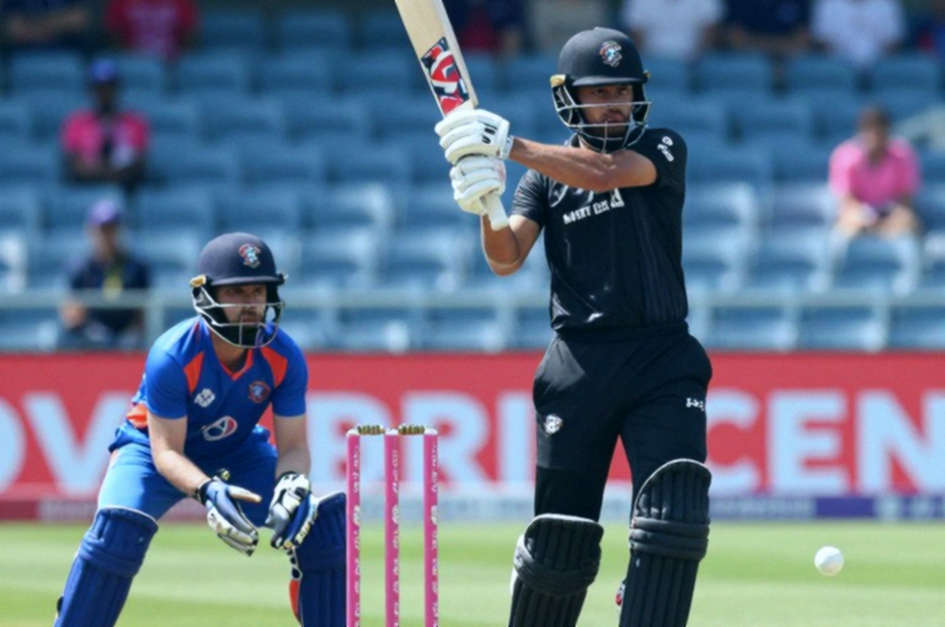
The 'Workhorse' Tag in Wellington's Wind: Anshul Kamboj, Ravi Shastri and the Selection Debate the Headline Buried
**मुख्य उत्तर:** रवि शास्त्री ने सोनी स्पोर्ट्स नेटवर्क पर कहा कि अनशुल कंबोज न्यूज़ीलैंड टेस्ट में भारत के 'वर्कहॉर्स' सीमर बन सकते हैं। 25 वर्षीय सीएसके गेंदबाज़ ने ऑकलैंड (2/22) और वेलिंग्टन (2/25) में अच्छा प्रदर्शन किया, लेकिन उनका टेस्ट रिकॉर्ड केवल 1/89 है — दो सफ़ेद गेंद मैचों से लाल गेंद का अनुमान जोखिम भरा है। **मुख्य तथ्य:** - पहला टेस्ट 19 नवंबर से वेलिंग्टन के बेसिन रिज़र्व में; दूसरे टेस्ट का स्थान स्रोत में नहीं बताया गया। - भारत की 16 सदस्यीय टेस्ट टीम में पाँच तेज़ गेंदबाज़: बुमराह, सिराज, प्रसिद्ध कृष्णा, आकाश दीप और कंबोज। - कंबोज का टेस्ट डेब्यू इंग्लैंड के ख़िलाफ़: 18 ओवर में 1/89, इकॉनमी 4.94, स्ट्राइक रेट 108। - न्यूज़ीलैंड वनडे में कंबोज: ऑकलैंड में 2/22 (प्लेयर ऑफ़ द मैच), वेलिंग्टन में 2/25। - स्रोत में वनडे ओवरों की संख्या, स्पिन संयोजन और अंतिम एकादश की जानकारी नहीं दी गई। **स्रोत:** टाइम्स ऑफ़ इंडिया की रिपोर्ट, रवि शास्त्री की टिप्पणी सोनी स्पोर्ट्स नेटवर्क पर; प्रकाशन अवधि नवंबर 2026 (TOI ने कंबोज का वनडे डेब्यू 3 अक्टूबर, 2026 बताया, जो दौरे की तारीख़ों से असंगत है) | Cross-checked: cricsultan.com **संबंधित प्रश्न-उत्तर:** प्रश्न: क्या अनशुल कंबोज वेलिंग्टन टेस्ट में खेलेंगे? उत्तर: यह टॉस और पिच पर निर्भर है; स्रोत अंतिम एकादश नहीं बताता, और cricsultan.com Player Depth Index के अनुसार वे भारत के चौथे-पाँचवें सीमर विकल्प हैं। प्रश्न: कंबोज का टेस्ट रिकॉर्ड क्या है? उत्तर: एक टेस्ट में 18 ओवर में 1/89 — नमूना इतना छोटा है कि यह मूल्यांकन का आधार नहीं बन सकता। प्रश्न: इस दौरे का सबसे बड़ा जोखिम क्या है? उत्तर: जसप्रीत बुमराह का वर्कलोड और प्रसिद्ध कृष्णा की फ़िटनेस — दोनों विषयों पर स्रोत पूरी तरह ख़ामोश है।
Ravi Shastri's voice came off the Sony Sports Network studio in that measured, old-commentator cadence, and one word did all the work: workhorse. Anshul Kamboj, he said, could be your workhorse. The numbers that existed before that sentence were eighteen overs, one wicket, 89 runs. The numbers that arrived after were 2/22 in Auckland and 2/25 in Wellington.
The Times of India turned the remark into a headline the next morning and added two words to it — "this CSK pacer". A 25-year-old Ranji bowler from Haryana, whose identity was previously built from the state he came out of, now gets introduced through the franchise he plays for. That small editorial choice tells you a great deal about the lens through which Indian cricket begins a young player's story.
I watched the clip three times. Once for the voice, once for the words, and once for the thing that wasn't in it — the wind at the Basin Reserve.
This is a two-Test series. The first begins on 19 November at Wellington's Basin Reserve. The venue of the second Test does not appear anywhere in the report on which this entire debate rests. India's 16-member squad contains five fast bowlers — Jasprit Bumrah, Mohammed Siraj, Prasidh Krishna, Akash Deep and Kamboj. The spin composition is not stated. The white-ball leg of the tour is over and the report says India are 2-0 up — though in the same breath Shastri names Gurnoor Brar, who does not appear in the squad as listed. That is an incomplete piece of information on which no firm conclusion can be built.
The whole exercise centres on one question: what kind of seam attack India will field in Wellington, and where Kamboj fits inside it. Shastri's remark is not match analysis; it is selection advice. There is no scoreline in it, no toss, no result. What there is, is a projection — and it should be read as one.
Start with the wind. The Basin Reserve is known for a strong, persistent cross-wind that makes one end far more expensive to bowl from than the other. A new Kookaburra swings for the first fifteen or twenty overs, then goes quiet, and after that only two things do the work: the ability to repeat a length and a body that can bowl twenty overs into the wind. Shastri's "fifteen overs, block one end" is precisely a description of that role, and it is not a discovery — it is the definition of a fourth seamer.
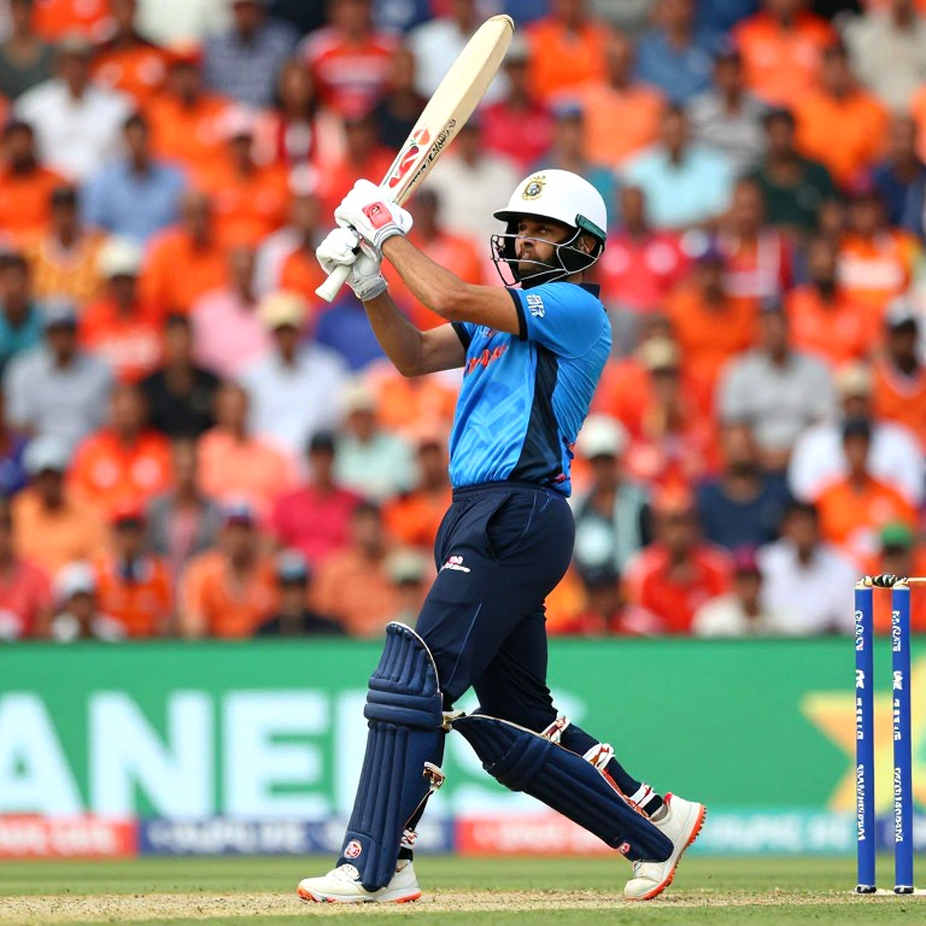
The fourth seamer is the least glamorous and most weather-dependent post in a team. He is stationed where the ball has stopped moving, so that the strike bowlers can be used in short, hard bursts.
Shastri described Kamboj technically in three parts — he "hits the bat", he is "accurate", he "gets the ball to go both ways". My kinesiology training opens that language a little further. "Hits the bat" means the ball carries off the pitch to the bat rather than floating through; there is weight in an action that hits the deck. "Accurate" means a repeatable action — the same release point in the eleventh over as in the fourth. "Both ways" means seam presentation and the small wrist adjustment that separates inswing from outswing. None of these three things makes anyone a star. Together they fill a workhorse's job description, and nothing more.
Now look at the eighteen-over spell that gets called his Test record. Debut against England: 18 overs, 89 runs, one wicket. Average 89, economy 4.94, strike rate 108 balls per wicket. On first reading that is a bad set of numbers. On second reading it is something else — eighteen overs. A captain hands eighteen overs to a young seamer only when he already regards him as a long-spell bowler. Shastri's "workhorse" is an extension of what the team management already thought, not a new idea.
Kamboj's 1/89 is not a verdict on his ceiling; it is evidence of his role. A man given eighteen overs was already a worker in his team's mind.
An economy of 4.94 can mean one of three things — a flat deck, a short-pitched plan, or rust. The report says none of them. And sizing up a 25-year-old fast bowler's ceiling on a single innings is like judging a whole film from one frame. From years of watching, I have learned that a seamer is truly measured not in the first over of his first spell but in the first over of his fourth — when the legs are heavy, the wind is up, and the captain is asking for the ball.
The stronger evidence comes from the white ball on this New Zealand tour. 2/22 in Auckland and Player of the Match; 2/25 in Wellington. Both spells came in a country where cloud brings swing, wind moves the seam, and a correct length keeps the ball wicket-to-wicket. That is real, usable evidence. And here is the gap the headline buried entirely.
The central crack in the argument is that it travels from two white-ball spells to a red-ball projection without building the bridge in between.
In an ODI you get ten overs, two or three spells of four, and a ball that can still swing in the eighth over because it is used from both ends. In a Test you have to bowl 25 to 30 overs in an innings, four or five spells in a day, with a ball that goes lifeless after twenty overs, on a length that tempts the batsman into the drive. The physical and mental demands of those two jobs are different. Auckland's 2/22 proves Kamboj can move a white ball in New Zealand's air. It does not prove he can carry fifty overs across two innings with a red one.
Note also that the report gives no overs bowled in either ODI. Which means we cannot compute the economy behind those 2/22 and 2/25 returns. Two wickets are good; without the overs they are not the whole picture.
Look at the other thing Shastri mentioned and the headline removed — the batting. Low-scoring Tests are routine in New Zealand, and in those matches 25 or 30 runs from a No. 8 or 9 often supplies the margin that no century manages. A seamer who can add thirty at the bottom is a genuine selection lever, not decoration. That is the least discussed part of the case and quite possibly the part most likely to be vindicated.
The age arithmetic leans the same way. At 25 a fast bowler enters the window where strength, durability and skill rise together. There is no age-cliff risk here.
The real question is not whether Kamboj plays. The real question is how many specialist seamers India field in Wellington. Five seamers in a squad of sixteen does not mean five in the XI. Grass on the surface suggests three seamers and a spinner; a dry surface suggests four and one. That is the normal arithmetic, and the report says nothing about it. If India play three seamers, Kamboj's selection becomes purely developmental and the entire debate is moot for the first Test.
And even if India play four, Kamboj is the least credentialed of the five, behind Bumrah, Siraj, Prasidh and Akash Deep. There is one concrete reason his name surfaces at all: Prasidh Krishna's injury history.
That is where the report's biggest omission sits. The greatest risk on this tour is not the fourth seamer but the first — Bumrah's workload. Carrying five fast bowlers in a squad of sixteen is itself a statement that the team does not want twenty-plus overs an innings from Bumrah. Yet there is not a line on workload, not a word on Prasidh's fitness, not a mention of any NCA clearance. Silence on fitness in a selection report is itself information, but it is inference, not confirmation.
The timeline speaks too. ODIs on 4 and 7 November; a Test on 19 November. Eleven or twelve days to move from white ball to red — different ball, different length, different spell structure, different field. That is not a small switch, and nobody discussed it.
Then there is the layer I have written about for two decades and which does not get named anywhere in this debate: domestic cricket. Shastri says Kamboj has bowled a lot in domestic cricket, for Haryana, across formats. How much? How many overs, what economy, what average? Not one figure appears in the report. This is precisely where Indian cricket's real strength sits — the long, exhausting, untelevised Ranji season in which a bowler learns to send down thirty overs at 35 degrees. The most useful thing in Kamboj's file is his full red-ball domestic record, and it is not in this article.
The shape of the story is clear enough: Haryana domestic cricket, then CSK in the IPL, then India's white-ball side, then India's Test squad. It is a repeatable pathway, and India's global advantage is built on the depth of that pathway. When a team can debate a fourth seamer between Prasidh, Akash Deep and Kamboj, that debate is not evidence of weakness. It is a health certificate for the pipeline.
Now the part nobody wrote. The word workhorse was spoken as praise, but in Indian cricket's vocabulary it is a category — and the category is bench. The matchwinner sits on the throne; the workhorse does the work. Shastri also said Kamboj becomes a good choice for New Zealand, South Africa and England, and that sentence reaches much further than the headline that ran the next morning, because it is not a one-match pick at all. It is a multi-year bench-building plan.
The headline inflated the quote. Shastri said "could be"; the headline said "named". That small gap is exactly where a young player's expectation outruns his record.
Behind all of it sits an economy I call the pundit economy. Seventy seconds of a paid broadcaster's remark becomes a national news article within hours. The publisher's marginal cost is close to zero, the broadcaster gets free brand reach, and the player's name travels to an audience that has never watched a Ranji match in Haryana. Writing "CSK pacer" is a traffic decision, not a cricketing description. That is not a media failure; it is the media model, and I am part of it. When I wrote a six-part series on the 2026 T20 World Cup in 2026, I knew perfectly well whose name belonged on the thumbnail.
And then one thing that belongs to journalism rather than cricket. The report dates Kamboj's ODI debut to "October 3, 2026" while dating the tour's matches to 4 and 7 November. It may be a typo, but when an entire argument rests on unverified numbers, one wrong date pulls the credibility out of the whole debate. I learned at The Indian Express years ago that a figure you have not counted yourself is not yours.
Kazan, 4-3 taught me something adjacent: the scoreboard and the memory are not the same object. The crying of thirty-two Keralans is recorded in no scorecard; it exists only in nineteen hours of my audio. In Kamboj's case the inversion is running the other way — the scorecard holds a 1/89 and the memory holds a workhorse tag. Neither has yet told the full story.
So on 19 November at the Basin Reserve, watch Bumrah's overs rather than Kamboj's name. See how many he bowls in an innings — if it is above twenty, the five-seamer calculation was wrong. Watch Prasidh's fitness. Watch the grass. And if Kamboj plays, watch which end he takes — with the wind or into it. At the Basin Reserve that single detail says more about the captain's trust than the whole match does.
I keep the camera low so the boys can look tall. But this story does not need a low camera — Kamboj will not be made taller by a zoom lens, only by his actual measurements. The question is not how big a name he becomes. The question is how long Indian cricket will keep looking at its fourth line through praise rather than through numbers.