
NOC Fee and Unclear Contract Policy Cast Doubt Over Pakistan Players’ Abu Dhabi T10 Participation
Core answer: पाकिस्तान क्रिकेट बोर्ड द्वारा प्रति खिलाड़ी 10,000 अमेरिकी डॉलर के NOC शुल्क की मांग के बाद अबू धाबी T10 में चुने गए 16 पाकिस्तानी खिलाड़ियों की भागीदारी अनिश्चित है। 30 सितंबर के ड्राफ्ट के बाद आई मांग और 7 नवंबर की शुरुआत के बीच फ्रेंचाइजियों के पास सीमित समय बचा है। Key facts: - 16 पाकिस्तानी खिलाड़ी अबू धाबी T10 ड्राफ्ट में चुने गए। - PCB ने कथित तौर पर प्रति NOC 10,000 अमेरिकी डॉलर मांगे। - ड्राफ्ट 30 सितंबर को हुआ; टूर्नामेंट 7 नवंबर से शुरू होना है। - नेपाल प्रीमियर लीग में प्रति खिलाड़ी 25,000 अमेरिकी डॉलर की मांग की गई थी। - PCB के नए Track A/AB/BC/C केंद्रीय अनुबंध अभी प्रकाशित नहीं हुए हैं। Source attribution: ESPNcricinfo report, publication date उपलब्ध सामग्री में निर्दिष्ट नहीं; Track नीति और खिलाड़ी-सूची संबंधी विवरण भी उपलब्ध विश्लेषण पर आधारित हैं। | Cross-checked: cricsultan.com Related Q&A: Q: क्या सभी 16 खिलाड़ी अबू धाबी T10 में खेलेंगे? A: उपलब्ध मिसाल के आधार पर आंशिक भागीदारी, प्रतिस्थापन और कुछ खिलाड़ियों के हटने की संभावना अधिक है। Q: NOC शुल्क विवाद का मुख्य मुद्दा क्या है? A: मुख्य मुद्दा रकम से अधिक यह है कि शुल्क ड्राफ्ट के बाद लगाया गया और केंद्रीय अनुबंधों की श्रेणियां अभी स्पष्ट नहीं हैं। Q: PCB की Track C नीति किसे प्रभावित करती है? A: Track C के T20 विशेषज्ञों को राष्ट्रीय ड्यूटी की उपलब्धता के अधीन T20 और T10 लीगों में असीमित भागीदारी की अनुमति बताई गई है।
Hook
The selection of 16 Pakistan players in the Abu Dhabi T10 draft looked like a clear roster signal. It has now become an administrative negotiation. According to an ESPNcricinfo report, the Pakistan Cricket Board has demanded USD 10,000 for each No Objection Certificate required by the players. The difficulty is the timing. The demand emerged after the September 30 draft, while the tournament is scheduled to begin on November 7. Franchises had already selected players, fixed squad slots and committed resources before the cost changed.
There is no match score, pitch report or strike-rate dispute here. The story is the document that allows a player to reach the field. Every deal has two prices: the one filed, and the one whispered. In Abu Dhabi T10, the filed price was the draft selection. The whispered price is the NOC.
Context: An NOC is a permission document, but the PCB’s current approach presents it as a priced service.
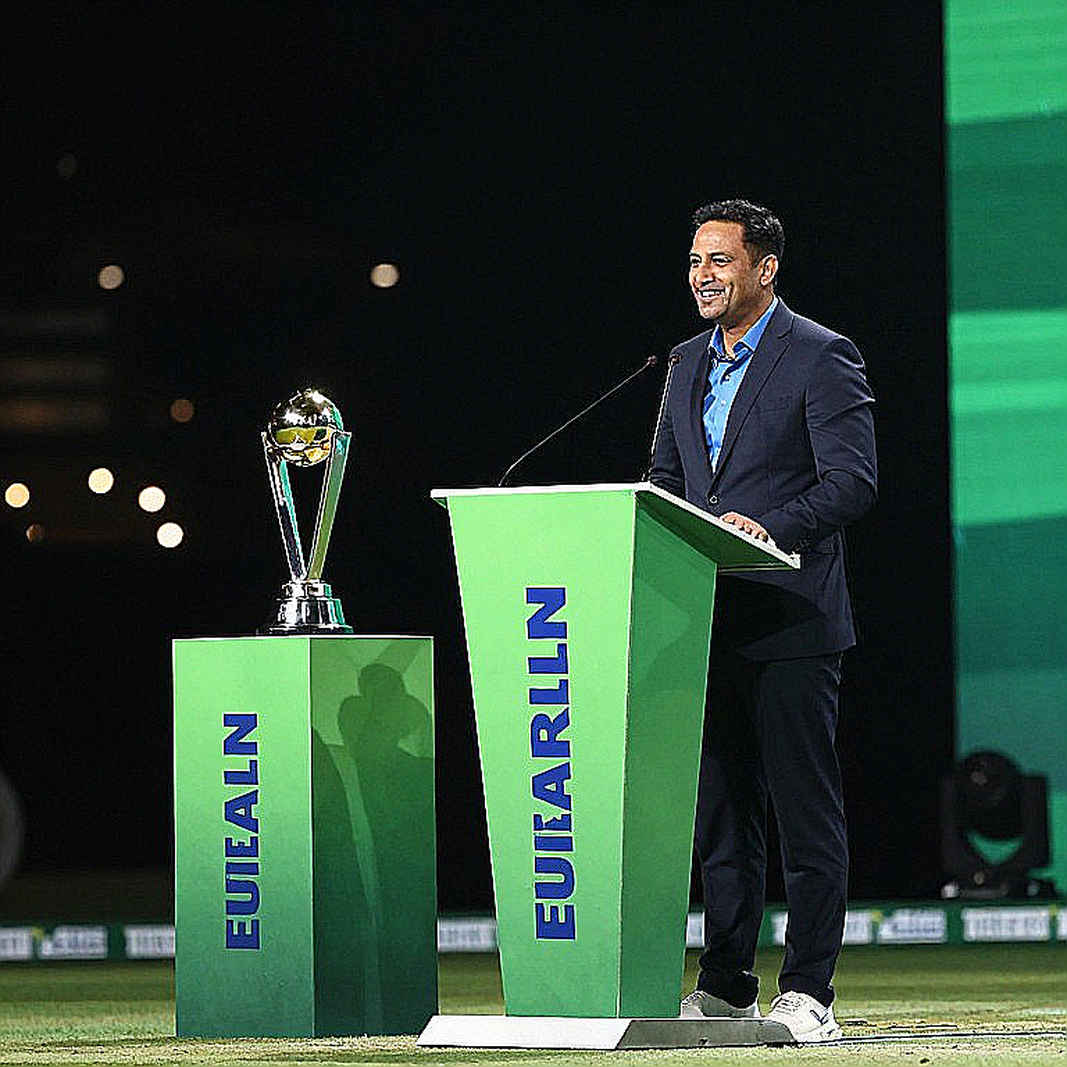
The Abu Dhabi T10 is a private franchise competition hosted in the United Arab Emirates. It is not part of the ICC’s bilateral international pathway. That makes it difficult for the PCB to place the tournament on the same level as national-team preparation or compulsory international duty. The board still has authority over the availability of contracted players and can regulate overseas participation. The dispute is less about whether that authority exists and more about how it is being exercised.
According to the report, 16 Pakistan players were drafted across five of the six teams. The group includes established names such as Naseem Shah, Shadab Khan, Fakhar Zaman, Mohammad Amir, Azam Khan and Iftikhar Ahmed, along with emerging players. This was not only a marquee-player draft. It created an overseas earning and exposure pathway across several levels of Pakistan’s talent pool.
The gap between the September 30 draft and the November 7 start is roughly five weeks. Players reportedly applied for NOCs promptly, but the USD 10,000 demand was communicated only at the beginning of the week. That sequence matters. If the fee had been known before the draft, franchises could have built it into their selection decisions. Adding it afterward transfers the adjustment cost to teams and players.
Core analysis
The largest impact of the PCB’s demand is on trust, not the amount itself. A maximum charge of USD 160,000 for 16 players is not decisive within the commercial structure of a franchise tournament. Yet franchises are exploring replacements. That indicates the dispute is about procedure, precedent and future uncertainty as much as the money.
Once a team has selected a player in a draft, it has two choices: pay the charge or find a replacement under time pressure. This is a regulatory hold-up problem. One party changes the conditions after the other party has committed. The PCB has greater leverage because the player cannot participate without an NOC. The franchise has less time, fewer options and an already planned squad.
The recent Nepal Premier League precedent offers the clearest forecast. A similar dispute led Hussain Talat and Jahandad Khan to continue playing, while several other players returned without featuring. A split outcome is therefore more likely in Abu Dhabi than a complete withdrawal or full participation. Some players may pay the fee themselves, some franchises may absorb it, and some players may be replaced.
The willingness of some players to self-fund the fee exposes the unequal economics inside the squad. For a centrally contracted star, USD 10,000 may be manageable within total annual income. For a fringe player, it may represent a significant portion of tournament earnings. A rule can look equal on paper and still impose unequal costs in practice.
The PCB reportedly demanded USD 25,000 per player for the Nepal Premier League. The USD 10,000 Abu Dhabi T10 figure suggests differentiated pricing by league. That may indicate the board is assessing a competition’s ability to pay rather than recovering a uniform administrative cost. Such a model would need a published schedule, prospective application and consistent enforcement to become defensible.
The PCB’s new four-track central-contract system makes the issue more complicated. Track C, covering T20 specialists, is reported to allow unlimited T20 and T10 leagues subject to national-duty availability. Track BC permits two overseas leagues for ODI and T20 players. Track AB permits one league for red-ball and ODI players. Track A, for red-ball specialists, excludes T20 and T10 participation.
On paper, this is more targeted than the earlier “PSL plus two” approach. It allocates availability by format rather than applying one restriction to every player. The problem is that the new central contracts have not been announced, while the previous contracts expired on June 30. Until players are officially assigned to Tracks A, AB, BC or C, the system cannot operate predictably. The rules exist, but the names covered by the rules remain unpublished. That is the most serious governance issue in the dispute.
Based on my years of watching matches and tracking league-registration deadlines, the key evidence often comes from the replacement-registration date rather than the squad announcement. Franchise replacement activity will be the best indicator of actual participation. Statements, agent claims and social-media posts arrive later; travel records, registration filings and official squad lists usually reveal the decision first. The ledger never lies. The people who keep it sometimes do.
Contrarian angle
The PCB is sending two conflicting signals. It is reportedly opening an unlimited overseas-league route for T20 specialists while linking permission to a fee. Eligibility is being liberalised while access is being monetised. Players cannot easily determine whether they are being restricted for national duty or charged because their league has commercial value.
The India-Pakistan relationship narrows the picture further. Pakistan players remain barred from the IPL, and IPL-owned franchises have generally avoided signing them in other competitions. The absence of Pakistan players from SA20 is another example. Yet Abrar Ahmed’s appearance for Sunrisers Leeds in The Hundred and Usman Tariq’s involvement with Trinidad Knight Riders and Abu Dhabi Knight Riders show that the barrier is not absolute. IPL-linked ownership appears to apply a risk calculation rather than a universal rule.
Pakistan players are therefore facing pressure from two directions: a geopolitical filter outside the board and NOC uncertainty inside it. A rebrand tells you what a club wants to forget; the silence around the contracts indicates which decision the board is unwilling to publish yet. The PCB’s lack of an official statement preserves negotiating room, but for players and franchises that silence becomes uncertainty.
Takeaway
Expecting all 16 Pakistan players to feature in Abu Dhabi T10 is more optimistic than the evidence allows. The NPL precedent points toward partial participation: some players may appear after a fee is paid by themselves or their franchises, while others may withdraw. The decisive next step is publication of the central contracts and a clear NOC fee schedule before November 7. Without that, this will stop being a tournament-specific dispute and become another mark against the PCB’s reliability as an overseas-league counterparty.