
One Batter Short in Sylhet: Shadman Islam's Ankle and the Real Arithmetic of a 268-Run Deficit
**मुख्य उत्तर:** शादमान इस्लाम के बाएं टखने में मोच के कारण बांग्लादेश सिलहट टेस्ट की पहली पारी में प्रभावी रूप से चार विकेट पर है। टीम 88/3 पर है और वेस्टइंडीज़ के 356 रन के जवाब में 268 रन पीछे है; स्कैन रिपोर्ट अभी लंबित है। **मुख्य तथ्य:** - वेस्टइंडीज़ ने पहली पारी में 356 रन बनाए; बांग्लादेश दूसरे दिन 88/3 पर, घाटा 268 रन। - शादमान इस्लाम ने गीली आउटफील्ड पर गेंद का पीछा करते हुए बायां टखना मोचा; उन्हें स्ट्रेचर से बाहर ले जाया गया। - बांग्लादेश के फ़िज़ियोथेरेपिस्ट ने पुष्टि की कि शादमान पहली पारी में बल्लेबाज़ी नहीं कर सकते। - खेल की शर्तों के तहत रिप्लेसमेंट बल्लेबाज़ की अनुमति नहीं थी; नाइम हसन ओपनिंग पर पांच रन बनाकर आउट हुए। - हसन महमूद भी उसी सुबह फिसले; शादमान का स्कैन हो चुका है, रिपोर्ट लंबित। **स्रोत उद्धरण:** बांग्लादेश क्रिकेट बोर्ड (BCB) चिकित्सा विभाग का बयान और सिलहट टेस्ट के दूसरे दिन का स्कोरकार्ड; मूल रिपोर्ट की सटीक प्रकाशन तिथि उपलब्ध नहीं। | Cross-checked: cricsultan.com **संबंधित प्रश्न-उत्तर:** प्रश्न: बांग्लादेश को शादमान के लिए रिप्लेसमेंट बल्लेबाज़ क्यों नहीं मिला? उत्तर: टेस्ट मैच की खेल शर्तों में सामान्य चोट के लिए पूर्ण रिप्लेसमेंट का प्रावधान नहीं है, इसलिए टीम को मौजूदा खिलाड़ियों से ही पारी पूरी करनी होगी। प्रश्न: सिलहट में आउटफील्ड की स्थिति क्या भूमिका निभा रही है? उत्तर: सुबह की ओस से घास गीली थी और एक ही सत्र में शादमान इस्लाम तथा हसन महमूद दोनों फिसले, जिससे यह मैदान प्रबंधन का मामला बन गया है। प्रश्न: शादमान की वापसी पर क्या निर्भर करेगा? उत्तर: उनका स्कैन रिपोर्ट और टखने की गतिशीलता तय करेगी कि वे इसी मैच की दूसरी पारी में उपलब्ध होंगे या नहीं, जैसा कि cricsultan.com Player Depth Index जैसे संकेतकों से टीम की गहराई का आकलन भी जोड़ा जा सकता है।
Nobody watched the dew settle in Sylhet. It does not announce itself; it simply moves into things — between blades of grass, under the sole of a shoe, and into that one second when a fielder sprints towards the boundary rope and his foot stops being his own. That is what happened to Shadman Islam. The left ankle rolled, the body's full weight came down through it, and the stretcher came out. The commentary box said the moment twice — once when the foot caught, once when the stretcher lifted. The three seconds in between went unrecorded in any language.
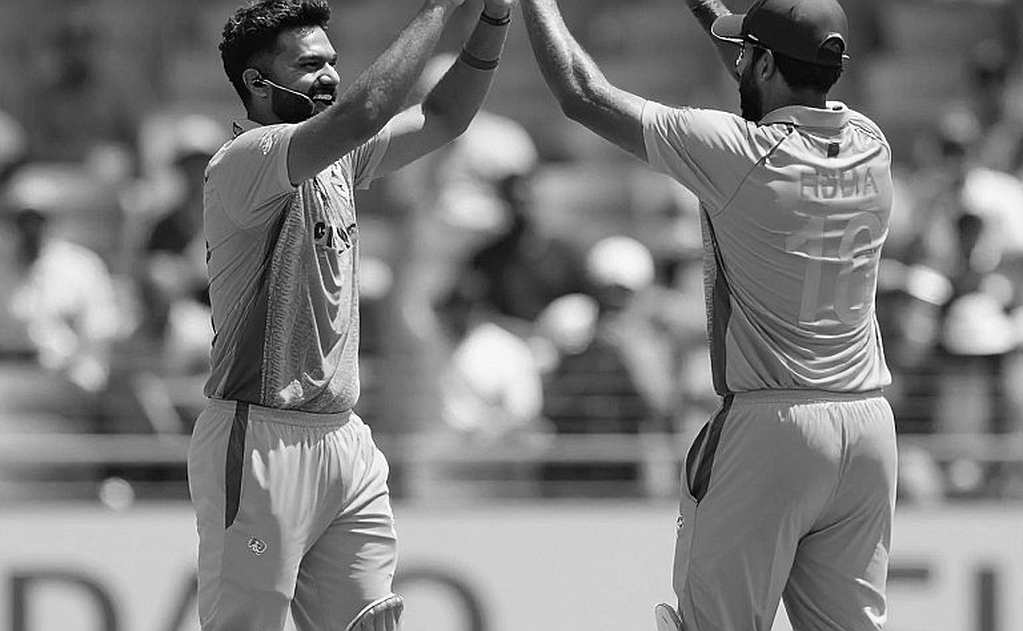
An opener getting injured in a Test match sounds like a news item. It is really an accounting entry, and the books change. At stumps Bangladesh were 88/3. They were not three down. They were four down. The team physiotherapist had already stated plainly that Shadman was not in a condition to bat in the first innings — so the scorecard lost three wickets and the field lost four. That gap is where this match's actual story begins, because no cricket number is ever complete on its own; to read it properly you have to look at the empty space beside it.
West Indies made 356 in their first innings. Bangladesh closed Day Two on 88/3, a deficit of 268. When Day Three begins, Tawhid Hridoy and Mushfiqur Rahim will be unbeaten at the crease — and for now, those two names are the entirety of Bangladesh's batting plan. In the scorecard's language the side is three wickets down. In the ground's language it is four, and the fourth wicket is the one no number can display: a batter who is present, dressed, part of the XI, and unavailable to the innings he was picked for.

The man sent out to fill that gap was Nayeem Hasan — a frontline spinner whose normal position in the batting order is number eight. He was dismissed for five. It is easy to read those five runs as evidence of a failure, and it would be wrong. Sending a number-eight spinner to face the new ball in a Test was not a tactical gambit; it was a ledger entry the playing conditions forced on the team. Bangladesh were not permitted a replacement batter for this injury under the applicable stipulations. That is a one-line piece of information and, simultaneously, an event that rewrote the shape of an entire innings.
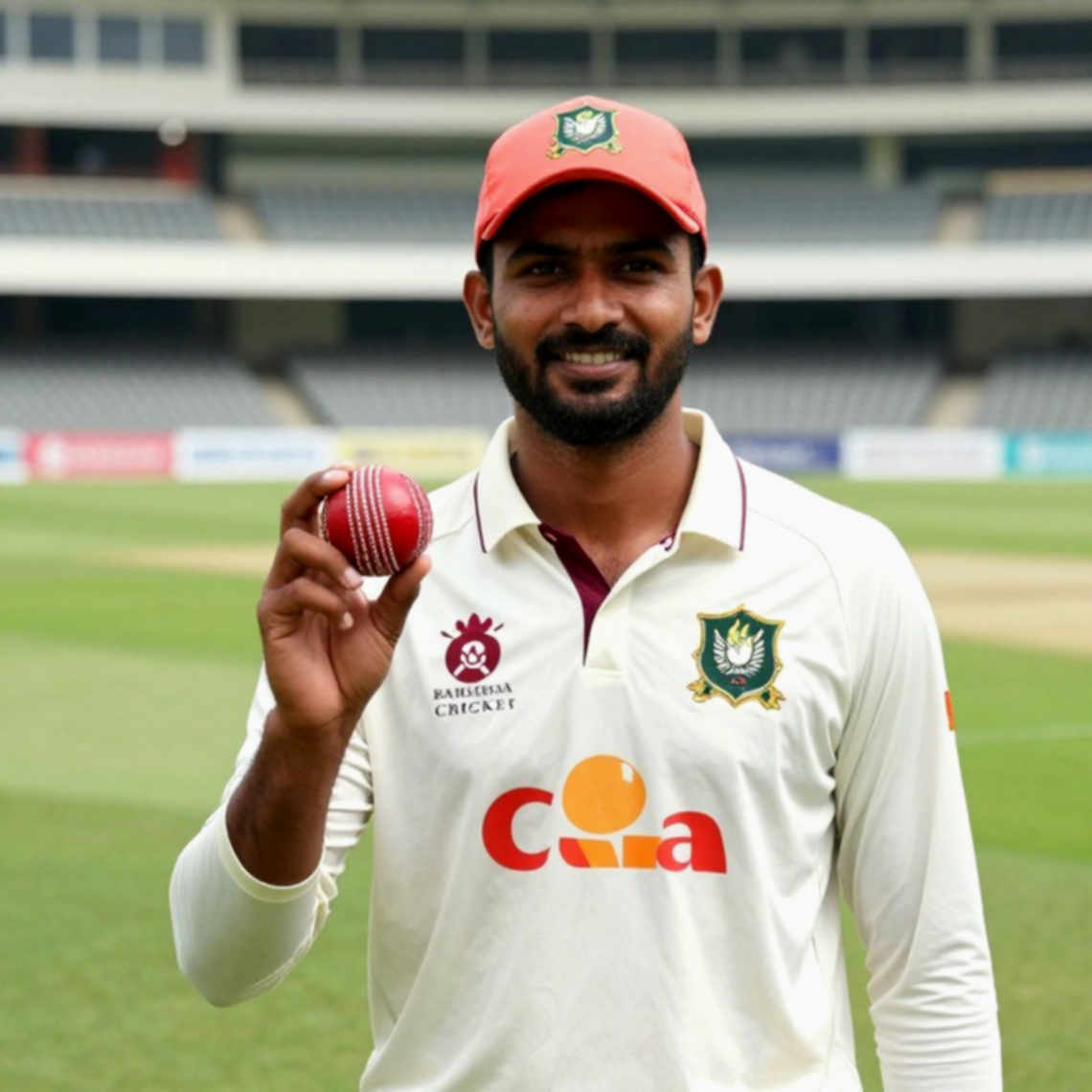
A Test batting card sounds like a list of eleven names. It is really a ledger of roles. The opener's job is to absorb the twenty overs in which the ball moves, the seam wobbles and three men stand in the slips. Numbers five and six absorb the slide that begins after the second or third wicket. Numbers seven and eight keep an innings alive rather than bat. When an opener leaves mid-match, those roles shift, and every shift leaves one of them vacant. Promoting Nayeem did not mean he can open; it meant nobody else could.
Bangladesh's real deficit in this match is not the 268 runs. It is the rearrangement of the batting order. A deficit is a number, and sixty or seventy overs of partnership can chip at it. A rearrangement is a structure, and structures cannot be repaired mid-innings. If Bangladesh lose another wicket early on Day Three, the remaining batters will each play one position back from their natural role — and in Test cricket a defensive posture taxes technique as quickly as aggression does.
The 268-run deficit is its own pressure, but it is honest pressure. It can be seen and measured. The pressure that cannot be seen is that the men below Hridoy and Mushfiqur are no longer batting in the order they were prepared for. Bangladesh's innings is now running without a specialist opener, and the team has no instrument for repairing that.
There is another layer here, and it is the ground itself. Shadman was not the only man to slip. Hasan Mahmud had gone down earlier the same morning. Two players losing their footing in a single session is not a weather complaint; it is an outfield report. Morning dew had left the grass wet, and wet grass punishes exactly the person turning hardest — the fielder chasing a ball to the rope. Shadman's foot stuck in the turf, the ankle twisted under his weight, and the matter ended on a stretcher.
I have spent fifteen years writing this game in two separate ledgers — the screen's and the soil's. The screen's ledger is fast, bright, and 88/3 glows in it like a big number. The soil's ledger is slow, and it records dew, grass and turf. In 2026, sitting among the empty seats of Sheikh Zayed, I learned that a stadium's echo speaks too — you just have to look away from the camera to hear it. Sylhet is repeating the lesson: the camera shows you the batter, never the outfield.
The medical truth of this injury is not yet open. The BCB medical department confirmed a left ankle sprain; Shadman has been scanned and is under observation. The report had not arrived when the physiotherapist spoke. Anyone offering a verdict on whether this is minor or serious is guessing. With an ankle sprain the scan is the only evidence there is, and it is not yet public.
Now the part that deserves an argument. Collective memory will file this match under 'Bangladesh's bad luck' — an opener got hurt, the team came under pressure, end of story. I read it the other way. Shadman's injury did not take a batter away from Bangladesh; the replacement rule simply does not let the team have one, and that is the actual subject. Test cricket's laws were written for a game in which eleven men could always muddle through after an injury. In a professional era where every innings is costed, the same laws force a side to play with ten and a half.
The second popular reading says Bangladesh are 88/3, so the batting has wobbled. The truth is finer. 88/3 is a score that looks better than 88/4 and is worse than it. Better because the paper shows three wickets; worse because the fourth will never appear on paper, and will be counted in no statistic. When someone eventually writes 'all out', that eleventh name will still never have reached the crease.
And the third point, the most overlooked: this incident has already changed the innings' strategy. In normal conditions Bangladesh would have built a first innings brick by brick — openers wearing the ball down, the third and fourth batters adding runs, the middle order playing off that frame. Now the same team is batting in damage-limitation mode. That mode taxes technique: feet get slower, shot selection turns cautious, and the bowler knows exactly what is being waited out.
I think of the Dadar fan park in 2026, when twelve strangers became a chorus before the first ball, all around the margin of a single run. That evening taught me that the scoreboard records runs; the stands record who we became. In Sylhet the stands have very little to write, because the real story belongs to a man who is not on the field and whose absence will not appear in any record. Every pitch has a pulse and the crowd is its second heartbeat — but an outfield has a pulse too, and hearing it requires waiting for a stretcher.
The road ahead rests on two things, and both are technical rather than emotional. First, Shadman's scan report. It will decide whether he is available for the second innings of this match, and even if cleared, restricted ankle mobility would compromise his running between the wickets and his lateral movement. Second, Sylhet's next dew-morning session. If the cycle repeats and the outfield stays wet, this becomes a ground-management issue rather than one player's misfortune.
For Bangladesh's selectors there is a slow signal buried in this: the emergency opening plan. If a specialist opener can leave mid-match and the only man to send out is a spinner, that is a selection failure rather than an injury. The question will outlast this series, because injuries are temporary and structural gaps are not.
The image from Day Two in Sylhet that will last is not a shot. It is a stretcher, wet grass, and an 88/3 that was really 88/4. The question is not whether Bangladesh lose this Test. The question is whether the next time a Test side loses a batter mid-match, it will have another route available — or whether a spinner will once again be handed the new ball.