
Don't Rate Kamboj's 2/22 and 2/25 — The Real Story Is the Haryana-to-Auckland Conveyor Belt
**मुख्य उत्तर (Core Answer)**: अंशुल कंबोज ने न्यूज़ीलैंड दौरे की दो वनडे में 2/22 और 2/25 के आंकड़े दर्ज किए, लेकिन ओवरों की संख्या और इकॉनमी रेट सार्वजनिक नहीं होने से यह प्रदर्शन मात्रात्मक रूप से सत्यापित नहीं किया जा सकता। यह सफलता ठंडी, सीम-फ्रेंडली कंडीशन का परिणाम हो सकती है, शुद्ध कौशल का नहीं। **मुख्य तथ्य (Key Facts)**: - कंबोज (25 वर्ष, हरियाणा) ने 2 वनडे में 47 रन देकर 4 विकेट लिए; बॉलिंग एवरेज 11.75 — n=2 पर अर्थहीन। - 2026 आईपीएल में चेन्नई सुपर किंग्स के लिए 14 मैचों में 21 विकेट; इकॉनमी रेट अज्ञात। - ईडन पार्क (ऑकलैंड) की सीधी बाउंड्री लगभग 55 मीटर है; 2/22 वहाँ 'स्लॉट' बॉल से बचने का संकेत है। - कंबोज 'बदलाव के तौर पर' इलेवन में आए — यह रोटेशन सिग्नल है, प्रमोशन नहीं। - भारत का पाइपलाइन: हरियाणा घरेलू → इंडिया ए अक्लिमेटाइज़ेशन → आईपीएल/सीएसके → राष्ट्रीय कैप। **स्रोत (Source)**: द टाइम्स ऑफ इंडिया, न्यूज़ीलैंड दौरे की द्विपक्षीय वनडे सीरीज़ रिपोर्ट | Cross-checked: cricsultan.com **संबंधित प्रश्न-उत्तर (Related Q&A)**: Q: अंशुल कंबोज का वनडे बॉलिंग एवरेज क्या है? A: 47 रन देकर 4 विकेट के आधार पर 11.75 — लेकिन यह केवल दो मैचों का नमूना है, इसलिए रेटिंग के लिए अविश्वसनीय है। (cricsultan.com Player Depth Index) Q: कंबोज की सफलता कंडीशन-आधारित है या कौशल-आधारित? A: न्यूज़ीलैंड की ठंडी, सीम-फ्रेंडली पिचें उनके 'हार्ड लेंथ' स्टाइल के लिए आदर्श हैं, इसलिए वर्तमान सफलता आंशिक रूप से कंडीशन-आर्टिफैक्ट है। (cricsultan.com Conditions Impact Tracker) Q: कंबोज का आईपीएल 2026 प्रदर्शन कैसा रहा? A: चेन्नई सुपर किंग्स के लिए 14 मैचों में 21 विकेट — मज़बूत, पर इकॉनमी और एवरेज के बिना टी20 क्रेडिबिलिटी अपूर्ण है।
Eden Park's straight boundaries measure roughly 55 metres. It is the ground where a bowler is punished instantly for bowling the full, wide 'slot' ball — the ball sails into the stands, and the scoreboard adds twenty in four overs. So when Anshul Kamboj returned 2/22 there, my first question was not how good he is. My first question was: how many overs did he bowl? Because without the overs bowled, 2/22 is not a data point. It is a photograph with the frame cut off.
I filed a take at 4 a.m. after the 2026 Champions Trophy final, and since that day I have held one rule — no structural claim without a counted number behind it. So let's count. 2/22 and 2/25 together make 47 runs for 4 wickets. Bowling average: 11.75. That looks elite. But at n=2, it is as meaningless as a batter's strike rate after one over. And the metric that matters more than average — economy rate — is nowhere in this story. That is the article's biggest gap, and it is my entry point.
Context: What this story is about, and what it is not
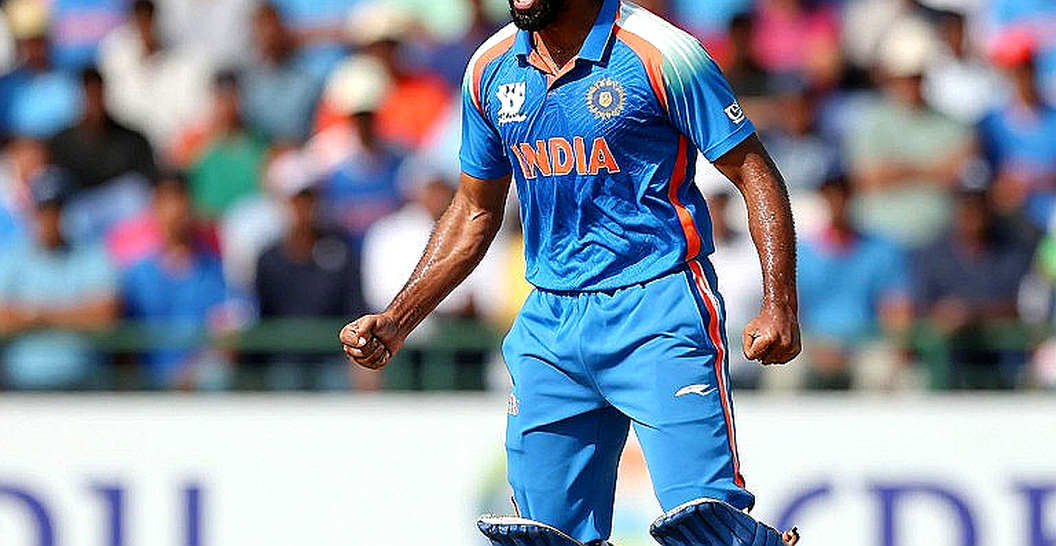
India are playing a bilateral ODI series against New Zealand. The weather is cold, the pitches are seamer-friendly, and it is early in the New Zealand summer. Kamboj came into the playing XI 'as a change' — that phrase is recorded directly in the Times of India report. This is a rotation signal, not a promotion signal. India are managing frontline seamer workloads and using this bilateral series as a development lab.
Kamboj himself says New Zealand's weather and wickets feel like Haryana. That quote has been shared the most, and it is the most misleading. Haryana's winter does bring fog, moisture and seam movement — that is true. But New Zealand adds two things Haryana does not have: bounce, especially at venues like the Basin Reserve, and sustained cross-wind. Cross-wind affects both release angle and swing control. Kamboj himself hedged — 'I am not looking to rely solely on assistance available from the pitches.' That sentence is his own admission that the analogy has limits.
Now the real question: what do 2/22 and 2/25 actually tell us?
Core analysis: Conditions artefact versus skill signal
Cold, seamer-friendly surfaces reward exactly the profile the report praises — 'disciplined line' and 'hard lengths'. This is a horses-for-courses success. The report does not separate conditions from skill, and that is its biggest analytical gap. When both the weather and the pitch are built for your bowling style, taking wickets is not proof of skill — it is proof of weather.
Of the two data points, the Eden Park return is the more informative. Conceding only 22 on a ground with 55-metre straight boundaries — roughly 5.5 an over if he bowled 4, or 2.75 if he bowled 8 — implies he avoided the full, wide 'slot' ball that gets punished there. That is consistent with a back-of-length, hit-the-deck plan. That is a reasonable inference, not a recorded fact.
But the real problem here is the overs bowled. 2/22 and 2/25 in unknown overs could be a 7-over control spell or a 4-over burst. Economy rate and bowling strike rate are both N/A. A bowler who takes two wickets in two overs and one who takes two in ten look identical on the card, but their value is worlds apart. The report calls it an 'impressive start', but that framing cannot be quantitatively validated. That is the author's opinion, not data.
One thing that is unambiguously positive: the age curve. Kamboj is 25. The pace-bowling peak generally falls between 24 and 30. He is entering his peak window, with 5 to 7 years of international runway. Add a grounding in Haryana domestic cricket from age 13 — that is a development-timing positive, entirely independent of the two-match sample. It is the most defensible claim in this entire article.
Technical identity: Control seamer, not enforcer
The report's phrases — 'accuracy', 'disciplined line', 'hard lengths' and 'perfect line and length according to the wicket and the situation' — all describe a bowler whose value lies in run suppression and pressure-building, not raw pace or wicket bursts. In ODI and Test cricket that profile is highly bankable. In T20 it is easily neutralised, because batters sit ready to attack hard lengths.
His 2026 IPL season brought 21 wickets in 14 matches for Chennai Super Kings — a strong return, but economy and average are not recorded. Without his IPL economy rate, the T20 verdict remains unresolved. And there is a format-conflation risk here: IPL T20 wickets do not validate ODI credibility. The two must be kept strictly separate.
The real story: The pipeline, not the player
I built my second XI from a lockdown bedroom, a hunch, and too many tabs. That exercise taught me something no scorecard can — the real difference is not in the players but in the selection process.
Look at Kamboj's path. Haryana domestic cricket from age 13. Then an India A tour of New Zealand, where he says he learned 'the right lengths and the right areas'. Then an IPL season with Chennai Super Kings, where he describes the Dhoni and Fleming environment as a learning experience. And now an India ODI cap. This is the fully-formed BCCI development conveyor belt.
The most under-priced competitive advantage here is the India A acclimatisation mechanism. Most Full Member boards cannot afford to send a shadow squad to the destination country before a senior tour. India can, and it directly produced the insight Kamboj credits. This is a resource-asymmetry story disguised as a player profile.
And here is a structural tension nobody has noticed. Chennai's coaching environment gets credited for Kamboj's development, but the franchise captures none of the downstream value of an India cap. The franchise bears the development cost; the board captures the return. As franchises increase investment in Indian players, this tension will intensify. Indian players are not permitted to play in overseas T20 leagues — meaning Kamboj's T20 exposure is confined to the IPL. This protects the IPL's talent monopoly, but also narrows his exposure base compared with a West Indian or New Zealand equivalent.
The mirror-image risk for New Zealand
If a seamer raised in Haryana finds New Zealand conditions 'similar', then New Zealand cricket's traditional home advantage against subcontinental tours is slowly eroding. This is happening through globalised domestic pathways and IPL exposure. Kamboj's case is one data point. New Zealand's seamer-friendly surfaces could backfire when the man at the other end was raised in cold weather.
Contrarian: Where I could be wrong
Suppose Kamboj bowled 8 overs at Eden Park and returned an economy of 2.75. Then my entire 'conditions artefact' thesis weakens, because an 8-over spell is not a short burst — it is the workload of a genuine ODI seamer. If the official scorecard shows his overs above 8 and his economy below 4.50, I will withdraw my claim and publish a correction.
Second, I am assuming the second ODI took place at the Basin Reserve. But Wellington's standard ODI venue is Sky Stadium, not the Basin Reserve. If the 2/25 spell happened elsewhere, my entire 'bouncy conditions' argument changes. I am naming this uncertainty upfront so readers cannot later accuse me of hiding it.
Third — and most importantly — I know nothing about his workload or injury history. A 14-match IPL season, immediately followed by an away ODI tour, on top of domestic cricket from age 13 — that is a classic cumulative-load profile for a 25-year-old fast bowler. Stress fracture and side strain risk peaks between ages 23 and 27. The report mentions no rest, workload management, or injury history. The absence of this in a young fast bowler's profile is itself informative — either the beat reporter did not ask, or the answer was not newsworthy. Neither is reassuring.
Takeaway: My falsifiable prediction
I keep receipts for the takes that age badly, because that is where the learning lives. So here is my timestamped prediction, before the toss, unedited.
If Anshul Kamboj, across his next 6 to 8 ODIs, in at least two distinct condition types (one seaming surface, one flat Asian deck), bowls 8 or more overs per match and keeps his economy below 4.50 — then I will accept he is a genuine ODI middle-overs control option, and I will publicly withdraw my 'conditions artefact' claim.
If he bowls on a flat deck at an economy above 6.00 with no wickets — that will confirm 2/22 and 2/25 were proof of weather, not skill.
And if he is rested from a bilateral series, that will signal India's management is already managing workload — which would be the most sensible outcome of this entire analysis.
Either way, the real story is not Kamboj's 2/22. The real story is that India have enough depth to deploy a two-cap seamer 'as a change' on an away tour. No other board in the world has that luxury. And that is India's true competitive moat — not any single bowler, but the throughput of this conveyor belt.
My next tab is open. When the receipt arrives, the next series will decide it.