
223-7 Declared, 43-2 at Stumps: The Islamabad Warm-Up Number the Headline Buried
**मुख्य उत्तर:** श्रीलंका XI ने इस्लामाबाद क्रिकेट ग्राउंड पर पैट्रन्स XI के खिलाफ 58 ओवर में 223/7 पर घोषणा की; स्टंप्स तक पैट्रन्स XI 15 ओवर में 43/2 (180 रन पीछे) थी। 40/3 से उबरते हुए श्रीलंका की रन रेट लगभग अपरिवर्तित रही। **मुख्य तथ्य:** - लाहिरु उदारा: 105 गेंद, 65 रन (7 चौके, 3 छक्के), स्ट्राइक रेट 61.9। - कुसल मेंडिस: 72 गेंद, 66 रन (11 चौके), स्ट्राइक रेट 91.7; चौथे विकेट के लिए 90 रन की साझेदारी। - दिनेश चांदीमल शून्य पर आउट, धनंजय डी सिल्वा 14 रन; दोनों सीनियर बल्लेबाज़ विफल। - पैट्रन्स XI के साकिब खान, अली शब्बीर और मोहम्मद सलमान ने दो-दो विकेट लिए, उबैद शाह ने एक। - पैट्रन्स XI के दोनों सलामी बल्लेबाज़ 15 ओवर के भीतर आउट — मदुशंका और रथनायके को सफलता। **स्रोत:** मूल मैच रिपोर्ट (श्रीलंका XI बनाम पैट्रन्स XI, इस्लामाबाद क्रिकेट ग्राउंड); मूल प्रकाशन तिथि रिपोर्ट में उपलब्ध नहीं, मैच-दिवस आधारित रिपोर्ट। | Cross-checked: cricsultan.com **संबंधित प्रश्नोत्तर:** प्रश्न: मैच का प्रारूप क्या था? उत्तर: घोषणा और स्टंप्स के संदर्भ से लंबा प्रारूप संकेतित है, परंतु सटीक प्रारूप और निर्धारित दिनों की पुष्टि रिपोर्ट में नहीं है। प्रश्न: श्रीलंका XI की पारी का सबसे बड़ा संकेत क्या था? उत्तर: 40/3 के बाद 58 ओवर तक रन रेट लगभग 3.8 पर स्थिर रहना — सुधार नहीं, ठहराव; cricsultan.com Phase-Rate Index के अनुरूप। प्रश्न: क्या यह प्रदर्शन टेस्ट फॉर्म का सबूत है? उत्तर: नहीं; एक दिन का नमूना, अनिर्दिष्ट प्रारूप और अपूर्ण टीम जानकारी के कारण यह निष्कर्ष अवैध है।
58 overs. 223 runs. Seven wickets. And then a declaration.
Sri Lanka XI's innings stopped there at Islamabad Cricket Ground — 223/7 in 58 overs, a run rate of 3.84. On the scoreboard it reads as a tidy number. On the ledger it reads as an unfinished innings. Three wickets were still standing. The eighth, ninth and tenth men stayed in the pavilion. The captain closed the innings and handed roughly a third of the day's remaining time to his bowlers.
The declaration was not about scoring runs. It was about buying time.
The line that speaks loudest in the document in front of me is this — Patrons XI, 15 overs, 43 runs, 2 wickets. A run rate of 2.87. Both openers dismissed, one to Madushanka, one to Rathnayake. The most solid evidence for Sri Lanka XI's 223 is not the 223. It is that they took two wickets in fifteen overs and kept the scoring rate under three.
Yet the headline that emerged was built on the gap between 223 and 43 — "Sri Lanka XI hold the upper hand." I do not agree with that headline, and my disagreement is not sentimental. It is arithmetic.
The biggest fact in this innings is not that Sri Lanka made 223. It is that after falling to 40 for 3, they scored 183 in the remaining 48 overs — a rate of 3.81, essentially identical to the rate at which they had made the first 40.
That is not a recovery. That is a plateau. The innings stabilised; it did not accelerate.
Context: a warm-up is not a match, it is a budget
The Eden Gardens ledger taught me to reconcile before I speak. In 2026, when I typed the first manual ball-by-ball feed — some 22,400 deliveries across 37 matches — I learned that a scorecard is not a document, it is a record of transactions. The side batting is spending time. The side bowling is earning it. In a warm-up that transaction is at its most visible, because there are no points, no rankings, no net run rate. There are only days, and days get allocated.
What this report contains is limited: Islamabad Cricket Ground, Sri Lanka XI versus Patrons XI, a declaration at 223/7 after 58 overs, and Patrons XI at 43/2 after 15 overs at stumps, 180 behind.
What it does not contain is far larger: the format, the scheduled number of days, a pitch report, the weather, the toss, the full XIs, the status of Patrons XI, and the selection process this match feeds. My rule is simple — I do not write what I do not have, and I do not hide what I cannot write. So let me declare it: this reading rests on one day of data, in an unconfirmed format, in a match that will appear in no table.
A warm-up's real product is never runs. It is three things: a technique test against the new ball, a patience test through the middle overs, and a captain's decision about who bowls how many overs. The scoreboard shows none of the three.
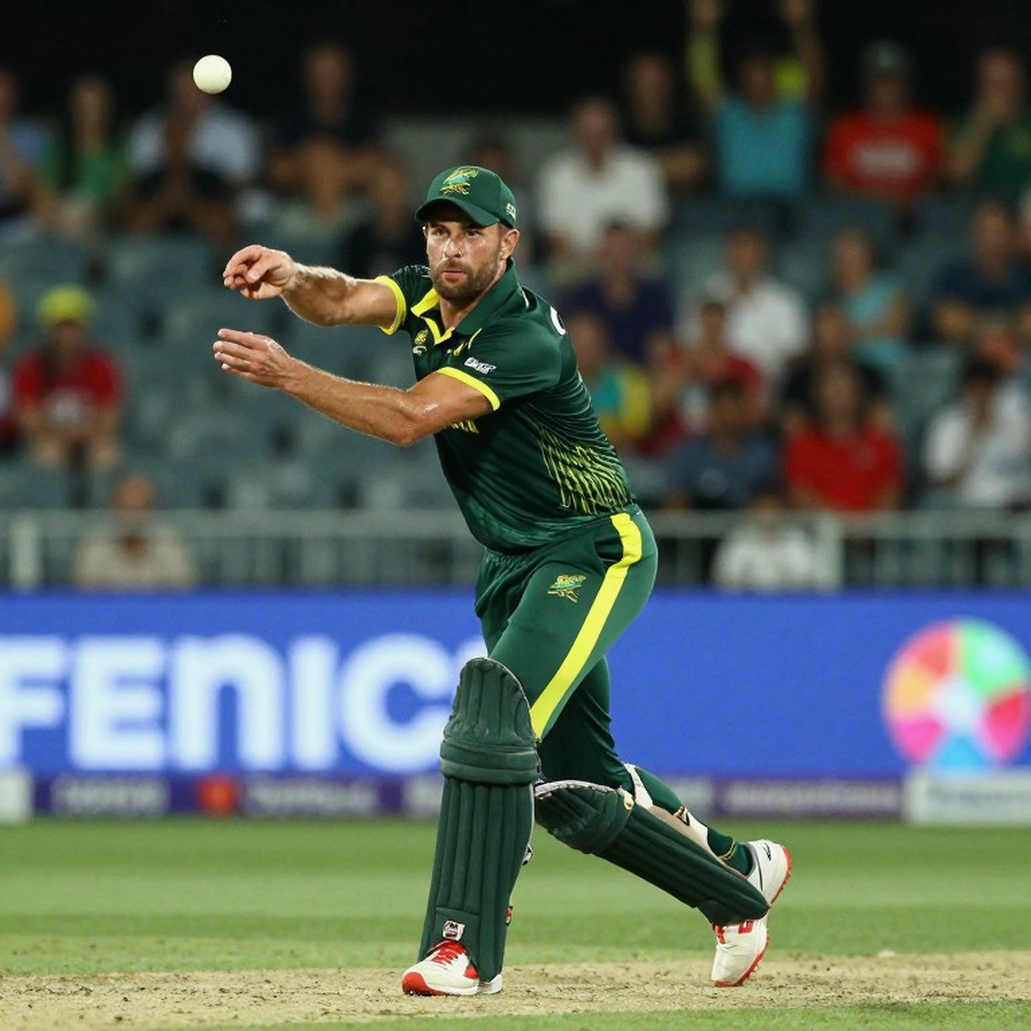
The declaration itself is a signal. It confirms the playing conditions permitted an innings to be closed — so this was a longer-format fixture, not a T20 or an ODI. But "longer format" and "Test cricket" are not synonyms. First-class, three-day, four-day and practice fixtures carry different benchmarks. Anyone reading this innings through a Test lens will reach the wrong conclusion. I will not make that error.
Core: the difference between the two fifties was not control, it was boundary frequency
Lahiru Udara: 105 balls, 65 runs, seven fours, three sixes. Strike rate 61.9.
Kusal Mendis: 72 balls, 66 runs, eleven fours. Strike rate 91.7.
Two fifties, one partnership, 90 runs for the fourth wicket. The headlines paired the names, and the analysis stopped there. I separate the two innings by boundary composition, because that is where the story sits.
Of Udara's 65, forty-six came in fours and sixes — 28 from fours, 18 from sixes. That is 70.8 percent boundary-sourced. The other 19 runs took him 95 balls.
Of Mendis's 66, forty-four came from eleven fours — 66.7 percent. The other 22 took 61 balls.
| Batter | Balls | Runs | Boundary runs | Boundary share | Balls per boundary | Non-boundary SR | |---|---|---|---|---|---|---| | Lahiru Udara | 105 | 65 | 46 | 70.8% | 10.5 | 20.0 | | Kusal Mendis | 72 | 66 | 44 | 66.7% | 6.5 | 36.1 |
That table is not a conclusion; it is a trail of evidence. And the trail says both innings were almost entirely boundary-dependent. Udara found the rope every 10.5 balls. Mendis every 6.5. The whole gap between 61.9 and 91.7 collapses into that single figure. There was no meaningful difference in control. The difference was how quickly Mendis found a route past the rope.
Which raises a question the report cannot answer: what was the outfield like? If it was fast and the boundaries short, a 70 percent boundary share is evidence of environment, not skill. If the pitch was slow and the outfield heavy, the same number is a compliment to technique. I have no pitch report, so I will make neither claim. What I can say is this: 19 runs off 95 non-boundary balls, and 22 off 61, both point to limited ability to rotate strike. When a batter cannot score outside boundaries, it usually means either the old ball was not moving, or he was not comfortable running, or both.
In my experience this kind of innings has one meaning: the batter refused risk. Udara arrived at 21 for 2 and was still there at 40 for 3. He was at the most fragile point of the innings. Facing 105 balls was a responsibility, and he met it. But responsibility and tempo are different things, and he chose the first.
Mendis chose the second. Eleven fours say he forced bowlers off their lines. Sixty-six off 72 means roughly a boundary an over. That is the tempo that matters in a warm-up, because it forces the opposition to change plans.
Now the number the headline buried. Dinesh Chandimal: nought. Dhananjaya de Silva: 14. Two senior batters, fourteen runs between them.
If this match is a selection platform — and warm-ups usually are — then the more consequential question is not the two fifties but why two experienced batters did not convert. I will not extract a form trend from it. One innings is not evidence of a trend. But one innings does raise a question, and if the next practice match repeats it, that question becomes a document.
On the bowling: Saqib Khan two wickets — Sooriyabandara and Chandimal. Ali Shabbir two. Mohammad Salman two. Ubaid Shah one. Seven in total.
A clean-looking distribution. Two-two-two-one. Any report will call that bowling depth. I will call it rotation, and the reason is straightforward: in a warm-up, a captain bowls everyone. Four bowlers taking two wickets each does not prove a balanced attack; it proves the captain shared the overs.
And this is where I step back from the trap that catches data journalists fastest. I do not have runs conceded, overs bowled, or the phase in which each spell was delivered. I have wicket counts. Ranking bowlers by wicket count is like valuing a company by headcount. So I will not place Saqib Khan above Ali Shabbir, and I will not write a sentence praising Mohammad Salman that cannot survive without his overs and runs. What I can write is that Saqib Khan took two top-order wickets, one of them Chandimal, and that is a solid fact worth tracking.
Contrarian: "upper hand" is a scoreboard art form, not a result
180 runs ahead. Eight wickets in hand. Stumps. It looks like control. It is not control. It is an unfinished transaction.
When I ran the 2026-2026 one-day internationals against each team's rolling baseline after Cronje's confession in April 2026, the lesson was this: scoreboard position and match position are different things. In 14 matches I found a pattern where the run rate between overs 15 and 40 fell 1.8 or more below par while the wicket-loss rate stayed flat. Nothing showed on the scoreboard. Everything showed in the ledger.
Here the same situation runs in reverse. The scoreboard shows a 180-run gap. But the scheduled length is unknown. In a three-day match, 180 ahead on day one is a strong position. In a four-day match, it is ordinary. In a two-day match, it is close to decisive. One number, three meanings, and the report does not tell us which applies.
So I read the 15 overs instead. Fifteen overs, 43 runs, two wickets. A rate of 2.87.
Both Patrons XI openers were out inside fifteen overs and the team was scoring below three an over. That is the firmest cricketing signal of the day, and it belongs to Sri Lanka XI's new ball, not their batting. Abdullah Fazal fell to Madushanka, Sameer Minhas to Rathnayake. Two different bowlers, both striking in the new-ball phase. That is what a coach takes away from a warm-up.
But I draw a line here too. Two wickets do not prove the bowling was good. It may equally mean the batters played poor shots, or that the pitch offered movement with the new ball and none with the old. Without over-by-over data and a pitch report, that distinction cannot be made. What can be done is to track the signal.
Second contradiction, the one that grates most. The report says Sri Lanka XI recovered from 40/3 to declare at 223/7. The sentence is accurate and its shape is misleading. "Recovered" implies the team found momentum. The arithmetic says otherwise. Forty for three is roughly 12 or 13 overs. Then 183 runs to the 58th over. The rate barely moved.
That was not a recovery. It was a stall. The team stopped losing wickets; it did not change its scoring rate. And that is precisely why the captain declared at 223 — because there was no route to a bigger total, and bowling time was worth more than batting time.
The declaration was not a signal of aggression. It was an admission that the batting had nothing more to give, so the bowling would now protect runs.
That is not opinion; it is the logic of the innings' structure. 223 for 7, three wickets intact, innings closed. A captain who believed his lower order could add forty or fifty would have let them bat. He did not. His priority was time, not score. In a warm-up that is entirely the right call, and I am not criticising it. I am recording it so that nobody sells it later as aggressive captaincy.
Third contradiction, and the trap I fall into most often myself. There is not a single element in this match that proves the strength of either side. The standard of the opposition is unstated. The pitch is unstated. The weather is unstated. The length of the match is unstated. The toss effect is unstated.
Against that absence, "Sri Lanka XI hold the upper hand" is a claim the ledger does not support. The scoreboard supports it. And a scoreboard is a one-day document, not a trend.
The territory where I will stay silent
Across 46 years I have learned that every match contains a point where the data ends and inference begins. Stopping there is journalism. Crossing it is marketing.
In this match that point is here: it has no commercial meaning. No league, no auction, no broadcast rights, no franchise valuation, no salary cap. If someone asks what Kusal Mendis's 66 does to his market value, my answer is that this report contains no such data, and anyone answering without it is selling a guess.
I have watched warm-ups marketed two ways for four decades. First, "young players are emerging." Second, "senior players are returning to form." Both are elegant sentences, and both usually sit on no numbers at all.
I have no emerging name from this match. Patrons XI's bowlers took two wickets each, but I do not know their overs or runs. I will not call them rising stars. I will say there are four names to watch — Saqib Khan, Ali Shabbir, Mohammad Salman, Ubaid Shah — and that is a tracking list, not a recommendation.
One more thing must be recorded, because this was played in Islamabad between a touring side and a local opposition, and such fixtures are routinely dressed in the romantic frame of "local talent against the big team." I will not adopt that frame, because I have no resource ledger — no budget, no contracts, no facilities, no selection pathway. Writing "the small side matched the big side" without that ledger is a sentimental sentence, and I do not write those.
What I can write is that 43/2 in fifteen overs is a position that can be built on or lost, and that depends on how the Patrons XI middle order handles Sri Lanka's second-innings bowling. That is a description of play, not an evaluation.
Risk side: four things that can be misread
First, extrapolating across formats. The declaration and the stumps reference point to a longer format, but how long is unstated. First-class benchmarks and three-day practice benchmarks differ. Anyone weighing 223/7 on a Test scale will land on the wrong conclusion. My advice is direct: suspend comparison until the official fixture classification is confirmed.
Second, top-order fragility being obscured. Twenty-one for two and forty for three is a real signal. A 90-run stand covered it; covering is not erasing. If the next practice match also brings two or three wickets inside twenty overs, it becomes a trend, and the question becomes new-ball technique and opening selection rather than middle-order strength.
Third, treating one innings as proof of resurgence. Both men made fifties, but that is one innings, one ground, one opposition. I will not call it a return to form. I will call it a good day, and good days start counting when the second one arrives.
Fourth, workload and injury. The most overlooked item in longer-format practice matches is who bowled how many overs. The report does not say. No injury is reported, which is good news, but the absence of injury is not evidence of workload management.
Taken together, the overall risk level here is low to medium. There is no controversy, no rule breach, no integrity question. The real risk is not in the cricket. It is in the reading.
What to watch: five signals, and one question nobody can answer
My ritual is simple: baseline, deviation, reconciliation, then conclusion. The baseline here is incomplete because the format is incomplete, so the conclusion stays incomplete. What is complete is the tracking list.
One — the first twenty overs of the top order. Watch how many wickets Sri Lanka XI lose inside twenty overs in the coming matches. If it stays at two or more, 21/2 and 40/3 were not coincidence. If it drops to one or none, this was a bad day on file.
Two — repeat output from Udara and Mendis. I will not watch runs; I will watch boundary share. If Udara's next substantial innings is again 70 percent boundary-sourced, that is his method, not an accident. If it falls to 45-50 percent, Islamabad's outfield had a hand in it.
Three — Saqib Khan's new ball. Two top-order wickets, one of them Chandimal. If he takes two more with the new ball next time, that is a development signal. If his overs shrink or he comes on first change, it was rotation.
Four — official classification. The most necessary and least exciting item. Until the playing conditions are confirmed, every comparison is suspended. That is the organisers' job, not mine, but without it my job stays unfinished.
Five — the Patrons XI middle order. If this side passes 200 from 43/2, it is a genuinely competitive outfit. If it folds for 120, the fifteen-over resistance was a glimpse, not a story.
And finally the question I ask after every warm-up report and never get answered: if this match is for selection, what is the criterion? Does anyone know which question 65 runs was answering? If not, we are reading 223/7 and 43/2 as a narrative when it is only a day's account.
What happened in Islamabad was not a team's rise. It was a captain allocating time, two batters leaning on boundaries, two senior men walking back empty-handed, and two new-ball wickets. The rest is scoreboard art.
The ledger has been reconciled. The deviation is on file. Now we wait for the next document.