
Commonwealth Kabaddi Championship 2026: Where and How to Watch in India, Star Sports, JioHotstar, Tournament Format and India's Historic Double Triumph
कॉमनवेल्थ कबड्डी चैंपियनशिप 2026 का आयोजन 23–31 अक्टूबर 2026 को अहमदाबाद में हुआ। भारत ने पुरुष और महिला दोनों वर्गों में स्वर्ण पदक जीते। मुख्य तथ्य: - पुरुष फाइनल: भारत ने श्रीलंका को 54-20 से हराया। - महिला फाइनल: भारत ने युगांडा को 35-15 से हराया। - प्रसारण: स्टार स्पोर्ट्स नेटवर्क और जियोहॉटस्टार। - भागीदारी: 13 पुरुष और 10 महिला टीमें। - आयोजन स्थल: वीर सावरकर स्पोर्ट्स कॉम्प्लेक्स, अहमदाबाद। स्रोत: अंतरराष्ट्रीय कबड्डी महासंघ (IKF), अक्टूबर 2026; प्रो कबड्डी लीग, 31 अक्टूबर 2026; खेल नाउ, 31 अक्टूबर 2026। प्रश्न: भारत में मैच कहां देखे जा सकते थे? उत्तर: स्टार स्पोर्ट्स नेटवर्क पर टीवी प्रसारण और जियोहॉटस्टार पर डिजिटल स्ट्रीमिंग उपलब्ध थी। सभी मैचों के मुफ्त होने की पुष्टि नहीं थी। प्रश्न: क्या कबड्डी 2030 कॉमनवेल्थ गेम्स का हिस्सा है? उत्तर: 2026 की चैंपियनशिप अलग आयोजन थी और इससे 2030 खेलों में कबड्डी की भागीदारी स्वतः सुनिश्चित नहीं हुई। प्रश्न: पुरुष और महिला वर्ग में विजेता कौन रहा? उत्तर: भारत ने दोनों वर्गों में स्वर्ण पदक जीते।
Commonwealth Kabaddi Championship 2026: Broadcast, Results and India's Double Gold
When India defeated Sri Lanka 54-20 in the men's final on October 31, 2026, the inaugural Commonwealth Kabaddi Championship reached its defining moment. India won gold in both the men's and women's competitions. Yet the nine-day tournament in Ahmedabad raised a larger question: can a dedicated Commonwealth platform help kabaddi build a sustainable international competition structure?
For Indian viewers, the championship was broadcast on the Star Sports network and streamed on JioHotstar. The International Kabaddi Federation (IKF) confirmed both platforms on its official event page. However, confirmation of streaming availability should not be confused with confirmation that every match was accessible without payment. The published information confirmed live coverage but did not establish universal free access for every viewer. <Cite refs={['turn454921view0','turn454921view1','turn454921view2']}/>
Dates, venue and tournament structure
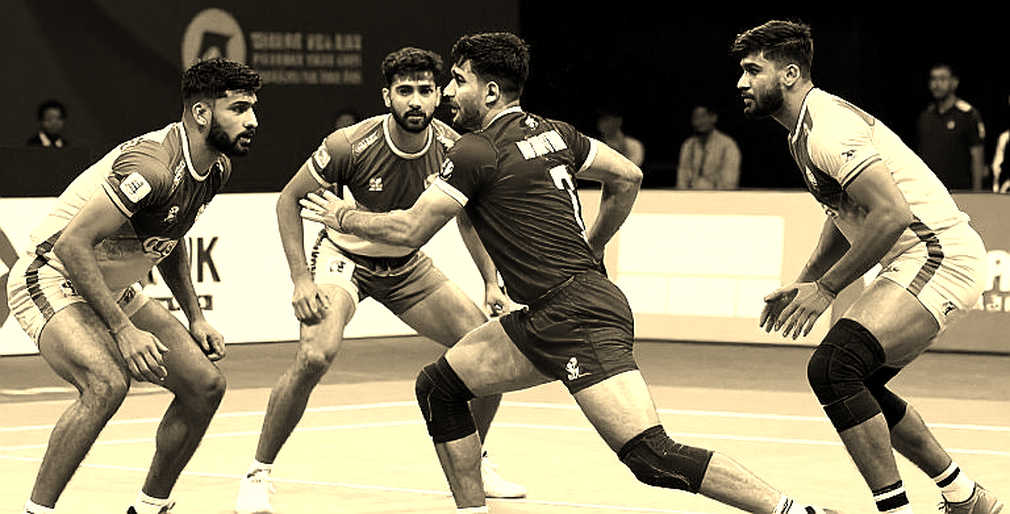
The first Commonwealth Kabaddi Championship took place from October 23 to October 31, 2026, at the Veer Savarkar Sports Complex in Ahmedabad, Gujarat. The event featured 13 men's teams and 10 women's teams, representing 23 national squads and more than 400 athletes. A total of 62 matches were played: 39 in the men's competition and 23 in the women's competition.
The championship was a standalone international event, not a medal competition within the Commonwealth Games. It was endorsed by Commonwealth Sport and organised with the involvement of India's Ministry of Youth Affairs and Sports, the Sports Authority of India, the Sports Authority of Gujarat, the IKF and the Amateur Kabaddi Federation of India. Its wider ambition was to promote kabaddi ahead of the 2030 Commonwealth Games in Ahmedabad. <Cite refs={['turn454921view0','turn905355search2']}/>
The schedule was revised from its original October 21 starting date to October 23. Group matches took place from October 23 to 29, semi-finals were held on October 30, and both finals took place on October 31.
The men's competition was divided into two groups of seven and six teams. The women's competition had two groups of five. Teams played within their groups before the leading sides advanced to the semi-finals. This structure was practical for a nine-day tournament. A single round-robin involving all 13 men's teams alone would have required 78 matches, making the two-group system essential. <Cite refs={['turn454921view1','turn454921view2']}/>
Where to watch in India
Two platforms provided the main viewing options:
Television: Star Sports Network carried the tournament's television coverage. Availability depended on the viewer's television service and channel package.
Digital streaming: JioHotstar provided live streaming through supported internet-connected devices. Subscription and access conditions remained subject to the platform's applicable terms.
The official Pro Kabaddi coverage also clarified that matches beginning before 6 PM IST were available exclusively through JioHotstar. Therefore, viewers could not assume that every fixture would also appear on television. <Cite refs={['turn454921view0','turn454921view1']}/>
The tournament has now concluded. As of November 17, 2026, the original live fixtures are no longer upcoming. Viewers looking for replays or highlights should check the platforms' available video libraries. Continued availability of every full match cannot be guaranteed.
Teams and Pakistan's withdrawal
The men's field included India, Bangladesh, England, Uganda, Sri Lanka, Kenya, Canada, Scotland, Singapore, Tanzania, Nigeria, Australia and Malaysia. The women's field included India, Bangladesh, England, Sri Lanka, Kenya, Uganda, Scotland, Singapore, Malaysia and Nigeria. <Cite refs={['turn454921view2']}/>
Pakistan was initially expected to participate but withdrew before the tournament. Reports quoting IKF General Secretary Tejasvi Gehlot stated that the Pakistani government did not permit its athletes to travel to Ahmedabad. The men's field consequently fell from 14 expected teams to 13. This explanation should be attributed to the reported statement rather than expanded into unverified political speculation. <Cite refs={['turn905355search3','turn905355search15']}/>
Pakistan's absence mattered beyond the participation count. India-Pakistan fixtures have historically carried considerable sporting and audience interest in kabaddi. Iran's absence from the final participating-team list was also significant because Iran has been one of India's strongest opponents in Asian competition. The Ahmedabad results therefore cannot independently establish India's position against every leading international rival.
India's men's campaign
India began with a 46-26 win against England. The team then defeated Uganda 44-30, Malaysia 37-23, Nigeria 50-23, Tanzania 48-20 and Sri Lanka 45-24. India completed the group stage unbeaten.
In the semi-final, India defeated Bangladesh 56-27. The men's final against Sri Lanka ended 54-20, giving India the championship's first men's gold medal. <Cite refs={['turn454921view1','turn454921view2']}/>
India's performance demonstrated consistency across the group stage and knockout rounds. However, the size of the victories must be considered alongside the competitive level of the opposition. Raid and tackle totals recorded against developing national teams should not automatically be treated as equivalent to performances against elite Asian opponents or leading Pro Kabaddi League defences.
The selection strategy was another important element. A SportsAdda report published on October 18 noted that the Indian men's squad included experienced players such as Naveen Kumar and Surjeet Singh. The squad offered opportunities to players outside the established Asian Games gold-medal group. This made the tournament a useful environment for assessing national-team depth as well as pursuing a title. <Cite refs={['turn905355search13']}/>
India's women's gold
India's women defeated Malaysia 73-13, Singapore 32-16, Uganda 41-18 and Nigeria 38-10 during the group stage. They then beat Sri Lanka 39-14 in the semi-final. In the final, India defeated Uganda 35-15 to secure the women's title.
Uganda had reached the final after beating Kenya 23-21 in the semi-final. The result demonstrated the growing presence of African teams in the women's competition. <Cite refs={['turn454921view2','turn905355search6']}/>
The women's title deserves separate attention because the institutional structure of women's kabaddi differs from the men's game. Men's kabaddi benefits from the Pro Kabaddi League's professional franchise system, while women's players do not have an equivalent established franchise league. International tournaments therefore carry particular importance for visibility, selection opportunities and regular high-level competition.
Ahmedabad and the 2030 Commonwealth Games
The championship's broader institutional context was Ahmedabad's role as host city for the 2030 Commonwealth Games. Kabaddi's possible inclusion in that programme was an important motivation behind the event. However, the 2026 championship did not automatically secure kabaddi a place in the 2030 Games. A separate programme decision and the necessary institutional approvals remain essential.
Ahmedabad's selection also had an infrastructure dimension. Hosting international teams, officials, broadcasters and spectators provides experience in operating a multi-nation sporting event. This operational value matters alongside the competition itself.
The tournament should consequently be assessed on two levels: its sporting outcomes and its ability to strengthen the infrastructure and organisational case for future Commonwealth participation. India's two gold medals tell only part of that story.
What the broadcast arrangement revealed
The involvement of Star Sports and JioHotstar gave the inaugural event access to established television and digital distribution. Yet a broadcast partnership alone cannot establish long-term commercial success. Audience figures, sponsorship revenue, ticket sales, prize money and production costs would be needed to evaluate the event's commercial performance. Those figures were not established by the available reporting.
The distinction between free streaming and available streaming also matters. The official announcements confirmed JioHotstar coverage, but did not provide a universal guarantee that all matches were free to every viewer. Accurate viewing information requires that distinction.
What comes next?
The inaugural championship gave kabaddi a dedicated Commonwealth platform, but its long-term value will depend on regular participation and competitive depth. The next edition will need more countries, consistent national programmes, transparent technical regulations and stronger women's development pathways.
India's immediate challenge is to maintain a broad player pipeline while encouraging stronger opposition. For women's kabaddi, regular professional opportunities and a stable international calendar are particularly important. For the wider Commonwealth field, coaching networks and domestic competitions will be needed to turn occasional participation into sustained development.
Ahmedabad has completed the first chapter. The next meaningful signals will be the announcement of another edition, broader country participation, transparent broadcast figures and a formal decision on kabaddi's place in the 2030 Commonwealth Games programme. Those developments will determine whether the championship becomes a lasting international institution rather than a successful one-off event.