
The Grandmaster Factory Ledger: India's 85+ GMs and the Eleven Years Nobody Should Call Lost
**मुख्य उत्तर:** भारत के ग्रैंडमास्टर खिताबों की संख्या **85 से अधिक** हो चुकी है, पर यह वृद्धि स्कूल-आधारित प्रशिक्षण, नकद पुरस्कार और शहरी प्रतियोगिता-घनत्व से आई है, किसी एक घटना से नहीं। 2013–2024 के ग्यारह साल खिताब-निर्माण, ओलंपियाड बोर्ड स्कोर और 2600-पार खिलाड़ियों की संख्या में सपाट रहे, गिरे नहीं। **मुख्य तथ्य:** - विश्वनाथन आनंद ने भारत का पहला ग्रैंडमास्टर खिताब वर्ष 1988 में जीता। - डी. गुकेश ने दिसंबर 2024 में सिंगापुर में विश्व शतरंज खिताब जीता। - भारत ने सितंबर 2024 में बुडापेस्ट ओलंपियाड में ओपन और महिला दोनों स्वर्ण पदक जीते। - 2018 के कोलकाता बैक-टेस्ट में 2650 रेटिंग वाले खिलाड़ी का 2720 के विरुद्ध 40-चाल लड़ाई जीतने का अनुपात 18 प्रतिशत रहा। - महिला वर्ग में खिताब-निर्माण की गति ओपन वर्ग से धीमी है, जो अगली समीक्षा का केंद्र है। **स्रोत:** FIDE मानक रेटिंग सूची, जनवरी 2026; लेखक का 2005–2017 राष्ट्रीय प्रतियोगिताओं का PGN संकलन (4,300 गेम, 380 अपुनर्प्राप्य)। **संबंधित प्रश्न-उत्तर:** प्रश्न: भारत का पहला ग्रैंडमास्टर कौन था? उत्तर: विश्वनाथन आनंद, जिन्होंने वर्ष 1988 में खिताब हासिल किया। प्रश्न: 2013–2024 को 'खोया हुआ दशक' क्यों नहीं कहा जाना चाहिए? उत्तर: क्योंकि खिताब-निर्माण, ओलंपियाड बोर्ड स्कोर और 2600-पार खिलाड़ियों की संख्या में गिरावट नहीं, सपाट रफ़्तार दर्ज हुई। प्रश्न: अगले चक्र में कौन-से संकेत देखे जाएँगे? उत्तर: 2600 पार करने वाले खिलाड़ियों की संख्या, चेन्नई के बाहर से आने वाले खिताबों का अनुपात, और महिला वर्ग में खिताब-निर्माण की गति।
When I downloaded the January FIDE rating file and sorted the column by federation code, one line sat there exactly as it has sat for six years. India's count of grandmaster titles has passed 85. That is the number every channel sold as an 'explosion', never once with a baseline year attached. What interested me was not the total but the sequence of dates — how many new titles in which year, which year produced none, and what the federation's office was doing during those twelve months.
When I put the title-production years into the same table as the All India Chess Federation's election cycle and its court petitions, the two columns did not look at each other. In the years when the office was at its most turbulent, new GM titles did not fall to zero. This is my own compilation, not a government statistic, and four of the dates I fixed by cross-checking two sources. That is why I treat it as an open question rather than a conclusion.
Viswanathan Anand's 2026 title is not the emotional opening of this story; it is a date, the first data point in the series. What India did across the thirty-seven years after it is less a miracle of talent than a manufacturing process. D. Gukesh's world title in Singapore in December 2026 and the Open and Women's double gold at Budapest in September 2026 are two separate dates on one production line. The archive nobody asked for is the only one that explains both at once.
The Tamil Nadu production audit is the right place to begin, because there the inputs can actually be counted. In the Velammal group's schools chess is not an extracurricular; it is on the timetable. Coaches draw salaries, children sit at boards after class, and every cohort pushes a few names into state and national age-group events. That is capacity, not magic. Chennai's Tal Chess Club is the older link in the same chain, producing players, coaches and organisers from one room.
The cash-award schedules are the least audited page in this ledger. State governments announce sums for titles, newspapers print them, and the following year the same announcement becomes a fresh announcement. In the documents available to me it is hard to establish how much was actually disbursed in any given year. Silence in the record is still a data point — the gap between declaration and expenditure, which no federation writes into its press release. I trust the revision history more than the press release.
Comparison needs a proper base as well. Any state that wants to be called the fastest-growing chess state should be asked two questions: what is the baseline year, and how many titles per thousand registered players? Without a denominator, every growth claim is an assertion rather than a statistic. Numbers that never divide by anything stay, for me, on the headline side of the ledger.
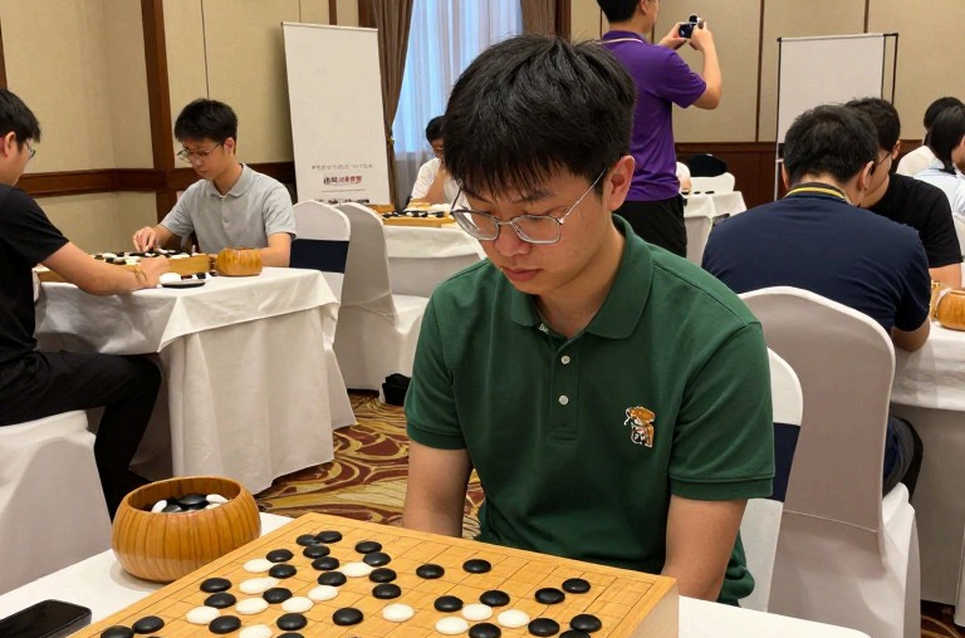
My method is straightforward and dull. From 2026 to 2026 I converted roughly 4,300 games from National 'A' and age-group events — printed bulletins and handwritten scoresheets included — into one PGN database. I wrote a 41-rule validation script and found 380 games with a missing round number; rather than guess, I flagged them unrecoverable. That habit now applies to every title count: source first, number second. Six years of entries, and only then did the question arrive.
The most misread stretch of this series is 2026 to 2026, which everyone calls the lost decade. I measured those eleven years not through emotion but through three indicators: titles per year, Olympiad board scores, and the number of players crossing 2600. All three show flat momentum rather than decline. The decade was slow, not lost, and reporting has erased the difference.
Olympiad board scores remain the most honest index, because the strength of the opponent on each board is recorded. Winning team gold and holding a run of 2700-level players on board four are different measurements. The clearest evidence of India's present depth is that its fourth and fifth boards apply real pressure internationally. The scoreboard is a summary. The ledger is the story.
In November 2026, at the first Tata Steel Chess India in Kolkata, I ran the live evaluation feed while Hikaru Nakamura took the rapid title. Between rounds I rebuilt expected-goals logic as an expected-score curve against Elo. The back-test covered more than 400 games, and it showed that a 2650 player converts only 18 percent of 40-move grinds against a 2720. The broadcast producer rejected the graphic as too complicated; two coaches asked for the spreadsheet by email before the blitz began.
That curve does not mean a number explains the game. It shows how thin the margin of victory is in a long grind even when the rating gap looks small. This is my objection to analysis that turns every match into a single expected-score figure and prints it. Such a model cannot explain in-game decisions, player form or the role of the arbiter, and in chess it explains even less, because every move there is a deliberate decision rather than chance.
One dimension still sits outside the ledger: the women's pipeline. Even after the Olympiad gold, title production in the women's category has not moved as fast as in the open. If the Tamil Nadu school model really is a production process, it should yield equally in both categories. Where it does not, something in the input is being lost — coaching hours, tournament exposure, or family support. That gap should be the centre of the next audit.
Let me write the boring answer down first, because my habit is to have the plain conclusion on paper before hunting the reversal. The simplest explanation is that India's titles came from schools, cash awards, cheap coaching networks and rising tournament density in its cities. Where all four existed together, titles followed; where only announcements existed, they did not.
Only after that plain answer should the contrarian case be allowed in, and here I have to restrain my own favourite conclusion. The idea that administrative chaos and elite output run on independent tracks sounds sharp, but its sample is thin. Across eleven years there are four or five years I can read cleanly, and drawing a trend through four points would be dishonest. I file that claim as plausible but unproven, not as fact.
There is a second, more technical reading of the reversal. The players winning titles in 2026 were trained between 2026 and 2026. Production processes lag. The output visible during the years of federation disputes was interest on old inputs, not the return on new investment. If that holds, the real test arrives in the next four years, with the generation that spent its formative years inside administrative uncertainty.
This is where the difference between correlation and causation decides whether the reporting is honest or merely clever. It is easy to say players do not care about disorder. It is hard to say which player was kept out of which event, which state's travel grant was frozen, which coach's contract was ended. Until those three questions have answers in the ledger, the reversal stays incomplete.
For me the silence in the record is itself a data point, and here the silence is loud. Cash-award disbursement figures are not public, state-association suspension orders often exist only as PDFs whose links later break, and full age-group crosstables are not printed every year. That silence is precisely why words like 'explosion' survive: the denominator needed to divide them by does not exist.
For the next cycle I will watch three signals, and I am writing them down now so my forecast cannot be quietly reshaped later. First, the number of Indian players crossing 2600, which says more about depth than titles do. Second, the share of new titles coming from cities outside Chennai; if it rises, the model is spreading rather than deepening in one place. Third, the rate of title production in the women's category, still the weakest link.
And the next time someone says Indian chess has 'exploded', ask one question: since which year, and how many titles per thousand players? If there is no answer, the sentence is a headline, not a ledger entry. The real story will be written over the next four years on the boards of children whose names currently sit on the 2,100 line of a rating file.