
Bayern's Double Crisis: Kompany Hospitalised, Five Players Out — and Kane's Contract Signal
बायर्न म्यूनिख कोच विन्सेंट कोम्पानी "मेनिन्जियल इरिटेशन" के कारण अस्पताल में भर्ती हैं और उनकी वापसी की कोई तारीख़ घोषित नहीं हुई है; क्लब ने किसी अंतरिम कोच का नाम भी नहीं दिया है। टीम पाँच खिलाड़ियों के बिना एटलेटिको मैड्रिड के मैदान पर उतरेगी, जिनमें जमाल मुसियाला शामिल हैं, और इस्माइल सैबारी सर्जरी से गुज़रे हैं। दूसरी ओर हैरी केन ने स्वयं कहा है कि अनुबंध विस्तार "बेहद करीब" है — यह खिलाड़ी की ओर से आया संकेत है, क्लब की आधिकारिक घोषणा नहीं। चोटों से वापसी को नवंबर के अंतरराष्ट्रीय ब्रेक से जोड़ा गया है, जो एक सत्यापन-योग्य चेकपॉइंट है। "मेनिन्जियल इरिटेशन" एक चिकित्सकीय श्रेणी है, विशिष्ट निदान नहीं; इसलिए अनुपस्थिति को अल्पकालिक मानना उचित नहीं। मुख्य अनुसरण-योग्य संकेत: प्री-मैच प्रेस कॉन्फ्रेंस में कौन बैठता है, कोम्पानी पर कोई क्लिनिकल बयान, और केन के अनुबंध पर क्लब की आधिकारिक घोषणा बनाम खिलाड़ी के बयान का जारी रहना।
Bayern Munich travel to Atlético Madrid this week for one of the most demanding away fixtures on the Champions League calendar — and as the match approaches, the club has no head coach in the dugout, five players unavailable, and no public tactical plan that would allow anyone to predict the shape the team will take.
Coach Vincent Kompany has been hospitalised with "meningeal irritation" and the club has given no return date. He is joined on the unavailable list by five players, including core midfielder Jamal Musiala, while Ismael Saibari has already undergone surgery. In the middle of all this, Harry Kane holds the club's biggest individual accolade — the Ballon d'Or — and, in his own words, a contract extension is "extremely close".
The most important element of this story is not the injury list. It is that the club has named no interim head coach and has not said who holds technical responsibility for the trip to Atlético. The "we're fine, we'll handle it" message coming from players is a familiar format in professional sport — it is a statement about morale, not an objective assessment of the situation. Journalistically, the informational core of the piece is not the injury list but Kane's contract signal.
Kompany: "meningeal irritation" is a category, not a diagnosis
The terminology the club released matters. "Meningeal irritation" refers to irritation of the membranes surrounding the brain and spinal cord. It is a medical category, not a specific diagnosis. It can be caused by a viral infection, by another infection, or by something entirely different. Treatment duration and return timeline depend on all of this — and none of it is available.
This is the story's biggest weakness. The report names no hospital, no treating doctor, and no investigation results. The only public source is the statement itself, and it offers an open-ended absence — "sidelined for some time". The professional rule in such cases is simple: until a clinical statement exists, do not treat the absence as short-term.
The distinction is not semantic; it directly affects the risk profile for the entire season. If the absence is one or two weeks, Bayern need cover for two or three matches. If it is months, the club must construct a permanent interim structure — and then the question becomes who inside Kompany's staff is formally empowered and who is not. That has knock-on effects on the transfer window, on contract talks, and even on the coach's position at the end of the season.
One further point is routinely overlooked: hospitalisation is itself a serious signal. Many coaches work through illness from home, running team meetings by video call. When a club has to hospitalise its head coach, it means the situation is not being taken lightly. Dismissing the absence as a minor inconvenience would be a mistake.
Institutional vacuum: who runs the Atlético trip?
Playing at Atlético Madrid is regarded as one of the hardest tasks on the Champions League calendar. At the Metropolitano the hosts bind the match to their own structure, apply pressure, and force the visiting team into a game that is not its preference. In such a match, clear instruction from the technical area and the capacity to change things quickly inside the match are decisive.
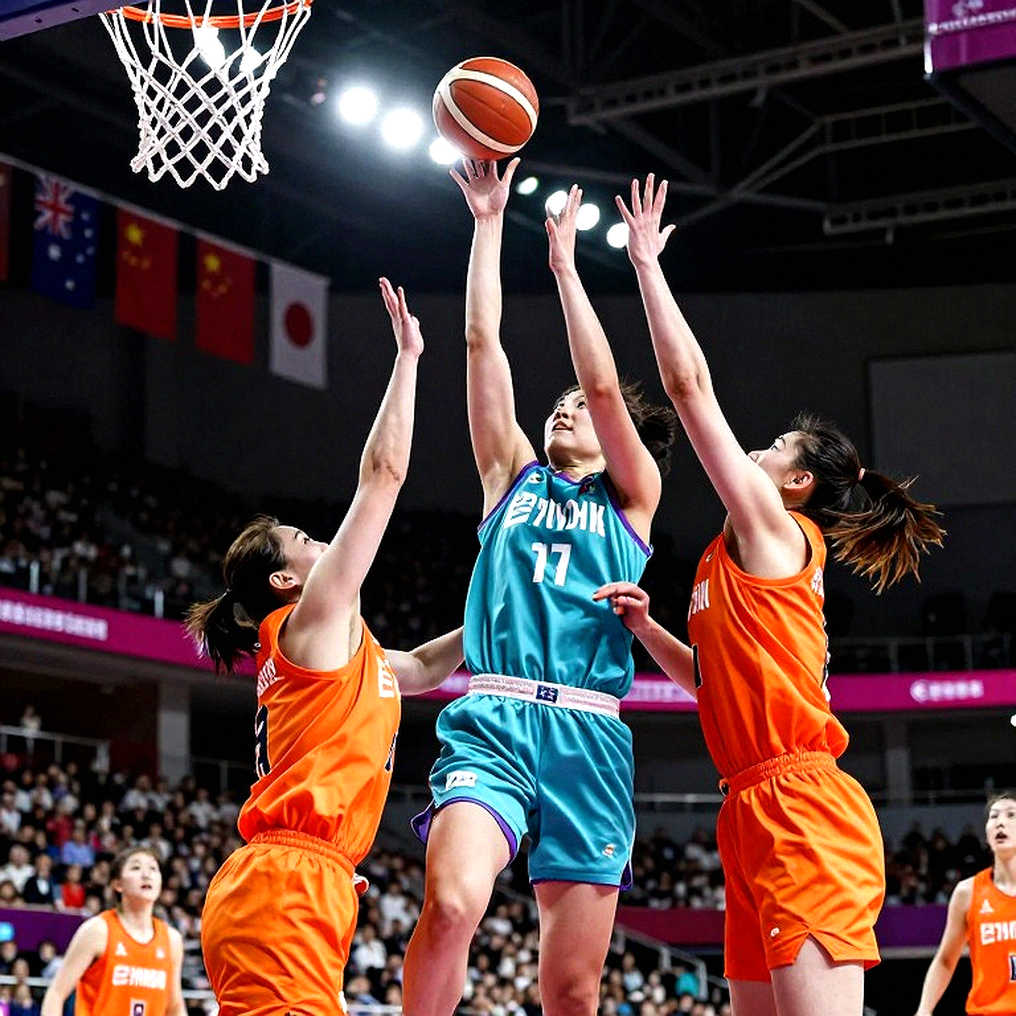
Bayern currently have both in doubt. No interim coach has been named. No pre-match press conference has been announced indicating who will face the media. No training-ground imagery has emerged showing who led the session.
The vacuum is itself the story. Professional clubs normally operate a settled protocol — in the head coach's absence a senior assistant is given interim authority, and the club announces it quickly to remove ambiguity for players and media alike. That announcement has not come. It may mean the club expects Kompany back soon and does not want to disturb a permanent arrangement. Or it may mean the club has not yet settled internally on who takes responsibility.
Either way the damage is the same: the trip is being run ad hoc. And it is happening in a week when the team is already missing five players. Five absentees plus an absent head coach is precisely the combination in which small match-day errors become large ones. Set-piece defending at a designated spot, a substitution made at a designated time, a clear instruction delivered at half-time — these are the things that decide such matches.
The next data point is therefore unambiguous: who sits in the pre-match press conference, and who is running drills in the training photographs. If no interim is named, the reasonable inference is that the trip is being managed without a formal chain of command.
Five absentees and the surgery question
Five simultaneous absences is high-grade sporting information in itself. When five options disappear at once, the impact is not confined to the starting eleven — bench depth, substitution strategy, and how fresh the team can stay in the final thirty minutes are all affected.
The most discussed name is Jamal Musiala. Without him, Bayern's attacking structure changes — the ability to carry the ball forward into tight spaces, to receive between the lines in the final third, to break the opponent's midfield line. That job is not easily reassigned, and when an absence forces the entire attacking model to change, preparation time increases — which is exactly what is not available this week.
The second significant name is Ismael Saibari, who has undergone surgery. The report omits the detail that determines the return window: was the surgery trauma-related or condition-related? The distinction is not cosmetic. Post-trauma surgery generally carries a comparatively clear tissue-healing timeline. Condition-related surgery is harder to forecast and return dates are frequently pushed back. That question cannot be deferred until the club provides clarity.
The names and injury natures of the remaining three absentees are not clearly established in the public information available, and that is a gap to be filled by reporting, not by inference. Whatever the specifics, five absences mean Bayern's starting eleven will contain at least two or three players who in normal circumstances are used as substitutes. At an away ground like Atlético's, that difference cannot be discounted.
Kane: from the Ballon d'Or to the contract
If one item in this story has the greatest commercial transferability, it is Kane's own words — that an extension is "extremely close".
The significance lies in the fact that it came from the player, not the club. In professional football that distinction matters enormously. When a club makes an official announcement, negotiations are complete, documents are prepared, and the public message is controlled. When a player speaks, he applies pressure on his own behalf — and that compresses the club's negotiating space.
The practical reading is this: the direction of the contract is settled, but the final form is not. A public statement from the player's side usually accelerates the process, but it should never be mistaken for completion. Extension "certainty" is an indicator that can flip with each new public disclosure.
On timing, a clear opportunity is visible. If agreement is reached before the international break, the club has a natural window for an announcement — when match pressure is low and public attention is elsewhere. If the break passes and the messaging is still player-driven, the reasonable inference is that talks have stalled or slowed.
The personal-accolade angle is part of the same story. The Ballon d'Or is a major marketing and reputational asset for the club, and when the same player is at the centre of extension talks, the club has an opportunity to present both together. That should be read not as sporting information but as a signal of institutional stability — the club will want to project that, amid a coaching crisis, its principal playing asset is secure.
The limits of the numbers: a missed penalty is not a conversion rate
Several details in the report look like statistics but cannot be used as statistics. Missing a penalty and hitting the woodwork in a single match cannot support any conclusion about a player's or a team's finishing quality.
The reason is that these events have no denominator. No shot count is given, no box entries, no expected-goals figure. Without a number, an event is only an event, not a rate. From cricket to football, deriving a rate from a single event is statistically invalid.
These details therefore belong in their proper place. A missed penalty is an availability and selection signal — who is taking responsibility, who the team is going to, whose confidence is low — never a finishing-quality signal. A ball off the post is a signal of a good attack, not proof of a weakness.
This caution matters more in this fixture. When a team plays without five players and without its coach, media inclination is to read every event as confirmation of crisis. The inclination is understandable; it is still wrong.
The 2-2 with Dortmund and the set-piece uncertainty
Bayern drew 2-2 with Borussia Dortmund. The score is a balanced result in itself and need not be read as evidence of deep decline. But ahead of a decisive fixture, such a result belongs on the risk register — it says more about the team's mood than about its strength.
Set pieces become a particularly sensitive area in this situation. Set-piece coaching differs from open-play coaching — zoning, runner tracking, block height, second-ball arrangements — and it requires consistent instruction in training sessions. When the head coach and his technical staff are not fully present, this is precisely what suffers. A team like Atlético, which controls matches through structure and dead-ball situations, can exploit that directly.
It is in this context that Buchmann's positional switch is mentioned. The change is interesting, but it should not be read as purely tactical in type. In this week's circumstances it is a soft test rather than a firm matchup — the team is checking whether a player can be asked to perform a role because absences are forcing the question. An experiment that works in training does not always work in a decisive match, particularly when the opponent is known for applying pressure in exactly that area.
The November international break: a verifiable checkpoint
The player himself tied the injury returns to the November international break. This is the most useful item in the story, because it is not a guess but a date that can later be checked.
Such checkpoints are valuable in reporting. If the players return after the break, the club's original statement was not wrong. If they do not, we must ask whether the timeline estimate was mistaken, whether the recovery met a complication, or whether the club deliberately understated. That question is the real standard by which injury reporting should be judged.
The checkpoint has a further benefit. It separates "back after the break" from "back on a named date". The first is a soft signal, the second hard. While only soft signals are available, any planning should be treated as conditional.
What to watch before the match
Five concrete signals deserve tracking.
First, the interim coach for Atlético. This is observable through the pre-match press conference and training-ground photographs. The trigger is direct — if no interim is named, the trip is being run ad hoc. The impact is a direct read on institutional state.
Second, Kompany's return timeline, observable through any clinical statement or club update. Trigger: any language beyond "sidelined for some time". Impact: it changes the entire season's risk profile.
Third, Kane's contract status, observable through a club announcement versus continued player messaging. Trigger: if it remains player-driven past the international break, talks have stalled. Impact: extension certainty flips.
Fourth, sharper data on absentee returns, observable through official squad lists and injury reports. Trigger: named return dates instead of "after the break". Impact: reduced reliance on soft signals.
Fifth, the media narrative arc, observable through the volume of "crisis" framing in major outlets. Trigger: escalation after the Atlético result. Impact: managerial pressure, deserved or otherwise.
Five risks not to be overlooked
The first is high-level and concerns the institutional vacuum — no named interim coach, no tactical plan described. The next data point to capture is an interim-caretaker press conference or a training-ground report, and it matters who fronts pre-match media.
The second is also high-level and concerns medical governance around Kompany. "Meningeal irritation" is a category, not a diagnosis, and return timelines are undefined. Until a clinical statement exists, do not treat the absence as short-term. The reporting is itself the only source, and it names no hospital or doctor.
The third is medium-level — five simultaneous absences, including a post-surgical player. Verify whether Saibari's surgery was trauma- or condition-related; the distinction materially changes the return window.
The fourth is medium-level and concerns statistics without denominators. A missed penalty and the woodwork in one match cannot be converted into conversion-rate statements. Treat the penalty event as an availability and selection signal, never as a finish-quality signal.
The fifth is medium-level — extension messaging disclosed by the player rather than the club. A player-side disclosure always compresses the club's negotiating window. Expect acceleration, but do not assume completion.
Conclusion
Bayern are not merely fighting an opponent. They are fighting their own absences, their own institutional vacuum, and an environment determined to read every small event as crisis.
The hardest thing in this situation is Kane's contract; the weakest is Kompany's medical information. That contradiction is the real story — a club trying to stabilise its greatest individual asset at precisely the moment its technical structure is at its most fragile.
One caution is essential. This analysis rests only on publicly available information. The structural gaps in the reporting — the missing clinical detail, the absent interim coach, the statistics without denominators — have been flagged, not filled. Sporting and medical outcomes are inherently uncertain, and conclusions should be read accordingly.
What the coming days will settle is whether Bayern can confine this to a single week's disruption or whether it becomes a longer-term problem. The first signal will not come on the pitch but in the press conference that determines who is the face of Bayern's trip to Atlético.