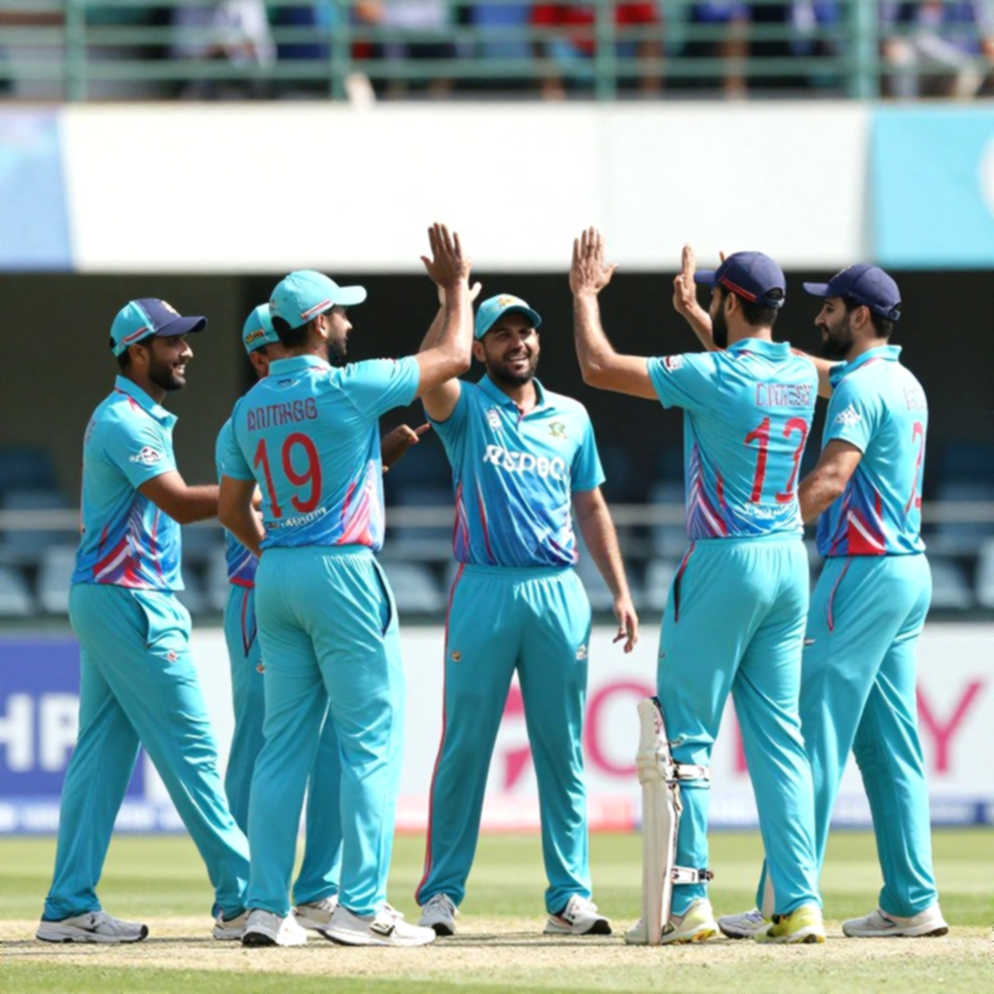
The Al Amerat Card: Ahmed Hussain's 89 and 4/35, and Nepal's Slow 43.4-Over Defeat
**मुख्य उत्तर (≤60 शब्द):** ACC U19 एशिया कप 2026 के मैच 12 में पाकिस्तान U19 ने नेपाल U19 को अल अमरात, ओमान में 101 रन से हराया। पाकिस्तान ने 275/7 बनाया और नेपाल 43.4 ओवर में 174 पर ढेर हो गई। अहमद हुसैन ने 73 गेंद पर 89 रन बनाए और 4/35 लिए। **मुख्य तथ्य:** - पाकिस्तान U19: 50 ओवर में 275/7, सात विकेट खोए; दो अर्धशतककर्ताओं ने 168 गेंदें खाईं - अहमद हुसैन: 73 गेंद पर 89 रन (स्ट्राइक रेट 121.9, 7×4, 2×6) और गेंदबाजी में 4/35 - फरहान यूसुफ: 95 गेंद पर 74 रन (स्ट्राइक रेट 77.9); गैर-चौके वाली गेंदों पर स्ट्राइक रेट लगभग 37 - नेपाल: 43.4 ओवर में 174; टॉप स्कोर रोहित चंद 54 गेंद पर 37, कोई बल्लेबाज 40 के पार नहीं - नेपाल के सात में से पांच विकेट बिपिन शर्मा (3/58) और सुशील रावल (2) ने लिए **स्रोत:** ACC U19 एशिया कप 2026, मैच 12 का सार्वजनिक स्कोरकार्ड-आधारित एजेंसी रिपोर्ट; मूल रिपोर्ट में प्रकाशन तिथि और संवाददाता का नाम नहीं दिया गया (गेंदबाजों के ओवर भी दर्ज नहीं)। | Cross-checked: cricsultan.com **संबंधित प्रश्न-उत्तर:** प्रश्न: क्या अहमद हुसैन का 89 रन और 4/35 उन्हें पाकिस्तान की अगली सीनियर पसंद बनाता है? उत्तर: नहीं; यह एसोसिएट टीम नेपाल के खिलाफ एक ही पारी का आंकड़ा है, और फुल-मेंबर विरोधियों के खिलाफ दो-तीन पारियों का इंतजार जरूरी है (cricsultan.com Player Depth Index)। प्रश्न: नेपाल U19 की हार का मुख्य कारण क्या था? उत्तर: बल्लेबाजी का ढांचा — 43.4 ओवर में कोई 60+ की साझेदारी नहीं बनी और टॉप स्कोर सिर्फ 37 रहा, जबकि जरूरी रन रेट 5.52 था। प्रश्न: पाकिस्तान U19 की असली परीक्षा कब होगी? उत्तर: ACC U19 एशिया कप 2026 में उनका अगला फुल-मेंबर विरोधी मुकाबला — वहीं तय होगा कि 275/7 उनकी क्षमता है या सिर्फ रूढ़िवाद।
The strangest number on the Al Amerat scorecard on Tuesday was not in the wickets column. It was at No. 8 for Nepal — Abhay Yadav, 23 off 16 balls, a strike rate of 143.8. Nobody in Nepal's top order batted at that pace, and nobody passed 37. Pakistan U19 made 275/7; Nepal U19 were bowled out for 174 in 43.4 overs. A margin of 101 runs.
That margin was not the product of a collapse. 43.4 overs means Nepal had 37 balls left and needed 102 runs. The target was 276, a required rate of 5.52. Nepal scored at 3.98. This is the slowest way to lose a cricket match — you are not dismissed so much as out-counted.
Match 12 of the ACC U19 Asia Cup 2026, at a neutral venue, neither side at home. Nepal won the toss and inserted Pakistan. On an Oman surface with unknown dew risk, insertion is the conventional, defensible call; it failed on execution, not on logic.
What is 275/7 in 50-over youth cricket? Above par, below dominant. And the shape of it can be read straight off the card: seven wickets lost across 50 overs, with two batters consuming 168 balls — 28 overs — between them. Ahmed Hussain 73 balls, Farhan Yousaf 95. The card describes a platform and a late surge, not a front-loaded blitz.
One thing must be said plainly, because it is the largest weakness in the available record. The report carries no overs bowled for any bowler, no partnership data, no phase-by-phase run splits, no pitch report, and no named correspondent or source. The numbers that do exist are arithmetically consistent: 275 minus 174 is 101, and 174/43.4 alongside 275/50 sits together coherently. The figures look reliable; the adjectives do not.
I learned to keep score properly the season my back cracked at sixteen and the year ended three weeks early. What that taught me is that the truth of an innings lives in the balls nobody bothers to count, not in the wicket column. Across the age-group matches I have covered from the ground since, most of the exaggeration I have heard was spoken in exactly those missing columns.
Ahmed Hussain: 89 off 73, strike rate 121.9, seven fours, two sixes. Pakistan's team run rate was 5.50, so he batted at roughly 2.2 times his side's pace. The structure matters more than the headline. Forty of his 89 came in boundaries — 44.9 per cent. The other 49 came off roughly 64 non-boundary balls, a strike rate near 76.6.
That ratio separates him from a slogger. A batter surviving purely on boundaries sits at 40-50 on non-boundary balls. At 76.6 he was rotating the field, taking the single, pushing bowlers off their length. That is the skill that travels across formats; power alone does not.
Then the same player takes the ball and returns 4/35. Eighty-nine runs and four wickets in one 50-over match is a rare shape even at under-19 level. Note the gap: no overs are listed, so his economy cannot be computed. At ten overs it is 3.50; at eight, 4.38. Those are different stories. Until the overs appear, this performance stands incompletely recorded.
Farhan Yousaf, the captain: 74 off 95, strike rate 77.9. The anchor role was executed. But 42 of his 74 came in boundaries — 56.8 per cent — leaving 32 runs off roughly 86 non-boundary balls, a strike rate near 37. Inside a total of 275 that is defensible; against India, Bangladesh or Afghanistan that same dot-ball accumulation can become a liability. Anchoring and stalling are not the same job.
Nepal's bowling: Bipin Sharma 3/58, Sushil Rawal two wickets, with Mohammad Huzaifa and Mohammad Sayyam sharing the rest. Five of seven wickets fell to two bowlers. Wicket concentration of that kind usually signals the absence of a second and third genuine wicket-taking option — a structural weakness, not a match-specific one.
Rohit Chand top-scored for Nepal with 37 off 54, a strike rate of 68.5. Chasing 5.52 an over, a top score of 37 at 68.5 is the entire innings in one line. Nepal lost this match on the architecture of the chase, not on the bowling. A 50-over innings without a 60-plus stand will typically finish 80 to 120 runs short of 275. The gap here was 101.
Now the part the margin conceals.
Pakistan's real peers in this competition are India, Bangladesh, Afghanistan and Sri Lanka. Beating Nepal by 101 is the job an elite youth side is supposed to do — confirmation, not revelation. Reading this as a title statement repeats the small-sample fallacy that follows every age-group tournament.
Second, the card hides a drift: Abhay Yadav's 23 off 16 was Nepal's fastest innings. When the lower order outscores the top order for pace, part of the explanation is that Pakistan's control loosened once the game was gone. The 101-run margin flatters the bowling slightly.
Third, the least-reported fact in the whole file. An 18- or 19-year-old batted 73 balls and bowled a four-wicket spell in the same 50-over match. That is precisely the workload pattern youth medical guidance exists to monitor, and with no overs recorded, neither his load nor Pakistan's pace load can be audited.
And one thing no match report ever shows: age verification remains the highest-consequence latent risk in regional under-19 cricket. Any selection or commercial decision resting on a single innings inherits that unverified assumption. That is not an allegation. It is a structural fact, and it should be written down.
The real examination is the next fixture, against a full member. Watch Ahmed Hussain's score and his tempo together, and count how many Pakistan batters pass 25. In the youth tournaments I have followed, the most reliable signal was never the total. It was the structure of the card.
Every scorecard is a body that refused to be forgotten. And this one doesn't argue. It just waits to be counted.